• Tropical Storm “Odile” aims U.S. Southwest, heavy rain expected

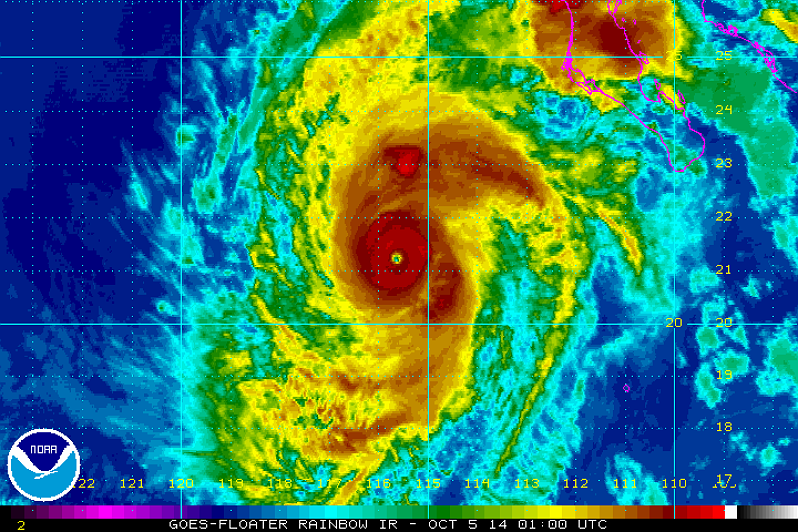
    At 09:00 UTC today the center of Tropical Storm "Odile" was located about 40 km WNW of Santa Rosalia, Mexico, bringing strong winds and heavy rains to the central portions of the Baja California peninsula. Its heavy rains are likely to result in life-threateni

  • Strong M5.6 earthquake registered 44 km NNE of Tokyo, Japan

    A strong earthquake registered as M5.6 on the Richter scale shook eastern Japan on September 16 at 03:28 UTC (12:28 local time). JMA reported depth of 50 km. USGS reports the same magnitude and depth of 53.9 km (33.5 miles). Widespread minor damage has been reported.Acc

  • Odile crashes into Mexico as a powerful Category 3 hurricane

    Hurricane "Odile" crashed into Mexico's Los Cabos resorts on Monday, September 15, 2014, forcing about 30 000 people to seek shelters. It is the strongest hurricane to make landfall this year anywhere and the strongest on record to hit Baja California.Odil

  • Typhoon “Kalmaegi” moves out of Philippines

    Typhoon "Kalmaegi" struck northeast of the main Philippine island of Luzon on Sunday evening (September 14) with winds of 160 km/h (100 mph) causing floods in mountainous and farming regions of northern Luzon.Three people were killed and three others remain mi

  • Two CMEs heading toward Earth, severe geomagnetic storms expected

    There are currently two Coronal Mass Ejections (CMEs) heading toward our planet and their combined arrival is expected to spark severe geomagnetic storms.The first one, released by the long duration M4.5 solar flare on September 9, is expected to hit Earth's magneti

  • Major solar flare measuring X1.6 erupts, sends Earth directed CME

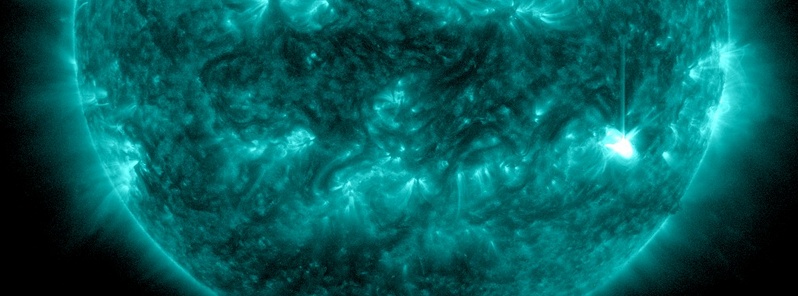
    A major solar flare measuring X1.6 at its peak time erupted on September 10, 2014. The source was geoeffective Active Region 2158 located almost at the center of the disk. The event started at 17:21, peaked at 17:45 and ended at 18:20 UTC.Coronal Mass Ejection (CME) was

  • British weather set to become more unsettled

    British winters are becoming increasingly volatile due to extreme variations in pressure over the North Atlantic according to scientists from the University of Sheffield.The new research, published on September 9, 2014, in the International Journal of Climatology,