• Early days of Earth’s sixth mass biological extinction event

    An international team of scientists warns that loss and decline of animals is contributing to what appears to be the early days of the planet's sixth mass biological extinction event. The planet's current biodiversity, they claim, is the highest in history of li

  • Landsat’s global perspective on natural disasters, urban change and more

    On July 23rd, 1972, the first Landsat spacecraft launched into orbit. At the time, it was called "Earth Resources Technology Satellite," or ERTS, and was the first satellite to use a scanning spectrophotometer. Previous satellites relied on film cameras (eject

  • The most thorough map of the Martian surface to date

    The United States Geological Survey (USGS) has released the most thorough map of the Martian surface to date. The data for the new map was collected by NASA's Mars Global Surveyor, Mars Odyssey and Mars Reconnaissance Orbiter, and

  • Another outbreak of noctilucent clouds over Europe

    The weekend of July 12 – 13 brought another outbreak of noctilucent clouds (NLCs) to Europe, SpaceWeather reports. Across the northern reaches of the continent, skies were criss-crossed by signature ripples of electric blue, like these photographed by Jaan Jalgrata

  • Scientists discover evidence of super-fast deep earthquake

    As scientists learn more about earthquakes that rupture at fault zones near the planet’s surface — and the mechanisms that trigger them — an even more intriguing earthquake mystery lies deeper in the planet.Scientists at Scripps Institution of Oceanogr

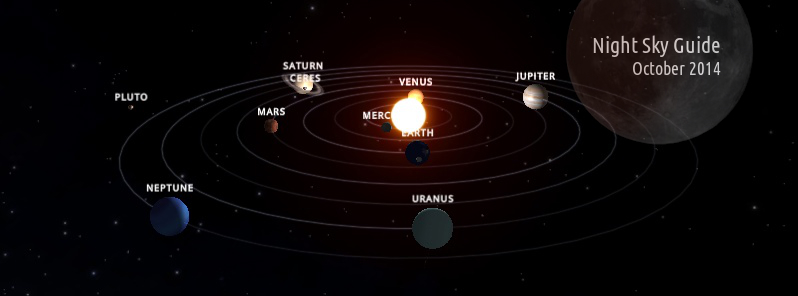
  • Night sky guide for July 2014

    July is the month when meteor activity starts to increase and continues into August. Several minor meteor showers during July and average Delta Aquarids on July 28/29 will introduce us to Perseids (August), one of the strongest meteor displays of the year