• More than 480 000 people told to evacuate as record-breaking rainfall hits southwestern Japan

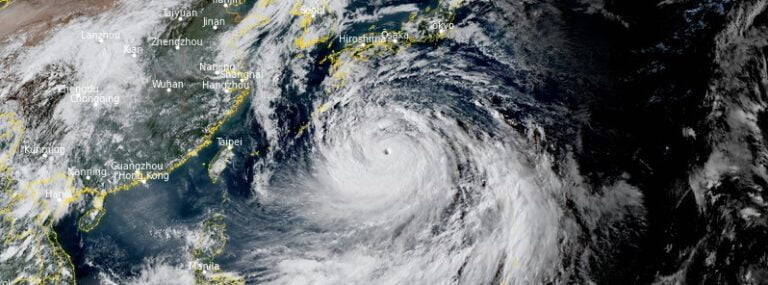
    More than 480 000 people living in southwestern Japan have been told to evacuate on July 19, 2022, as record-breaking rains continue falling over the region. Heavy rains are expected to continue through July 20. Residents in the affected region are urged to be on their guard against landslides, floods in low-lying areas, and river flooding.

  • Earthquake swarm beneath Kamaʻehuakanaloa (Lōʻihi) seamount likely the result of magma movement, Hawai’i

    The Hawaiian Volcano Observatory (HVO) has detected increased seismic activity beneath Kamaʻehuakanaloa (formerly known as Lōʻihi) seamount, south of the Island of Hawaiʻi over the past few days. The activity is likely the result of magma movement beneath Kamaʻehuakanaloa seamount and currently shows no sign of leading to an eruption. The last eruption at this volcano took place in 1996 (VEI 0).

  • United Kingdom issues first Red Extreme heat warning

    For the first time ever, temperatures of 40 °C (104 °F) have been forecast in the United Kingdom for Monday and Tuesday, July 18 and 19, 2022. As a result, the UK Met Office has issued the first ever Red warning for exceptional heat. The current record high temperature in the UK is 38.7 °C (101.6 °F), set in Cambridge in 2019.

  • Dozens missing, 15 000 rescued after severe flash floods hit pilgrimage site in Jammu and Kashmir, India

    Some 15 000 people have been airlifted to safety after severe flash floods swept through makeshift camps during an annual Hindu pilgrimage to an icy Himalayan cave in Jammu and Kashmir, India. The cave is located at an altitude of 4.1 km (2.5 miles) and is covered with snow most of the year except for the short summer period when it is open to pilgrims.

  • Very bright daylight meteor over New Zealand, loud boom reported

    A very bright daylight fireball was seen and recorded over Wellington, New Zealand at around 01:50 UTC on July 7, 2022 (13:50 LT). The event lasted about 10 seconds and was followed by a loud boom. It provided a wealth of scientific data as it left signatures on weather radars, seismometers, and geostationary satellites.