
Typhoon Nari makes historic landfall over Hokkaido, Japan
Typhoon Nari made a historic landfall over Cape Erimo in Japan on July 15, 2025, as the first typhoon to make landfall over Japan’s northern main island since 2016 and the first to make landfall in Hokkaido during July since records began. It was the fifth named storm of the 2025 Pacific typhoon season.
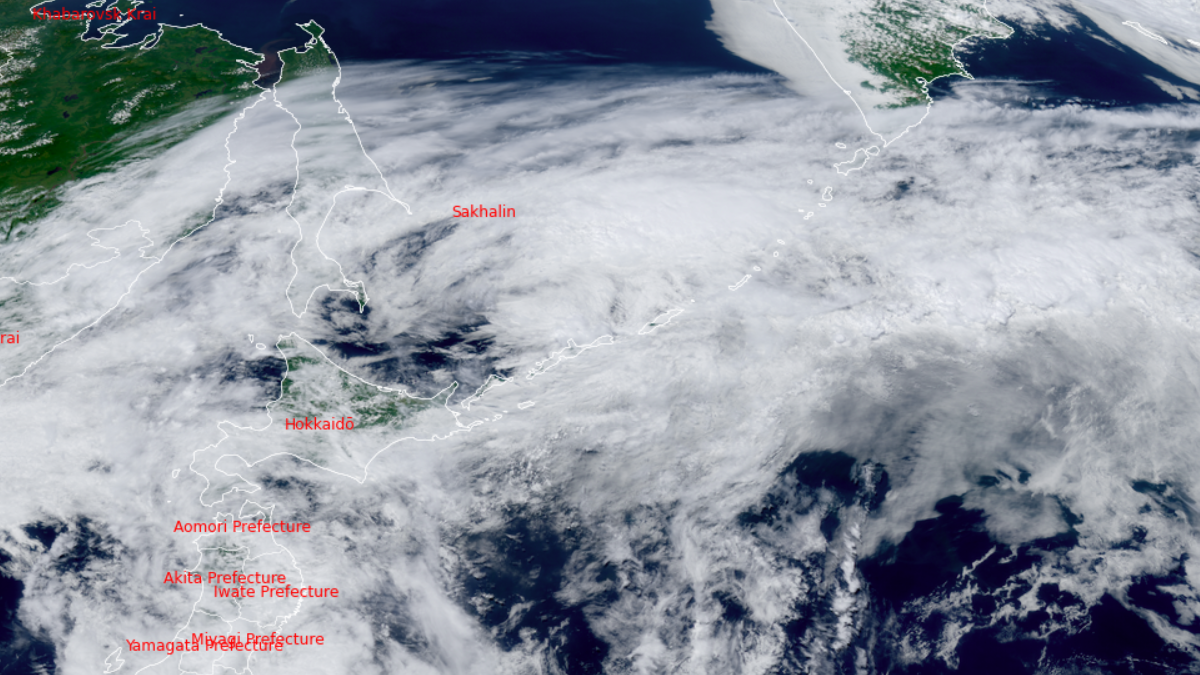
Satellite image of the remains of Typhoon Nari. Credit: JMA/Himawari-9, RAMMB/CIRA, The Watchers. Acquired at 03:40 UTC on July 15, 2025
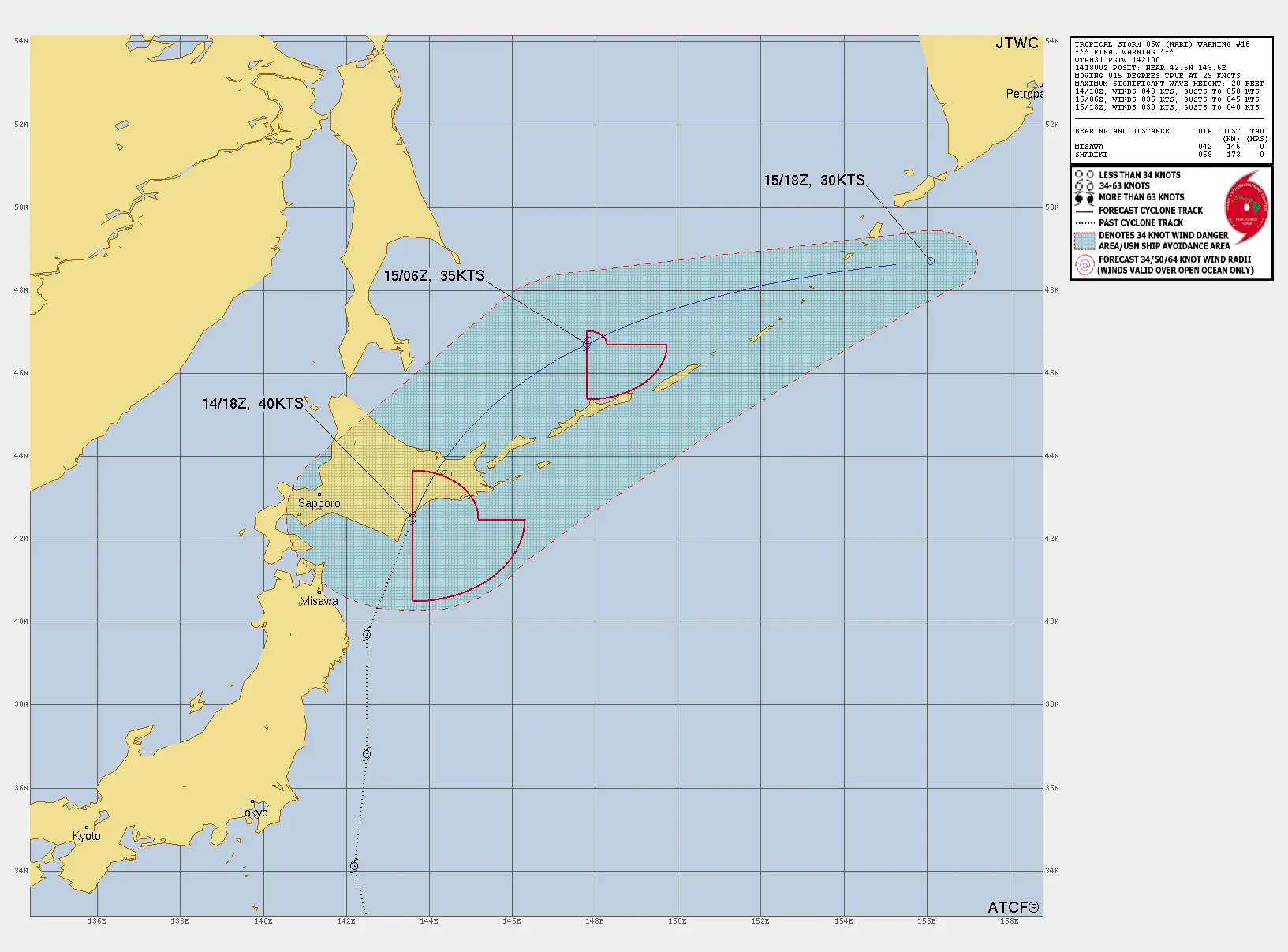
Typhoon Nari made landfall near Cape Erimo, at the southern tip of Hokkaido, around 02:00 local time (LT) on July 15, becoming the first typhoon to strike Japan’s northern main island since 2016.
The system moved northward after landfall and marked the first July typhoon landfall over Hokkaido since records began in 1951.
The system brought persistent rain and strong winds of over 80 km/h (50 mph) to parts of Hokkaido as it moved north, reaching the Sea of Okhotsk by 07:00 LT. It was downgraded to an extratropical storm by 09:00 LT.
Although the system has exited Japan, the Japan Meteorological Agency (JMA) has urged residents of Hokkaido to remain vigilant against storm winds, high waves, and heavy rain.
“Although the cyclone has moved away, a Pacific high-pressure system is expanding near Japan, causing a strong pressure gradient to develop to the east of the country,” said the JMA.
Up to 200 mm (8 inches) of rainfall is forecast in the Kanto-Koshin region through 18:00 LT on Tuesday, while over 80 mm (3 inches) is forecast for Tohoku Prefecture and up to 120 mm (5 inches) for Hokkaido Prefecture.
Strong winds are forecast to continue affecting parts of northern Japan, with gusts of over 105 km/h (65 mph) forecast for Hokkaido Prefecture through July 15.
Rough seas are also forecast for northern Japan on July 15. Waves of up to 6 m (20 feet) with swells are forecast in the Hokkaido region, while waves of up to 5 m (16 feet) are forecast for the Tohoku region.

Rishav Kothari is Editor-in-Chief of The Watchers, where he runs the newsroom and covers earthquakes, volcanoes, severe weather and space weather.
Published in the last 24 hours
- In September 1859, a solar storm lit up the night sky so brightly that gold miners in the Rocky Mountains woke up after midnight and started cooking breakfast, convinced the aurora glowing over their camp was the sunrise Epicenter
- A patch of warm Pacific water that could become the strongest El Niño in more than 70 years sits thousands of miles from any American town, yet it is already the main reason NOAA expects a wetter winter across the South and a milder one across the North
- A 19-year-old Nebraska teacher reportedly tied her pupils together with twine and led them to safety through a blizzard in January 1888 Epicenter
- NASA built the Opportunity rover to last 90 days on Mars, and Martian winds helped keep it alive for nearly 15 years by blowing dust off its solar panels, until a planet-wide dust storm in 2018 blocked sunlight and silenced the rover Epicenter
