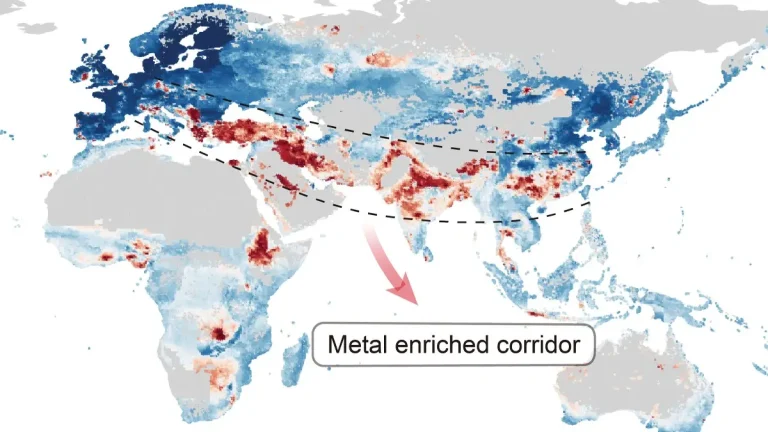
• Toxic metals pollute 17% of global cropland, threatening food safety

    A new study reveals that 14–17 % of global cropland, roughly 242 million ha (598 million acres), is contaminated with toxic metals, affecting food safety for up to 1.4 billion people. The contamination, driven by metals like cadmium and nickel, poses risks to agriculture and human health worldwide.

  • Signs of life detected on exoplanet K2-18b

    Researchers using the James Webb Space Telescope have detected molecules in the atmosphere of exoplanet K2-18b that may indicate potential biological activity. The analysis revealed the presence of dimethyl sulfide and dimethyl disulfide—compounds that, on Earth, are primarily produced by biological processes.

  • Polar vortex collapse to influence spring weather across U.S. and Canada

    Large-scale pressure changes following a strong sudden stratospheric warming event in mid-March 2025, which caused the collapse of the polar vortex, are expected to drive spring weather patterns across Canada and the United States into May. Northerly winds are expected to bring colder air into parts of North America, while high-pressure zones may lead to warmer conditions in the central U.S. and southern Canada. The shifts in weather patterns are consistent with the typical effects observed following a polar vortex disruption, where the jet stream becomes more erratic, leading to unusual temperature distributions and weather events.

  • M5.2 San Diego earthquake linked to Elsinore Fault renews concerns over major seismic risk in Southern California

    M5.2 earthquake that struck San Diego County near Julian on April 14, 2025, occurred along the Elsinore Fault Zone, a major strike-slip fault in Southern California capable of producing earthquakes up to magnitude 7.8. The fault runs near densely populated areas including Los Angeles, Long Beach, and Riverside, and its long period of limited activity may indicate an increased potential for a significant seismic event, according to recent research.

  • Turkey struck by severe agricultural frost, one of the worst in recent history

    Crops worth hundreds of millions of dollars have been reportedly damaged across Turkey as the worst agricultural frost event since 2014 struck the country during a three-day cold spell from April 10 to 12, 2025. Farmers across the country are trying desperate measures such as lighting fires around the crops to save them from the frost and avoid further losses.