Japan records hottest July for the second year in a row
Japan has recorded its hottest July ever, with an average temperature of 26.2 °C (79.2 °F), according to the Japan Meteorological Agency (JMA).


Japan has recorded its hottest July ever, with an average temperature of 26.2 °C (79.2 °F), according to the Japan Meteorological Agency (JMA).
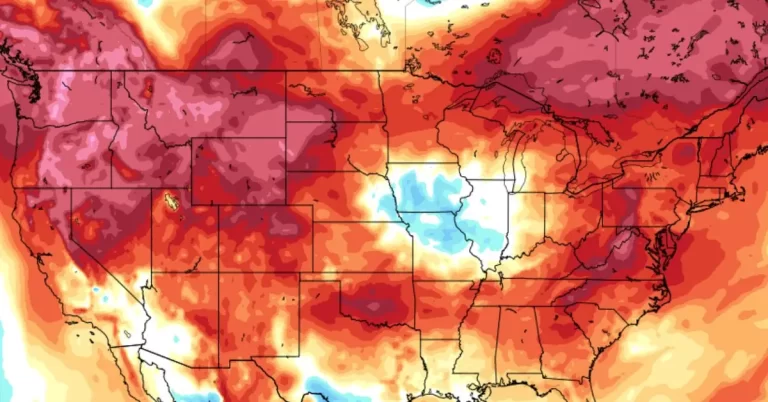
The National Weather Service has forecasted hazardous heat spreading from the Plains through the Mississippi Valley to the Southeast starting this week and continuing into the next. High temperatures combined with high humidity are expected to produce dangerously high heat indices, potentially exceeding 43.3 °C (110 °F).
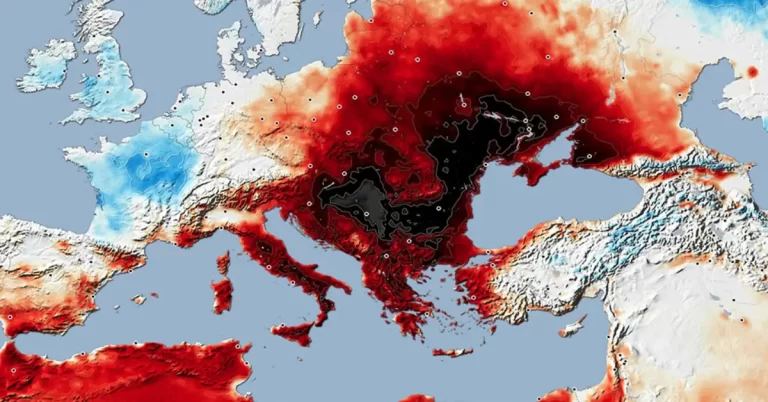
Southern and eastern Europe have endured a prolonged heatwave since early July, with temperatures forecast to remain high for at least another two weeks. The most intense heat was felt across the Balkan Peninsula and eastern Europe, where daily temperatures exceeded 40 °C (104 °F) in many areas. The Mediterranean Sea has also seen unprecedented warmth, with water temperatures reaching 30 °C (86 °F) in some areas.

Denver broke the 146-year-old record for the hottest July 14 after hitting 38.3 °C (101 °F) at 12:56 local time (LT) on July 14, 2024. Just two days before that, it had also broken the record for the highest recorded temperature for July 12.
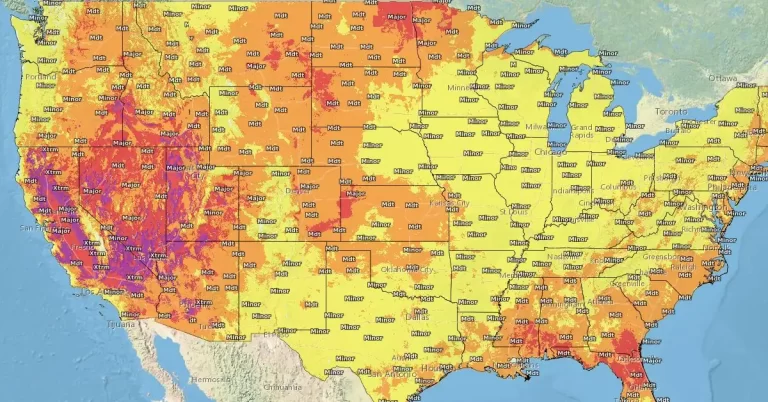
The National Weather Service (NWS) predicts temperatures to hit the upper 30s °C (90s °F) to mid-40s °C (110s °F) and up to nearly 50s °C (120s °F) in parts of California, Arizona, and Nevada, according to the latest advisory issued on July 11, 2024, forecasting multiple high-temperature records through July 13.

The Japan Meteorological Agency issued extreme heat warnings on July 7, 2024, after parts of Japan broke record heat levels. On the same day, Shizuoka touched 40 °C (104 °F), marking its highest recorded temperature since records began in 1940. The heatwave has led to four deaths and over 2 000 hospitalizations.

Las Vegas recorded its highest daytime temperature on Sunday, July 7, 2024, when the mercury reached 48.9 °C (120 °F) at the Harry Reid Airport. The extreme heat in the region claimed 2 lives and left one hospitalized.
Cities across Russia saw temperatures above 35 °C (95 °F) this week, while in Moscow, the mercury hit 32.7 °C (90.86 °F) on July 3 — the highest temperature for July 3 since 1917, according to the FOBOS weather center. This week, records were broken from Russia’s Pacific coast and the wilds of Siberia to the European parts of Russia.
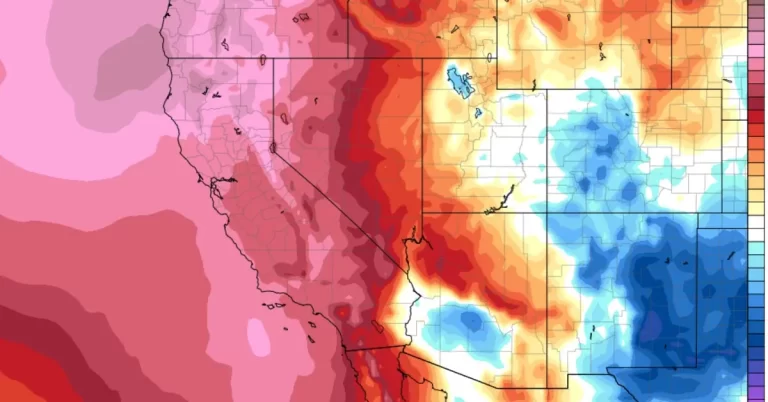
California is bracing for potentially record-breaking heat wave during the first week of July, with temperatures expected to soar past 43 °C (110 °F) in the hottest areas. The intense heat will impact a significant portion of the state, including the Sacramento Valley, San Joaquin Valley, and parts of Southern California, Nevada, and northwestern Arizona.

A massive power outage struck parts of the Balkan Peninsula on June 21, 2024, as temperatures soared to 40 °C (104°F). The blackout caused widespread disruption across Montenegro, Bosnia, Croatia, and Albania. Officials and media blame increased power consumption due to the sweltering heat for power grid failures.
