My passions include trying my best to save a dying planet, be it through carpooling or by spreading awareness about it. Research comes naturally to me, complemented by a keen interest in writing and journalism. Guided by a curious mind and a drive to look beyond the surface, I strive to bring thoughtful attention and clarity to subjects across Earth, sciences, environment, and everything in between.

  • Tectonic link found between Ontong Java Plateau and Louisville hotspot chain

    A new study from the University of Maryland and the University of Hawaiʻi has revealed surprising connections between two major volcanic features in the Pacific. By tracing the Louisville hotspot as the source of both the Ontong Java Plateau and a series of underwater volcanoes, the researchers have uncovered fresh insights into the Pacific Ocean’s geological history. This discovery challenges old ideas and offers a clearer picture of how the seafloor and the islands above it have formed over millions of years.

  • Antarctica sees ice gain after two decades of decline

    Antarctica has shown a rare shift in behavior, gaining ice mass between 2021 and 2023 after years of steady decline. Using satellite gravimetry, researchers tracked this anomaly and linked it to unusual precipitation rather than long-term change. The findings offer insight into the continent’s sensitivity but little certainty about what comes next.

  • China tests drone-based weather modification in Xinjiang

    In an effort to tackle water shortages in Xinjiang, China has undertaken a successful drone-based cloud-seeding experiment to enhance rainfall. The trial, conducted over a vast area of the Bayanbulak Grasslands, demonstrated moisture-laden positive results, with drones dispersing silver iodide to trigger precipitation. This approach aims to combat the region’s ongoing challenges with desertification and glacial retreat.

  • Earthquake simulations reveal hidden flood risks along Pacific Northwest coast

    A major earthquake along the Cascadia subduction zone would cause sudden coastal land subsidence, allowing seawater to penetrate farther inland. When combined with projected sea-level rise, this would substantially increase flood exposure in currently unaffected communities across northern California, Oregon, and Washington. Similar risks are present in other coastal regions located near active subduction zones worldwide.

  • New model links Mars’ molten core to hemispheric magnetic field anomaly

    A new study proposes that Mars once had a fully molten core, potentially explaining the planet’s hemispheric magnetic field asymmetry. The model links this anomaly to heat loss concentrated in the southern hemisphere, driven by differences in crustal thermal conductivity. The findings offer new insight into Mars’ early interior dynamics and atmospheric evolution.

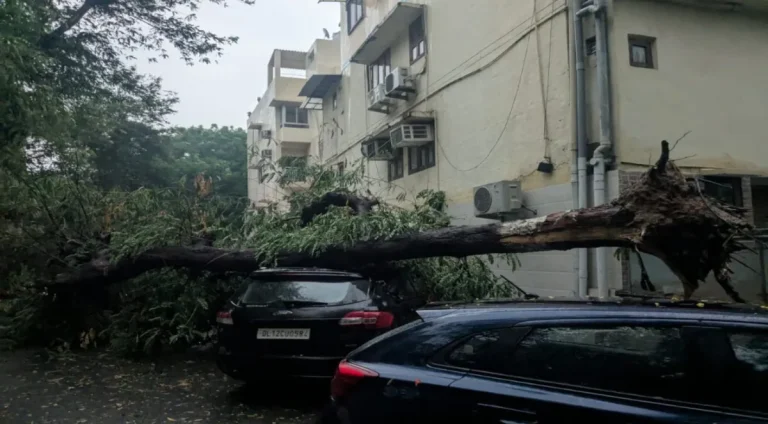
  • Severe thunderstorm hits Delhi-NCR, brings second-highest May rainfall since 1901 and leaves 7 dead across northern India

    Severe weather swept across Delhi and surrounding regions on Friday, May 2, 2025, as a powerful thunderstorm dropped 77 mm (3.03 inches) of rain—the second-highest single-day rainfall for May since 1901. At least seven people were reported dead due to storm-related incidents across northern India, while road and air traffic were severely disrupted.

  • Axial Seamount showing signs of approaching eruption as magma builds up off Oregon coast

    Axial Seamount, an underwater volcano off the Pacific Northwest coast, could erupt soon for the first time in a decade. Scientists at the University of Washington have detected a sharp increase in small undersea earthquakes and seafloor inflation — signs of magma buildup within the volcano. Despite the activity, experts say there is no threat to coastal communities. The site remains under constant observation through one of the world’s most advanced ocean monitoring systems.

  • Ancient Scottish meteorite impact aligned with Earth’s first land ecosystems

    Around 1 billion years ago, a meteorite collided with Earth, leaving behind a trail of clues in the rocks of northwest Scotland. This event may have shaped the earliest forms of life on land. By studying minerals trapped in ancient rock layers, scientists now suggest that the impact could have altered the environment in ways that influenced microbial ecosystems. The findings open new questions about the role of such collisions in Earth’s early biological history.