I'm a dedicated researcher, journalist, and editor at The Watchers. With over 20 years of experience in the media industry, I specialize in hard science news, focusing on extreme weather, seismic and volcanic activity, space weather, and astronomy, including near-Earth objects and planetary defense strategies. You can reach me at teo /at/ watchers.news.

  • Earthquake swarm at Kamaʻehuakanaloa (Lōʻihi) volcano, Hawaii

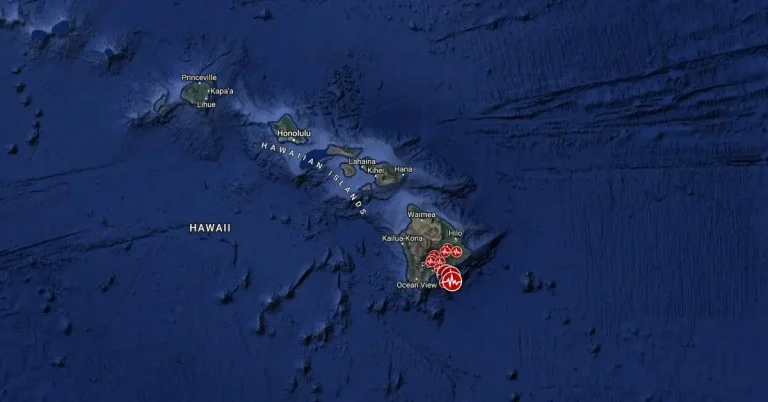
    A period of increased seismic activity started at Kamaʻehuakanaloa volcano (previously known as Lōʻihi) near Hawaii on November 1, 2024, with over 70 recorded earthquakes and two reaching M4.3. Seismicity remains above normal levels today, indicating magma movement beneath the volcano.
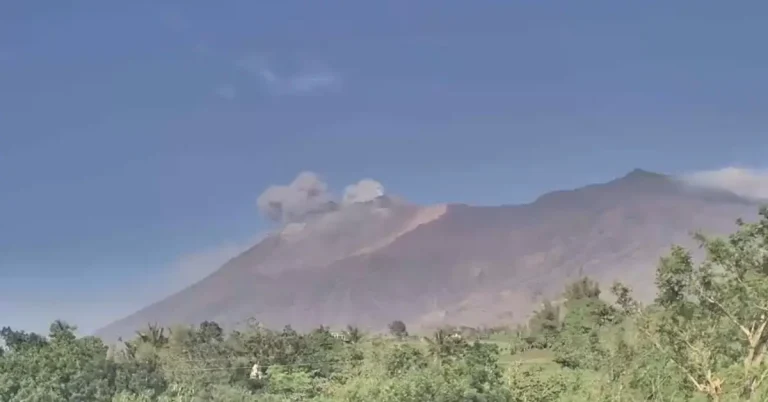
  • Continuous degassing, three ashing events observed at Kanlaon volcano, Philippines

    The Kanlaon Volcano on Negros Island, Philippines, produced three minor ash plumes from its summit crater on November 2, 2024, during brief eruptions lasting between four and twelve minutes each. The plumes rose to approximately 400 m (1 310 feet) above the crater and drifted southwest. No seismic or infrasonic signals accompanied the events, indicating low-energy emissions.

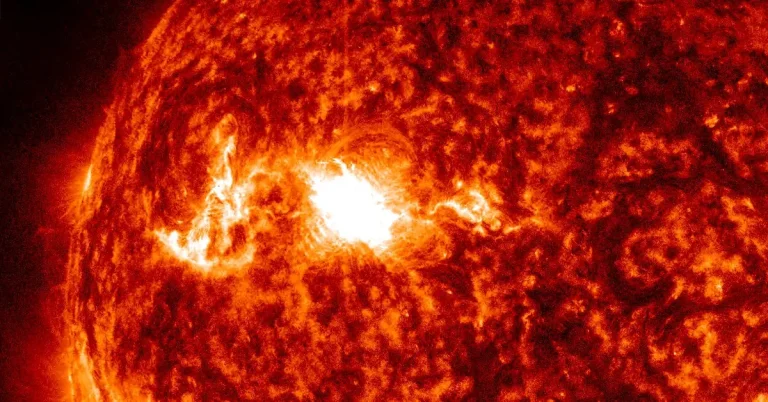
  • X2.0 solar flare erupts from Region 3878, solar radiation storm enters 7th day

    A major solar flare registered as X2.0 erupted from Active Region 3878 at 21:20 UTC on October 31, 2024. The event started at 21:12 and ended at 21:27 UTC. The flare was immediately followed by a long-duration M9.5 flare. Meanwhile, the solar radiation storm that started on October 26 entered the 7th day and continues at S1 – Minor levels.

  • Deep M6.0 earthquake hits Papua New Guinea

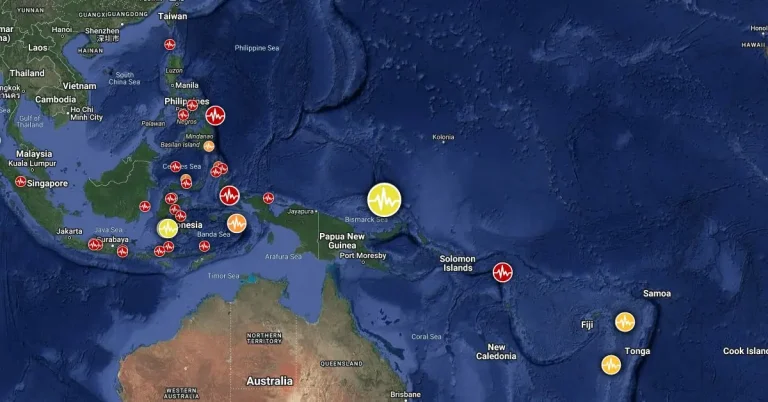
    A deep earthquake registered by the USGS as M6.2 hit near the coast of Papua New Guinea at 12:18 UTC on October 30, 2024. The agency is reporting a depth of 521 km (323 miles).

  • Typhoon “Kong-rey” rapidly intensifying as it moves toward Taiwan

    Typhoon “Kong-rey” is rapidly intensifying as it moves west-northwest toward Taiwan. The current forecast track calls for landfall on Taiwan’s southeastern coast within the next 48 – 60 hours. However, a shift westward could also lead to a direct landfall on Batanes, Philippines. Kong-rey is forecast to significantly strengthen and potentially reach super typhoon status as it approaches Taiwan.