• Geomagnetic storm in progress

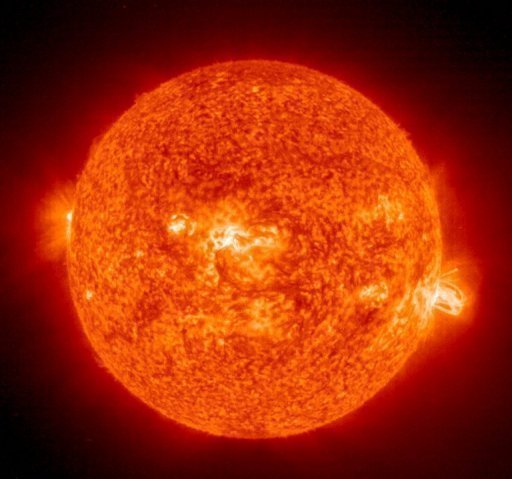
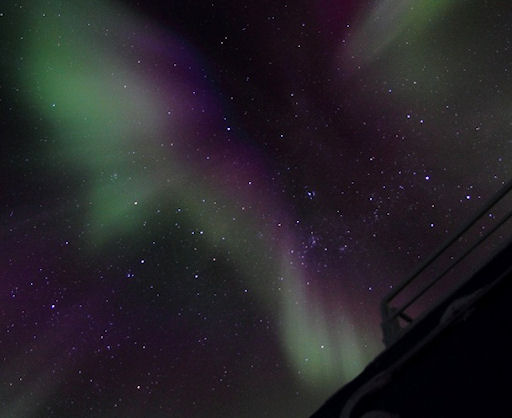
    The geomagnetic field was unsettled to active at mid latitudes. Minor to major storm conditions occurred at high latitudes due to Coronal Hole (CH) high-speed stream (HSS) effects. Solar winds speeds were sustained above 620 km/s during the period. The greater than 2
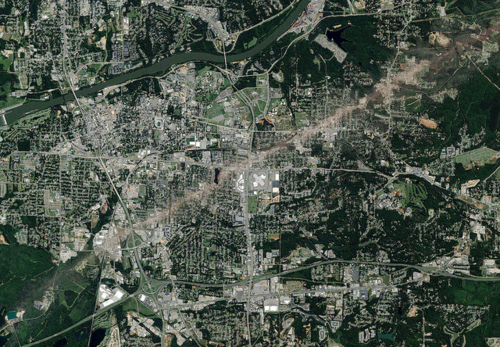
  • Tuscaloosa, Alabama tornado damage satellite imagery

    Following photos are before and after imagery showing tornado damage in various neighborhoods of Tuscaloosa, AL. The before imagery is credited to Google, the after imagery was taken from an altitude of 1,500m (5,000 feet) by a NOAA aircraft on April 29, 2011:The

  • Solar winds blowing earthward from Sun’s new coronal hole

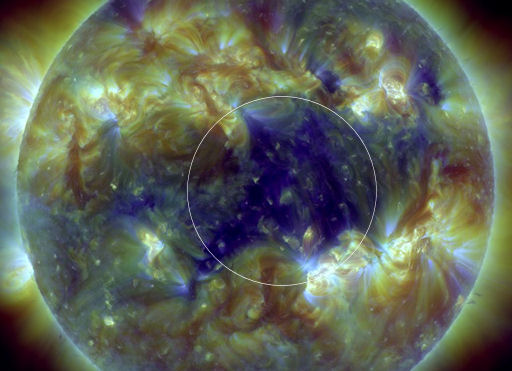
    NASA’s Solar Dynamics Observatory is monitoring a hole in the sun’s atmosphere – a “coronal hole.” It is the dark region circled in this extreme ultraviolet image taken during the early hours of April 28th: Coronal holes are places where the sun’s magnetic field

  • 141 violent tornadoes devastate few US states

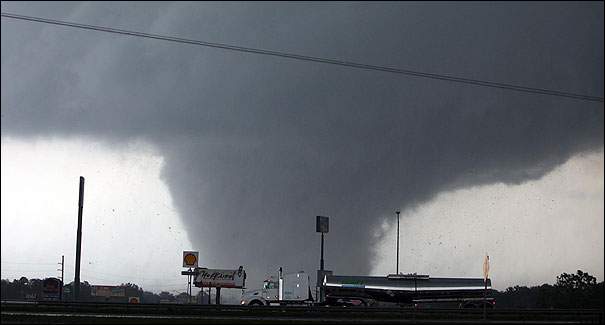
    The tornadoes and severe thunderstorms have killed at least 72 people across the South on Wednesday, according to the Associated Press, and the death toll will continue to rise. Tornadoes remain a threat from the mid-Atlantic to southern Alabama. Out of those

  • Fear of Juan de Fuca megathrust earthquake

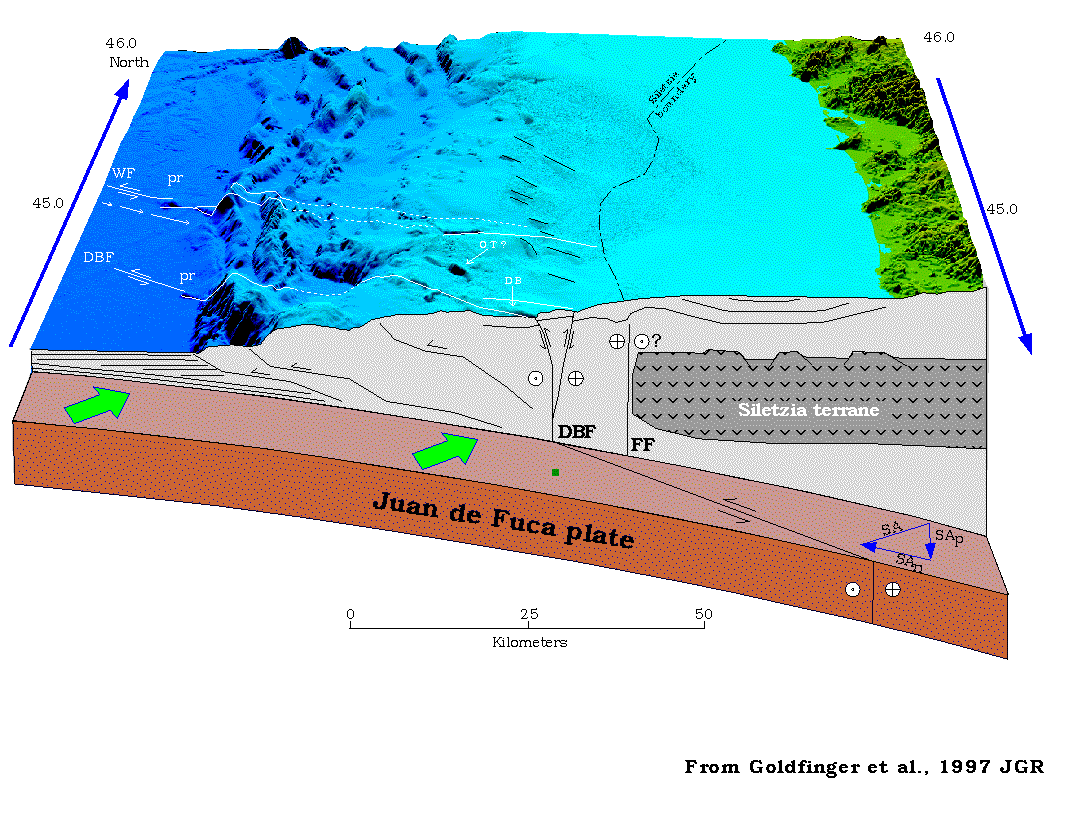
    The north-west coast of the U.S. could be devastated by a huge movement of undersea plates known as a ‘megathrust’ earthquake, scientists say. A review of the dangers posed by the Juan de Fuca plate released in the wake of the Japanese quake has raised fears that

  • Amazing B-class solar flare

    B-class eruptions are weak and generally not considered spectacular, but the one recorded by NASA's Solar Dynamics Observatory (SDO) on April 23rd was quite different:The blast hurled hundreds of thousands of tons of plasma above the stellar surface with a powe

  • Envisat view of Earth pt.1 (Video)

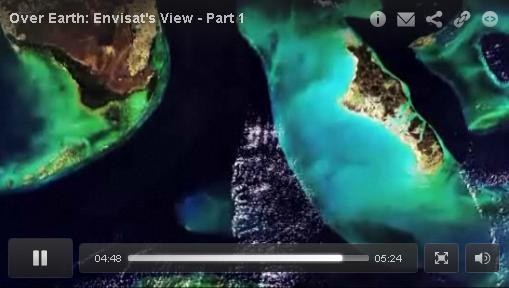
    Recently lost ENVISAT still shows no signs of “life”. While satellite observing community wait for some news lets take a look at breathtaking imagery of land and oceans by Envisat’s optical and radar instruments. The satellite is orbiting 497 miles above the

  • Sky watchers – The Lyrid meteors passing by Earth!

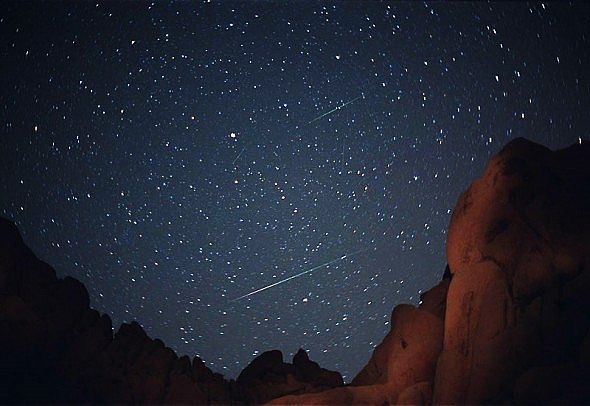
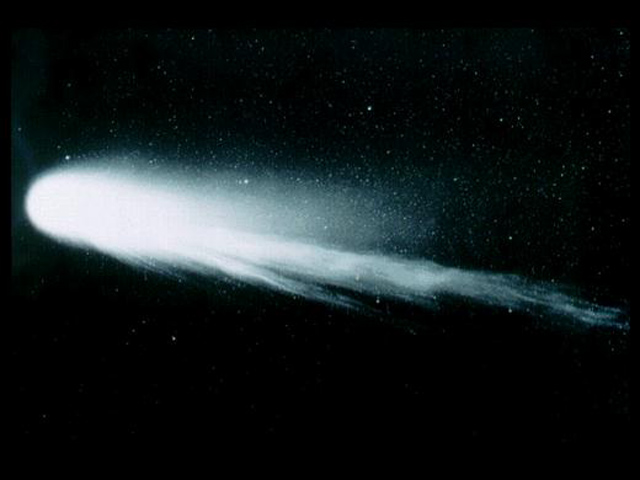
     Every year in late April Earth passes through the dusty tail of Comet Thatcher (C/1861 G1), and the encounter causes a meteor shower–the Lyrids. This year the shower peaks on Friday morning, April 22nd. The best time to look, no matter where you live, is