
Major landslide kills 14 at Tsadkane Mariam Monastery in Ethiopia
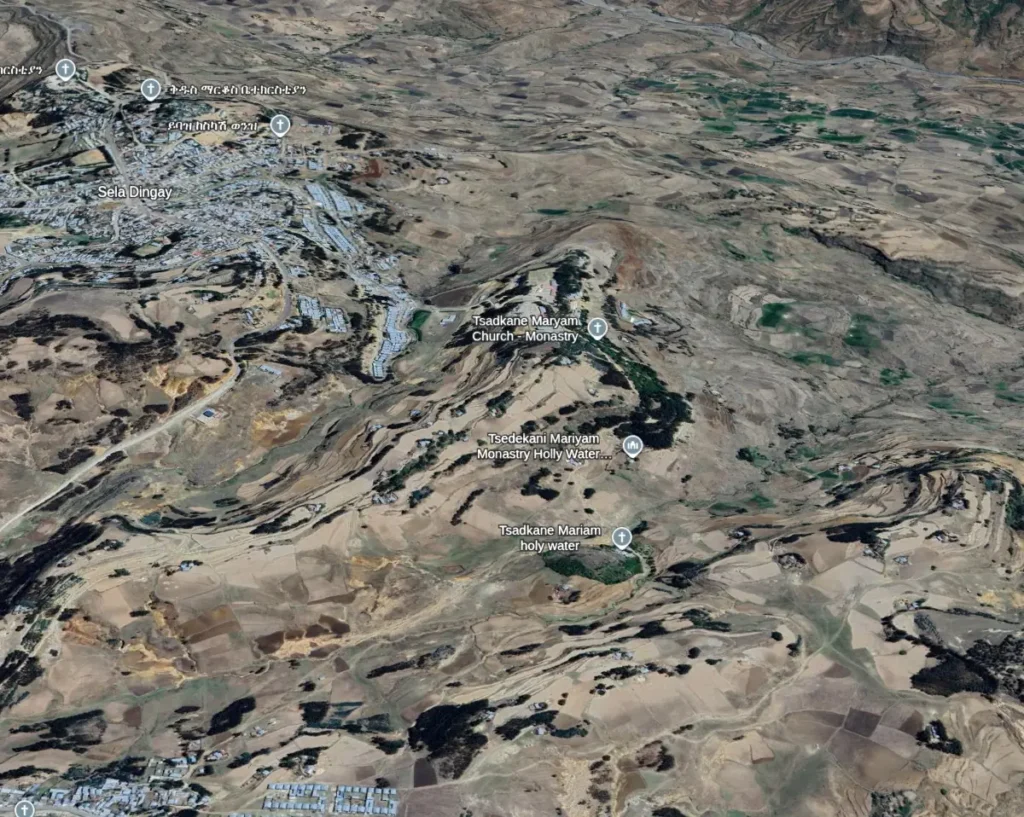
Fourteen people were killed when a landslide struck Tasadkane Debre Mitmak Saint Mary Monastery in Ethiopia’s Amhara Region at approximately 07:00 LT on August 3, 2026. The slope failure hit while hundreds of worshippers were gathered at the monastery for a holy-water ritual.

Members of the Ethiopian Orthodox Tewahedo Church hold a prayer service following the fatal landslide at Tsadqane Debre Mitmaq St. Mary Monastery in North Shewa Zone, Amhara Region, Ethiopia, on August 3, 2026. Credit: Debre Birhan City Administration Government Communication Department
The monastery is located in the mountainous Sela Dingay area of North Shewa Zone, approximately 200 km (124 miles) northeast of Addis Ababa. Heavy rainfall preceded the landslide, which released soil and large rocks from the mountain above the gathering area. There are also unconfirmed reports that hint at a tremor as the trigger.
Reports differed on the number of injured. The North Shewa Diocese reported five injuries, while the Associated Press reported seven. People with serious injuries were transferred to Debre Birhan, approximately 70 km (43 miles) from the monastery.
The local administration deployed specialists from its disaster-prevention office to support search-and-rescue operations after the landslide.
Eleven victims were buried at the monastery, while the remains of three others were returned to their home communities, according to Megabe Hadis Neka Tibeb Ababu, general manager of the North Shewa Diocese. Ababu said some of the victims were difficult to identify.
“Whilst it is a little challenging to speculate on what happened at this site, there are images that suggest that oversteepening of slopes might be an issue at the monastery,” landslides expert Dr. Dave Petley said.
“Sadly, in most landslides of this type in such locations, there is a paucity of follow-up reporting, so there is a high chance that we’ll never know the detail of this failure.”
The Ethiopian Meteorological Institute had forecast light to heavy rainfall across Amhara between August 2 and 5. Heavy to extremely heavy rainfall, ranking within the upper 10 to 1% of the forecast climatology, was forecast over eastern Amhara during the August 2–3 period and across parts of Amhara during the August 4–5 period. No site-specific rainfall measurement or formal technical assessment of the landslide was located.
The incident occurred during Ethiopia’s Kiremt rainy season, which generally extends from June through September. Heavy rainfall during this period regularly produces flooding and landslides in mountainous areas of the country.
A rainfall-triggered landslide in southern Ethiopia killed at least 257 people in July 2024. Landslides in Gamo Zone killed 127 people and forced more than 18 000 from their homes in March 2026, according to the United Nations.
References:
1 Ethiopia landslide kills 14 at monastery Ethiopia landslide kills 14 at monastery ritual, search continues for missing – AP – August 4, 2026
2 Daily Rainfall, Exceptional Rainfall and Temperature Forecast for August 2–4, 2026 – Ethiopian Meteorological Institute – Accessed August 4, 2026.

I’m a science journalist and researcher at The Watchers, contributing to the Epicenter edition, where I cover peer-reviewed scientific research and emerging discoveries across Earth and space sciences. With a background in astronomy and a passion for environmental science, I’ve worked in shark and coral conservation in Fiji, conducting reef and shark-behavior research, contributing to mangrove restoration, and earning PADI Open Water and Coral Reef Certifications. I bring a blend of scientific rigor and storytelling to illuminate the discoveries shaping our planet and beyond.
Published in the last 24 hours
- Second nationwide US flight halt since 9/11: how the November 13 FAA ground stop compares with September 2001 and January 2023 Epicenter
- FAA grounds all departing flights across the US after communications outage hits air traffic control centers nationwide
- In September 1859, a solar storm lit up the night sky so brightly that gold miners in the Rocky Mountains woke up after midnight and started cooking breakfast, convinced the aurora glowing over their camp was the sunrise Epicenter
- A patch of warm Pacific water that could become the strongest El Niño in more than 70 years sits thousands of miles from any American town, yet it is already the main reason NOAA expects a wetter winter across the South and a milder one across the North
