
Series of devastating wildfires hit Texas Panhandle, causing evacuations, temporary closure of critical nuclear weapons facility, U.S.

Image credit: Incident Information - Texas A&M Forest Service
A series of out-of-control wildfires swept through the Texas Panhandle on February 27 and 28, 2024, prompting tens of thousands of residents to evacuate, causing widespread power outages, and forcing the temporary shutdown of the Pantex Plant, a critical nuclear weapons facility. The disaster, affecting numerous homes and prompting a disaster declaration in 60 counties, saw the Smokehouse Creek Fire rapidly grow to Texas’ 2nd largest wildfire in history.
The wildfires, fueled by strong winds, dry grass, and unseasonably warm temperatures, resulted in an unknown number of homes and structures in Hutchinson and Hemphill counties being damaged or destroyed.
“Homes have burned in almost every direction,” Hemphill County Judge Lisa Johnson told The Canadian Record.
“The damage is bad. You would be shocked if you were to travel between here and Borger,” Hutchinson County emergency management coordinator Jerry Langwell said.
Gov. Greg Abbott responded by issuing a disaster declaration for 60 counties as the Smokehouse Creek Fire alone exploded in size from 16 200 ha (40 000 acres) to 81 000 ha (200 000 acres) in just 6 hours. The fire has now consumed more than 202 000 ha (500 000 acres).
The fire continued rapidly growing today and reached 323 800 ha (800 000 acres) before the end of the day, becoming the second-largest wildfire in Texas history.
Previously, the state’s second-largest wildfire was the 1988 Big Country fire at 148 100 ha (366 000 acres). The biggest fire ever in Texas remains the 2006 East Amarillo Complex fire, which grew to more than 367 000 ha (907 000 acres).
Update: the #SmokehouseCreekFire in Hutchinson County remains an estimated 250,000 acres and 0% contained. Crews are building fireline and engaged in structure protection in Canadian at this time. Fire behavior remains active. #txfire pic.twitter.com/yIxqY0Sryj
— Incident Information – Texas A&M Forest Service (@AllHazardsTFS) February 28, 2024
Smokehouse Creek Fire started on Monday, February 26. At this time, the cause remains undetermined.
The Pantex Plant, located northeast of Amarillo and a key site for the assembly and disassembly of America’s nuclear arsenal, evacuated non-essential personnel on Tuesday night, citing an “abundance of caution.” By Wednesday morning, the facility announced a return to normal operations, despite the ongoing wildfire threat.
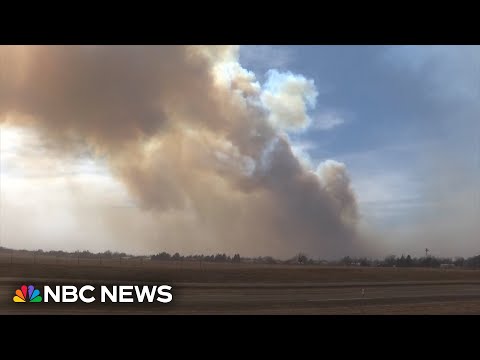
In addition to the evacuations, emergency management services in Borger organized a convoy to relocate evacuees in anticipation of power outages and freezing overnight temperatures.
Texas Department of Agriculture Commissioner Sid Miller said in a statement he is deeply concerned about the devastating wildfires.
“These fires not only threaten lives and property but also have a significant impact on our agriculture industry. We stand in solidarity with our farmers and ranchers facing loss and destruction. Our thoughts are with them during this challenging time, and we’re committed to supporting their recovery efforts every step of the way.”
The Texas Animal Health Commission said the effects of wildfire on the animal agriculture community can be devastating. “Please keep those affected and those responding to fires in the panhandle of Texas in your thoughts.”
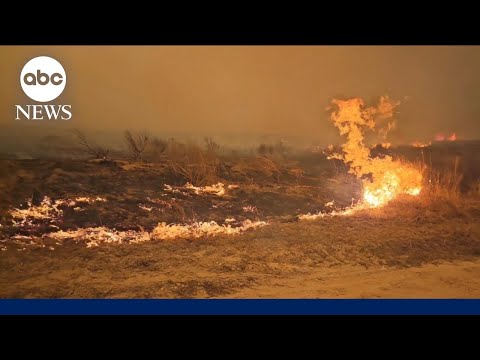
The impact of the wildfires extended beyond Texas, with fire officials in Durham, Oklahoma, also advising evacuations. In addition, red flag warnings and fire danger alerts have been issued across several states in the central U.S.
References:
1 Out-of-control wildfires scorch Texas Panhandle and pause work at nuclear weapons facility – AP – February 28, 2024
2 The latest on the rapidly growing Smokehouse Creek Fire in Texas – CNN – February 28, 2024

Teo Blašković founded The Watchers in 2011 and edited it until 2026, covering seismic and volcanic activity, extreme weather, space weather and near-Earth objects. Articles on this page are his archive.
Published in the last 24 hours
- NASA built the Opportunity rover to last 90 days on Mars, and Martian winds helped keep it alive for nearly 15 years by blowing dust off its solar panels, until a planet-wide dust storm in 2018 blocked sunlight and silenced the rover Epicenter
- In the winter of 1811–12, earthquakes near New Madrid, Missouri, shook so hard that witnesses saw the Mississippi River flow backward, and the shaking left a brand-new lake in Tennessee Epicenter
- On 28 August 1859 a solar storm shocked telegraph operators and threw sparks on other lines, and on 2 September Boston to Portland clerks unhooked their batteries and kept sending for more than two hours on the aurora's current alone. Epicenter
- In 2019, the Ronald Reagan Presidential Library hired hundreds of goats to eat 13 acres of brush around it; months later the Easy Fire surrounded the library, and the fire break the goats left behind slowed the flames before they reached the building Epicenter
