
Eye of Typhoon “Mawar” grazes northern Guam with Category 4 force
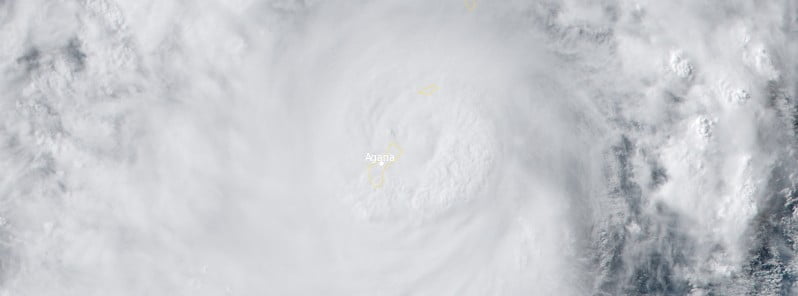
Featured image: Typhoon "Mawar" at 06:00 UTC on May 24, 2023. Credit: JMA/Himawari-9, RAMMB/CIRA, The Watchers
The southern eyewall of Category 4 Typhoon “Mawar” grazed the northern tip of Guam at around 08:00 UTC on May 24, 2023, with maximum sustained winds of 220 km/h (140 mph). This made Mawar the 15th typhoon of at least Category 4 intensity to pass within 110 km (70 miles) of Guam in records since WWII.
Typhoon “Mawar” has made its closest point of approach to Guam, with most of its eye passing through the Rota Channel between Guam and Rota. Its southern eyewall, however, grazed the northern tip of the island, near Anderson Air Force Base.
The typhoon caused widespread power cuts, affecting 98% of Guam Power Authority customers, and a major internet outage.
Landon Aydlett, a National Weather Service meteorologist in Guam, said Mawar’s winds were so fierce that the building the weather service office is in was vibrating.
“This is an extremely dangerous and life-threatening situation,” he said. “There will be a swath of tornado-like damage.”
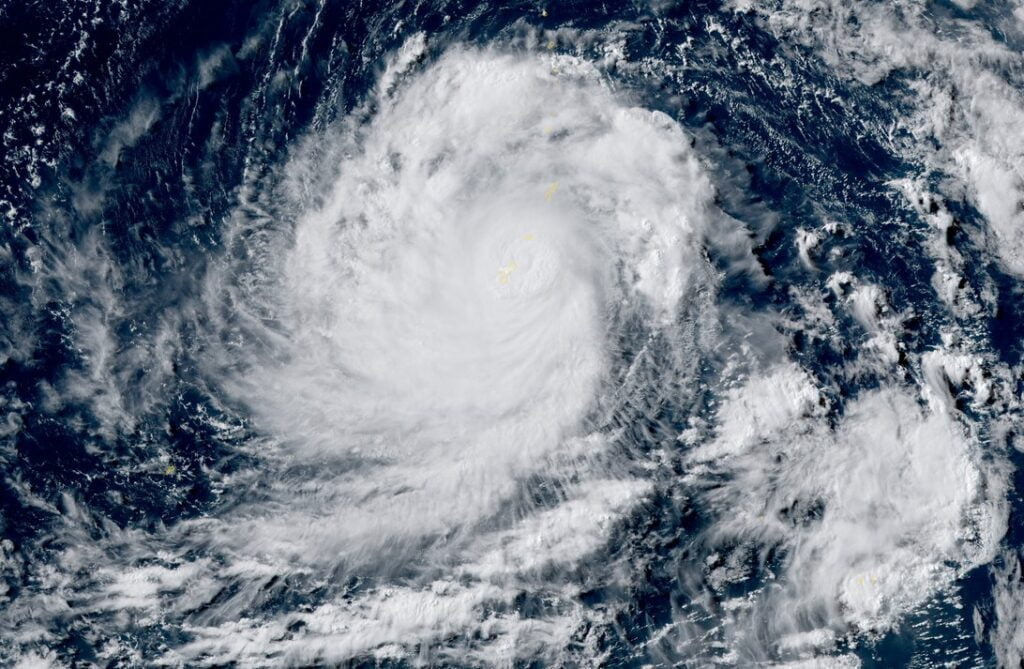
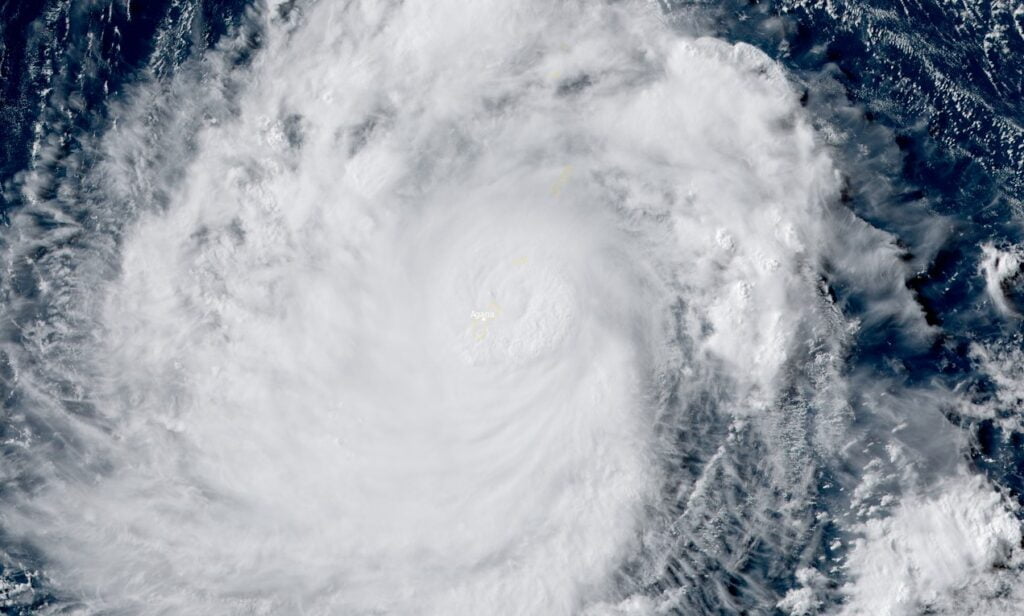
As Mawar moves away from the islands, the conditions will improve and damage assessments begin.


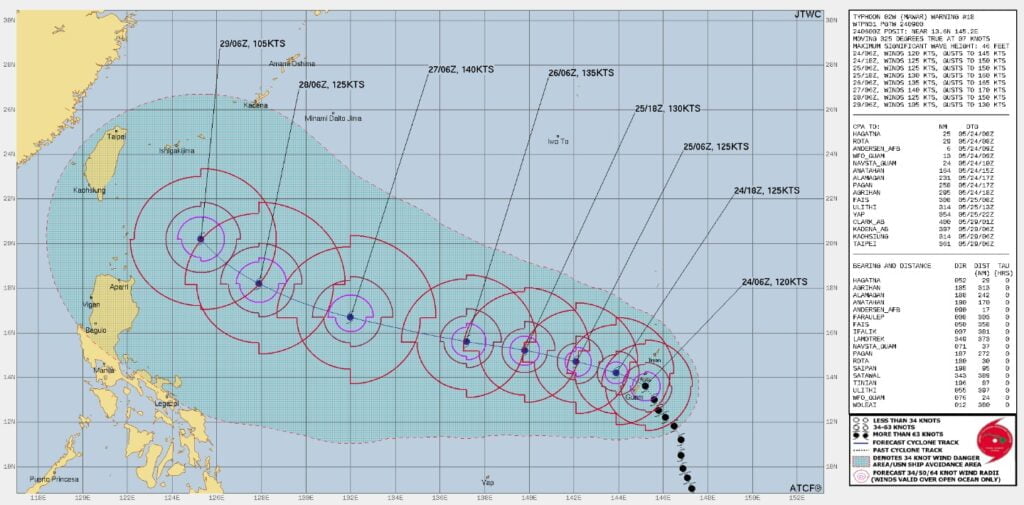
After moving away from Guam, Mawar is expected to peak at Category 5 Super Typhoon strength in the Philippine Sea, before it weakens near northern Philippines, Taiwan, and southern Japan (Ryukyu Islands).

Teo Blašković founded The Watchers in 2011 and edited it until 2026, covering seismic and volcanic activity, extreme weather, space weather and near-Earth objects. Articles on this page are his archive.
Published in the last 24 hours
- A meteorite blew a crater beside a village near Lake Titicaca in 2007, and dozens of villagers who went to see it got headaches and nausea, though tests found nothing the rock had added to the water Epicenter
- The people who pay closest attention to the weather are the ones storms have already cost the most, a study of 946 students found, with one damaging storm making little difference to how much attention a student paid, but two or more making a clear one Epicenter
- The sea is falling in Juneau, Alaska, because land freed from melted glaciers is rising about 0.6 inches a year Epicenter
- A dam above Los Angeles collapsed just before midnight on March 12, 1928, and the flood killed more than 400 people, hours after the engineer who built it had spent two hours looking at a new leak and decided there was no danger Epicenter
