
Catastrophic rock and ice avalanche hits Uttarakhand, leaving more than 150 people missing, India

Image credit: SDRF
A catastrophic rock and ice avalanche took place in the Chamoli district of the Indian state of Uttarakhand at around 05:00 UTC on Sunday, February 7, 2021. The event took place around 500 km (310 miles) N of New Delhi, leaving more than 150 people dead or missing.
At first sight, it appeared to be a glacial lake outburst flood (GLOF) but it was later determined to be a rock and ice avalanche caused by a landslide.
"The question as to the cause of this event has been solved by the availability of a Planet Labs image collected today," Dr. Dave Petley of The Landslide Blog wrote in his analysis of the event.

The affected area as seen by Sentinel-2 satellite on February 5, 2021 – two days before the event. Image credit: Copernicus EU/Sentinel-2, TW
Dr. Dan Shugar of the University of Calgary was the first person to deduce from this that the cause of the disaster was a landslide, Petley said.
PlanetLabs images posted on his website show the source of the disaster – a large rockslope detachment from Trishuli.
"It has moved northwards onto the glacier, and turned into a rock and ice avalanche that has moved toward the northwest."
3D rendering of @planetlabs image collected 7th Feb showing the source of the Uttarakhand disaster located by @WaterSHEDLab. Appears to be a complete detachment of a previously glaciated slope #Chamoli #Disaster #Landslide pic.twitter.com/SElrZh36kH
— Scott Watson (@CScottWatson) February 7, 2021
This looks like it could be from a (unnamed?) glacier flowing from Trisul peak. @planetlabs imagery from Feb 7 (L image) shows lots of dust/moisture in the air (same as in the videos), which is not present on Feb 6 (R). @BhambriRakesh @davepetley @irfansalroo https://t.co/mjetRxZb0V pic.twitter.com/5deVDWnRo3
— Dr Dan Shugar (@WaterSHEDLab) February 7, 2021
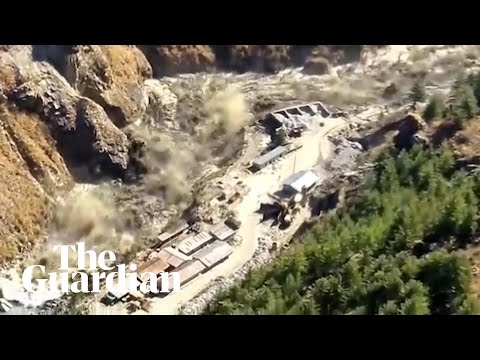
The Rishiganga Hydroelectric Project in the Tapovan-Rini area, with more than 150 workers believed to be in the facility, was completely destroyed.
Only 10 bodies have been recovered so far.
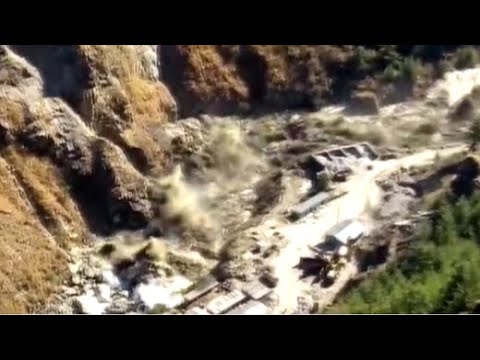
The debris also swept away homes, bridges, and livestock along the way and trapped 16 people in a tunnel near Tapovan who were later rescued.
Rescue efforts are underway to rescue more people trapped in another tunnel, the federal ministry said early Sunday.
State utility NTPC said a part of its Tapovan Vishnugad hydropower plant that was under construction was also damaged.
The event played out so fast there was no time to alert anyone, one of the locals told Reuters.


Teo Blašković founded The Watchers in 2011 and edited it until 2026, covering seismic and volcanic activity, extreme weather, space weather and near-Earth objects. Articles on this page are his archive.
Earlier reporting
Nothing on Watchers was published in the last 24 hours. These are older articles.
- Florida's east coast faces a moderate flash flood risk Wednesday through Friday, with 4 to 8 inches of rain forecast and the St. Johns River near Cocoa already in major flood at 17.13 feet
- The storms drenching California this week are fed by a river in the sky, a band of water vapor that can carry up to 15 times the flow of the Mississippi River, and this winter’s near-record El Niño could keep aiming more of them at the West Coast
- Bay of Bengal system to become Cyclone Akvan, landfall forecast between Nellore and Tuni on November 20, India
- El Niño floods kill 2 in Guayaquil as 172.8 mm of rain swamps Milagro, Ecuador's toll rises to 14
