
Rare Earth-grazing meteoroid recorded over Europe
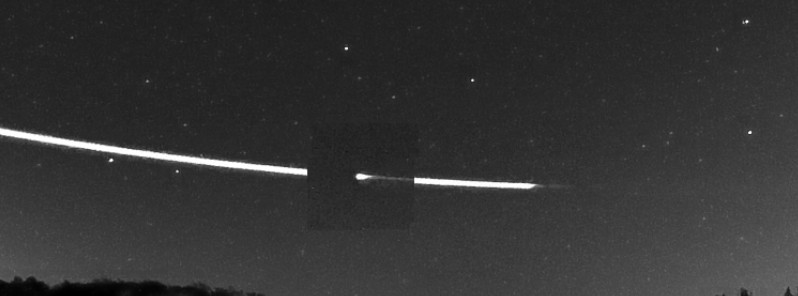
Image credit: Global Meteor Network; D. Vida, P. Roggemans, J. Dörr, M. Breukers, E. Harkink, K. Jobse, K. Habraken
A rare Earth-grazing meteoroid was spotted around 03:53 UTC on September 22, 2020 above northern Germany and the Netherlands, getting as low as 91 km (56 miles) above the surface — which is far below any orbiting satellites – before bouncing back into space.
The object was recorded by the cameras belonging to the Global Meteor Network — a decentralized scientific project made up of amateur astronomers and citizen scientists around the planet.
In comparison to the thousands of meteors we observe in a year, earthgrazers happen just a handful of times per year, the European Space Agency reports.
The International Meteor Organization (IMO) received 135 eyewitness reports from the Netherlands, Germany, Denmark and the United Kingdom.


According to IMO, the majority of eyewitnesses reported a very long bright, and slow meteor.
"Based on Denis Vida, postdoctoral associate at the University of Western Ontario and member of the Global Meteor Network team, the meteoroid entered the atmosphere at 34.1 km/s, reached the lowest altitude of ~91 km [56 miles] – far below any orbiting satellites and far below the ISS – and bounced back into space," IMO said.

Teo Blašković founded The Watchers in 2011 and edited it until 2026, covering seismic and volcanic activity, extreme weather, space weather and near-Earth objects. Articles on this page are his archive.
Published in the last 24 hours
- CPC posts a slight risk of heavy rain from the Gulf Coast to the Northeast urban corridor November 25-29, and a moderate risk of West Coast wind and Sierra snow on November 25
- Florida's east coast faces a moderate flash flood risk Wednesday through Friday, with 4 to 8 inches of rain forecast and the St. Johns River near Cocoa already in major flood at 17.13 feet
- Cyclone Akvan to make landfall between Nellore and Visakhapatnam around noon on November 20, IMD forecasts 120-130 km/h winds gusting to 145
- Radio pulses every 7.9 minutes reveal binary with white dwarf and Sun-like star Epicenter
