
A new mud volcano island forms in the Sea of Azov, Russia

Featured image: Formation of a new mud volcano in the Sea of Azov, Krasnodar region, Russia, October 25, 2015. Image credit: Анастасия Миронова
A new mud volcano island formed in the Sea of Azov, Russia, media reports. Amazing phenomenon appeared only a few meters off the shores of the Taman Peninsula on October 25, 2015, spewing out a mixture of water, sand, dirt and gases. A local resident witnessed its formation and recorded it on her camera.
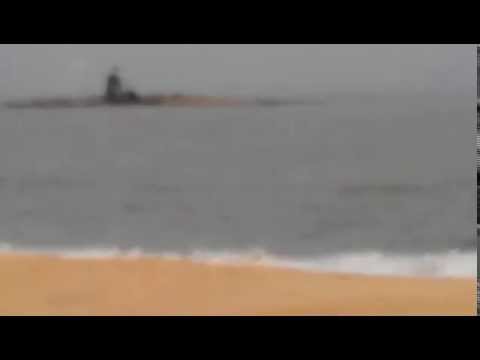
Video credit: Анастасия Миронова
This interesting natural phenomenon occurs after the hot water underneath the surface starts blending with mineral deposits. The mixture is then pushed up to the above surface where the thick mixture gets shot into air up to a couple of meters.
Although called a 'volcano' these muddy features don't spew lava, and are often used as cosmetic and therapeutic "mud baths". Mud volcanoes are common in the Krasnodar region of Russia, and local geologists often warn people to be careful about the eruptions as they can spew large clay or other debris causing damage or injuries.
Offshore mud volcano erupts in Sea of Azov … – https://t.co/34p5nAW6CN – #Geopolitics #News #Putin #Russia pic.twitter.com/epc1QZfwez
— State of Globe (@StateofGlobe) October 27, 2015
About 30 volcanoes of this type have been discovered in the Temryuk district in the Krasnodar region, and all of them found over the last 50 years have proven themselves to be harmless.
Both local residents and curious visitors practice mud baths as they are held in high esteem for relieving aches and muscle pain and treating conditions such as psoriasis, arthritis, sciatica or nervous system disorders.

Published in the last 24 hours
- High Risk of excessive rainfall covers Florida’s Space Coast as St. Johns River near Cocoa reaches 5.67 m
- Four small asteroids will pass close to Earth from November 21 to 23
- Cyclone Akvan weakens after landfall near Gopalpur; more than 300 000 evacuated in Odisha, India
- A broad low over southeastern Florida and the northwestern Bahamas has a 30 percent chance of subtropical or tropical development within 48 hours and a 50 percent chance within 7 days, the National Hurricane Center says
