• Earthquake swarm at Kamaʻehuakanaloa (Lōʻihi) volcano, Hawaii

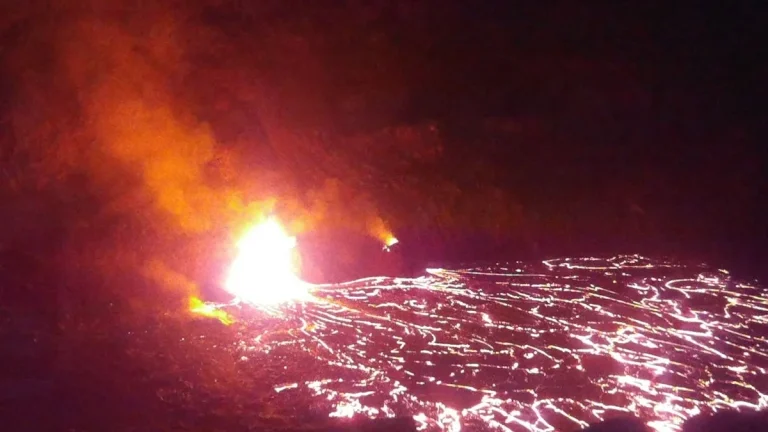
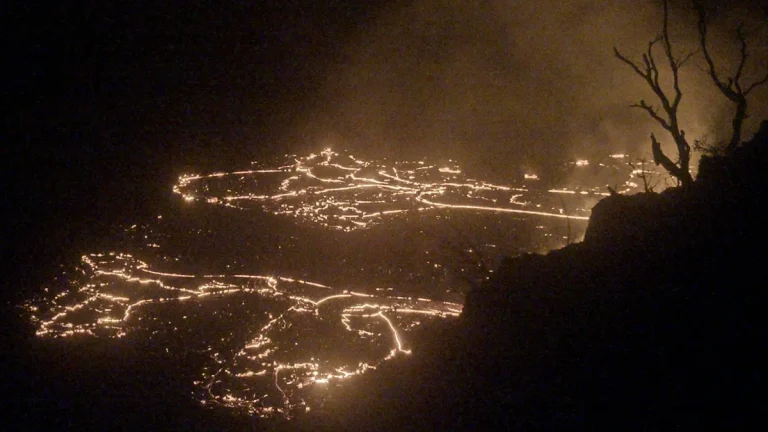
    A period of increased seismic activity started at Kamaʻehuakanaloa volcano (previously known as Lōʻihi) near Hawaii on November 1, 2024, with over 70 recorded earthquakes and two reaching M4.3. Seismicity remains above normal levels today, indicating magma movement beneath the volcano.

  • Historic storm from October 17 to 20 produced severe snowfall in Colorado and record rains in New Mexico

    A complex storm brought record-breaking rainfall to New Mexico and severe snowfall to Colorado from October 17 to 20, 2024. According to the Center for Western Weather and Water Extremes (CW3E), the storm was driven by a mid-level shortwave trough that deepened into a cutoff low-pressure system over Arizona, pulling in abundant moisture and creating conditions for intense thunderstorms.

  • United States sees record-breaking 24 billion-dollar weather disasters in 2024, with 418 fatalities

    The United States experienced a record-breaking 24 “billion-dollar” weather and climate disasters thus far in 2024, each incurring significant economic damage and resulting in the loss of 418 lives. This year’s toll greatly exceeds the long-term annual average of 8.5 events recorded between 1980 and 2023 and surpasses the recent five-year average of 20.4 events.

  • Earthquake swarm rattles Death Valley, California

    An earthquake swarm consisting of 64 recorded events has been occurring in the Death Valley region of California since October 24, 2024, with magnitudes ranging from 0.5 to 4.7 and focal depths reaching a maximum of 15.9 km (9.9 miles). The seismic activity is characterized by shallow to mid-crustal depths, typical of intraplate swarms in tectonically active regions.

  • Atmospheric river set to impact the West Coast with heavy rainfall

    A powerful atmospheric river (AR) is expected to bring significant rainfall to the West Coast, particularly affecting Washington and Oregon starting October 25, 2024, and continuing into early October 27. Following this, a second AR may impact the California-Mexico border and parts of the southwestern U.S. on October 28 – 29.