• Earth-facing sunspot 1356 harbors energy for M-class solar flares

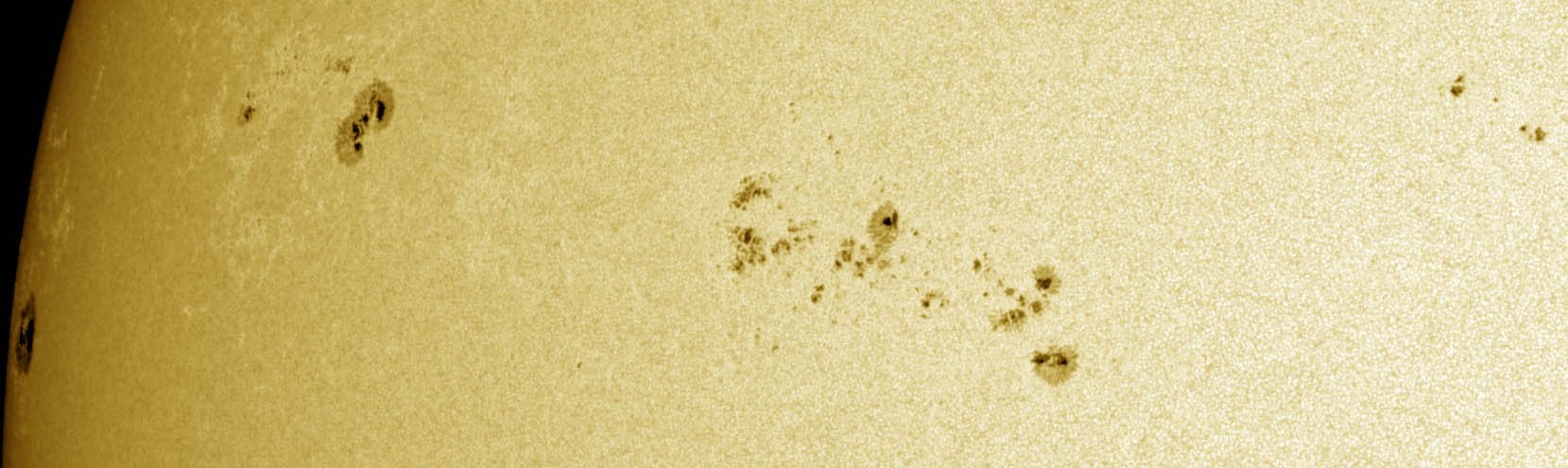
    Earth-facing sunspot 1356 has developed a “beta-gamma” magnetic field that harbors energy for M-class solar flares. NOAA forecasters estimate a 30% chance of such an eruption during the next 24 hours.A bright Coronal Mass Ejection (CME) is seen in the latest Lasco
  • Another Venus-directed CME

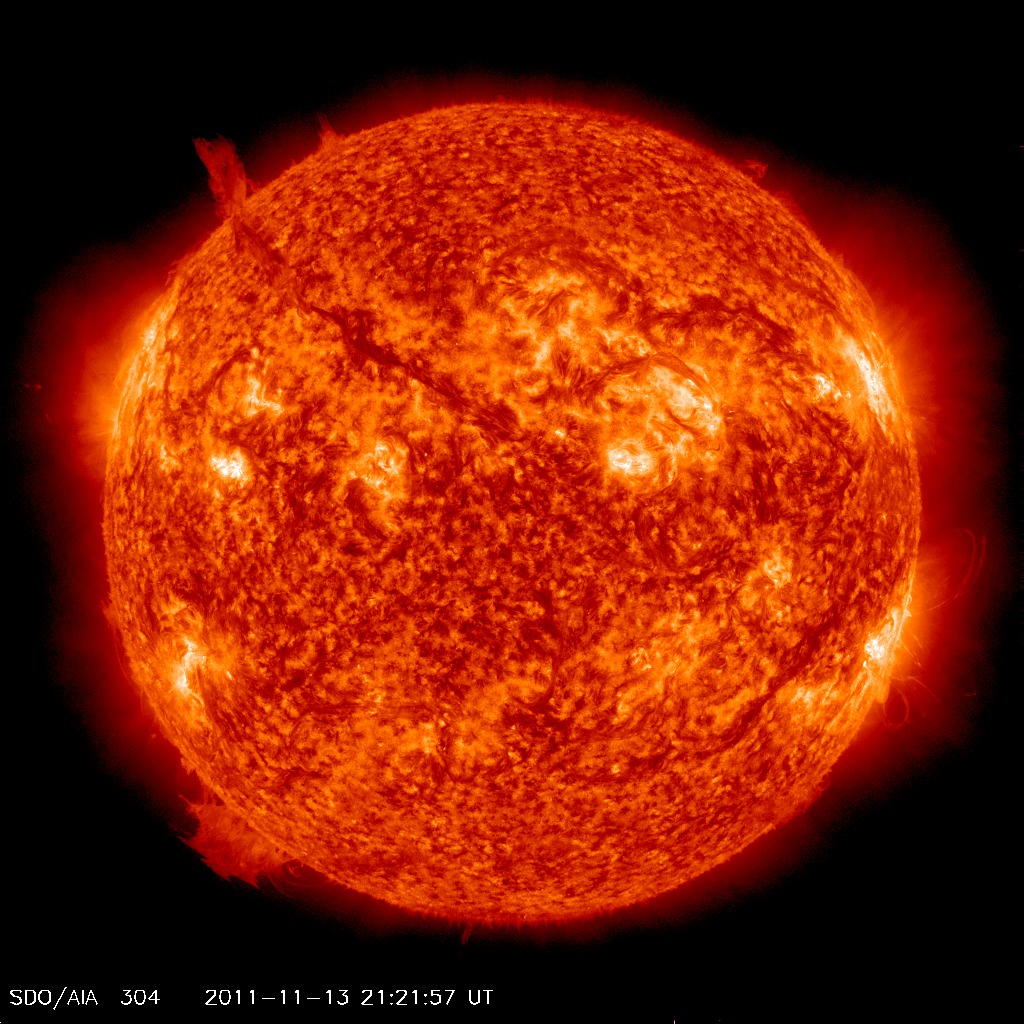
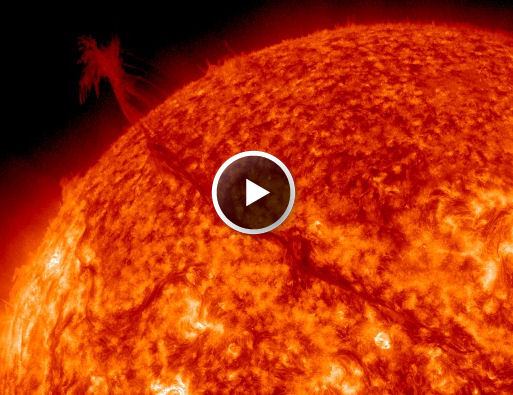
    A magnetic prominence dancing along the sun’s southeastern limb became unstable on Nov. 15th and slowly erupted. NASA’s Solar Dynamics Observatory recorded the coronal mass ejection (CME), which unfolded over a period of thirteen hours: The eruption hurled a cloud

  • Pair of M-Class flares and eruption filament

    A pair of M-Class flares took place on Tuesday morning. The first one registered M1.2 and was centered around Sunspot 1348 which is located near the northwest limb. The second event at 12:43 UTC peaked at M1.9 and was located around Sunspot 1346 in the southern

  • Venus-directed CME

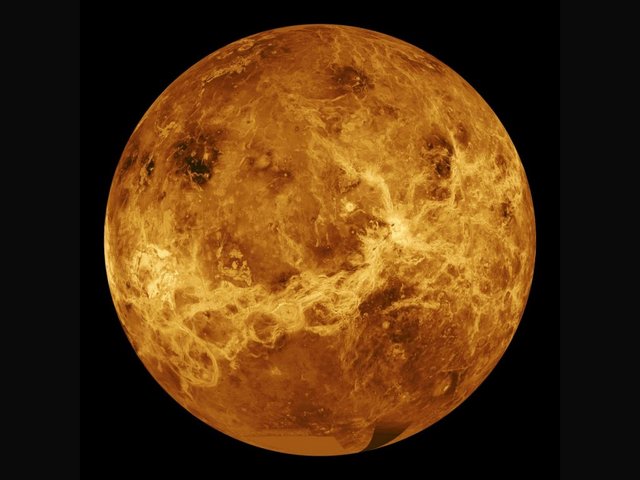
    A coronal mass ejection (CME, movie) that swept past Mercury on Nov. 13th will likely hit Venus later today. Because Venus has no global magnetic field to protect it, the impact could erode material directly from the top of the planet’s atmosphere. Venus has atmosphere

  • Huge solar filament and Mercury-directed CME

    There haven’t been any strong solar flares in days. Nevertheless, some impressive activity is underway on the sun. For one thing, an enormous wall of plasma is towering over the sun’s southeastern horizon. Huge solar filament is the biggest in a longer time period. A

  • Big sunspot starting to release X-class solar flares

    NOAA forecasters have upgraded the chance of X-class solar flares today to 20%. The source would be AR1339, one of the biggest sunspots in many years. The active region rotated over the sun’s eastern limb two days ago and now it is turning toward Earth.The Radio

  • Three M-class solar flares at northeast limb

    An M1.1 Solar Flare peaked at 15:08 UTC Monday morning and was centered around a new region located on the Northeast Limb. Stay Tuned for increasing solar activity.The second and third M-Class Flares of the day has taken place around the new region hiding on the

  • Sun blasted CME toward Mars

    A bright CME blasted off the sun on Oct. 22nd, and it appears to be heading for Mars. Analysts at the Goddard Space Weather Lab expect the cloud to reach the Red Planet on Oct. 26th (forecast track). A brief discussion of what CMEs can do to Mars follows this SOHO

  • Significant CME heading toward Mars

    A significant CME blasted off the sun today, Oct. 22nd, around 1100 UT. Analysts at the Goddard Space Weather Lab say the cloud is heading for Mars, due to hit the Red Planet on Oct. 26th.  (movie, forecast track)While looking at the latest STEREO Ahead images,

  • New sunspot record

    The official Sunspot number for Oct 21,2011 is 207. This is a new record for Solar Cycle 24. Despite the amount of Sunspots, only low level M-Class flares have taken place thus far. This could soon change. Solar activity has been moderate with low level