
The people who pay closest attention to the weather are the ones storms have already cost the most, a study of 946 students found, with one damaging storm making little difference to how much attention a student paid, but two or more making a clear one
Repeated property damage was associated with a clear rise in how psychologically important weather was to students, while one damaging event alone made little difference to the total score. In a study of 946 University of Georgia undergraduates, total weather salience was significantly higher among those reporting damage from two or more severe-weather events than among those reporting none or one, although the survey could not establish that the damage itself caused the difference.
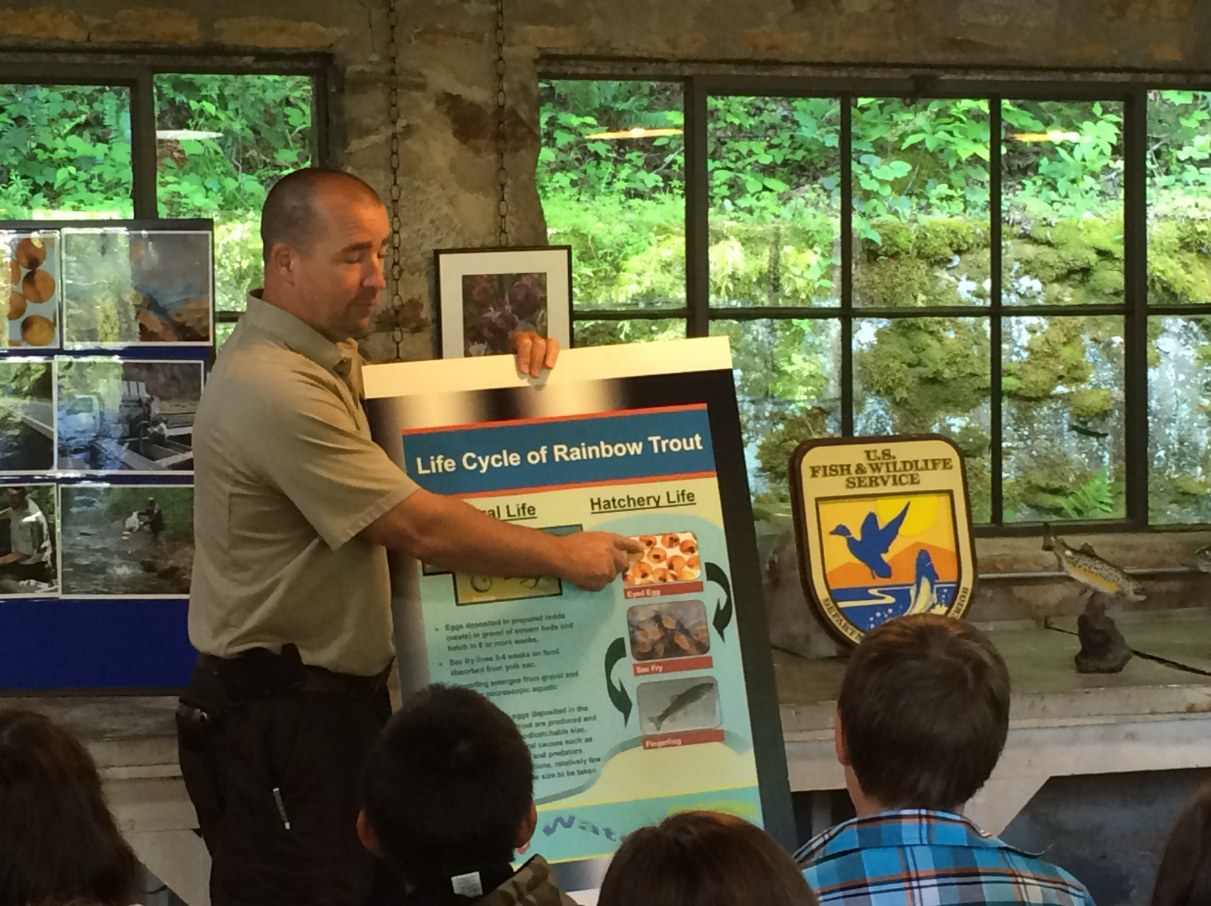
Chattahoochee Forest NFH University of Georgia Mountain Research and Education Center 16 November 2021. Credit: USFWS (public domain), via Wikimedia Commons.
Alan E. Stewart developed the Weather Salience Questionnaire (WxSQ) to measure something broader than whether a person occasionally checks a forecast. Weather salience describes the psychological importance people attach to weather and climate, including how closely they seek information, notice conditions around them, respond emotionally to weather and allow it to affect daily activities.
The 2006 study expanded Stewart’s earlier work into a sample of 946 University of Georgia undergraduates. The questionnaire had been refined to 29 items across seven dimensions: seeking weather information, weather-related mood effects, directly sensing and observing atmospheric conditions, attachment to particular kinds of weather, desire for weather variety, holiday-related weather interest and effects on daily life.

The participants included 283 men and 663 women ranging from 17 to 46 years old, with a mean age of 19.2 years. Eighty-six percent were identified in the paper as Caucasian American. Students completed the questionnaire online in exchange for course credit during three data-collection periods between April 2004 and October 2005.
One of those periods coincided with unusually active weather around Athens. Stewart noted that the September–October 2004 collection took place while the remnants of hurricanes Frances, Ivan and Jeanne brought torrential rain, tropical-storm-force winds and thunderstorms to the area, including several small, short-lived tornadoes.
The part of the study behind the repeated-damage finding came from additional questions about severe weather. Participants reported whether they or members of their families had sustained property damage or losses from floods, hurricanes, winter storms, thunderstorms or tornadoes. Stewart then grouped respondents by the number of damaging-weather experiences they reported.
The paper reports 230 respondents with no damaging event, 228 with one, 283 with two, 134 with three and 62 with four. Those groups comprise 937 of the 946 participants. Thunderstorms and winter storms were the most frequently reported causes of damage among students with one to four experiences, while hurricanes and tornadoes accounted for larger proportions among those reporting three or four events.

The clearest result concerned the total WxSQ score. Total weather salience differed significantly across the five damage-experience groups, F(4, 931) = 10.25, p < .0001. Students reporting damage from two or more events had significantly higher total weather salience than students reporting no damaging event or only one, with all of those comparisons below p = .0028.
The increase continued among students with greater numbers of reported experiences. Those reporting three or more damaging events had significantly higher total salience than respondents reporting two or fewer, with all comparisons below p = .012. Stewart characterized the pattern as an additive relationship between repeated damaging-weather experiences and weather salience.
The result was not identical across individual parts of the questionnaire. Weather-information salience differed significantly across damage groups, F(4, 931) = 10.09, p < .0001. Students reporting two damaging events scored higher on information salience than those reporting none, while students reporting three or four scored higher than respondents reporting one or two.
Directly sensing and observing weather followed a different pattern. Students reporting one or more damaging-weather experiences scored higher than those reporting none, but the study did not find a significant increase between one and two events. Students reporting three or four events then scored higher than those reporting no, one or two events. The two-event threshold in the headline therefore maps most cleanly to total weather salience rather than to every component of weather attention.
The study did not measure how much money respondents had lost or how severe each damaging event had been. Stewart explicitly described the property-damage questions as coarse because participants were asked whether damage had occurred, not the amount of damage or the physical severity of the weather that caused it.
The design also cannot establish that repeated losses caused people to become more weather-attentive. It compared people with different histories at one point in time rather than measuring the same people before and after damaging events. Differences in prior interest, exposure, memory or other characteristics could also contribute to the association.
Stewart published a peer-reviewed treatment of weather salience in the Bulletin of the American Meteorological Society in 2009 using the same 946-undergraduate convenience sample. The 29-item WxSQ had an internal-consistency coefficient of 0.83 and a test-retest reliability coefficient of 0.91. Weather salience was also related to owning and using a thermometer and to correctly distinguishing between weather watches and warnings.
The 2009 analysis also found differences in weather salience between students who had and had not experienced weather-related property damage and between those who had and had not evacuated because of a hurricane. Stewart nevertheless identified the undergraduate sample as a major limitation and called for research across more diverse ages, socioeconomic groups, regions and climates.
A nationwide study followed in 2012. Stewart, Jeffrey K. Lazo, Rebecca E. Morss and Julie L. Demuth analyzed data from 1 465 adults across the United States and confirmed the measurement structure of the WxSQ while also developing a seven-item short form.
Higher weather salience in the national sample was associated with seeking forecasts more frequently, checking weather information during more parts of the day, using forecasts for daily planning, seeking information over wider geographic areas and using precipitation and temperature forecasts. Weather salience was also positively associated with confidence in National Weather Service forecasts and with the importance respondents assigned to those forecasts.

The national results broadened the evidence that weather salience is connected with how people use weather information, but they did not reproduce the 2006 damage-count analysis as a test of a universal two-event threshold. The finding that total salience separated after two or more damaging experiences therefore remains a result from the University of Georgia undergraduate sample rather than a general rule for the public.
The original study leaves a question that a cross-sectional survey cannot answer: whether repeated damaging events change a person’s weather salience over time. Establishing that would require following people before and after severe-weather experiences and measuring changes within the same individuals rather than comparing groups with different histories.
References:
1 Stewart, A. E. (2006). Assessing the human experience of weather and climate: A further examination of weather salience. Preprints, AMS Forum: Environmental Risk and Impacts on Society: Successes and Challenges, Paper 1.6. American Meteorological Society. https://ams.confex.com/ams/pdfpapers/101916.pdf
2 Stewart, A. E. (2009). Minding the weather: The measurement of weather salience. Bulletin of the American Meteorological Society, 90(12), 1833–1842. DOI: 10.1175/2009BAMS2794.1
3 Stewart, A. E., Lazo, J. K., Morss, R. E., & Demuth, J. L. (2012). The relationship of weather salience with the perceptions and uses of weather information in a nationwide sample of the United States. Weather, Climate, and Society, 4(3), 172–189. DOI: 10.1175/WCAS-D-11-00033.1

I’m a science journalist and researcher at The Watchers, contributing to the Epicenter edition, where I cover peer-reviewed scientific research and emerging discoveries across Earth and space sciences. With a background in astronomy and a passion for environmental science, I’ve worked in shark and coral conservation in Fiji, conducting reef and shark-behavior research, contributing to mangrove restoration, and earning PADI Open Water and Coral Reef Certifications. I bring a blend of scientific rigor and storytelling to illuminate the discoveries shaping our planet and beyond.
Published in the last 24 hours
- A dam above Los Angeles collapsed just before midnight on March 12, 1928, and the flood killed more than 400 people, hours after the engineer who built it had spent two hours looking at a new leak and decided there was no danger Epicenter
- In 1903, 17 coal miners in Frank, Alberta, dug their own way out of a mountain after a rockslide sealed the mine, and came up 13 hours later to find part of their town buried Epicenter
- Brownsville, Texas, on the Mexican border, had not seen measurable snow since 1895, until it fell on Christmas Eve 2004 Epicenter
- China's giant sinkholes shelter endangered Magnolia but leave isolated populations genetically vulnerable Epicenter
