
In 1927, Louisiana dynamited a Mississippi River levee to save New Orleans, flooding the homes of about 10,000 people downstream, and the city turned out never to need it
Louisiana authorities began dynamiting the Mississippi River levee at Caernarvon on April 29, 1927, evacuating about 10 000 residents of St. Bernard and Plaquemines parishes so floodwater could be diverted away from New Orleans. The breach lowered the river at the city by about 0.15 m (0.5 feet), but a later natural levee breach relieved the pressure anyway, leaving the destruction downstream as a sacrifice that historical accounts later concluded had been unnecessary.
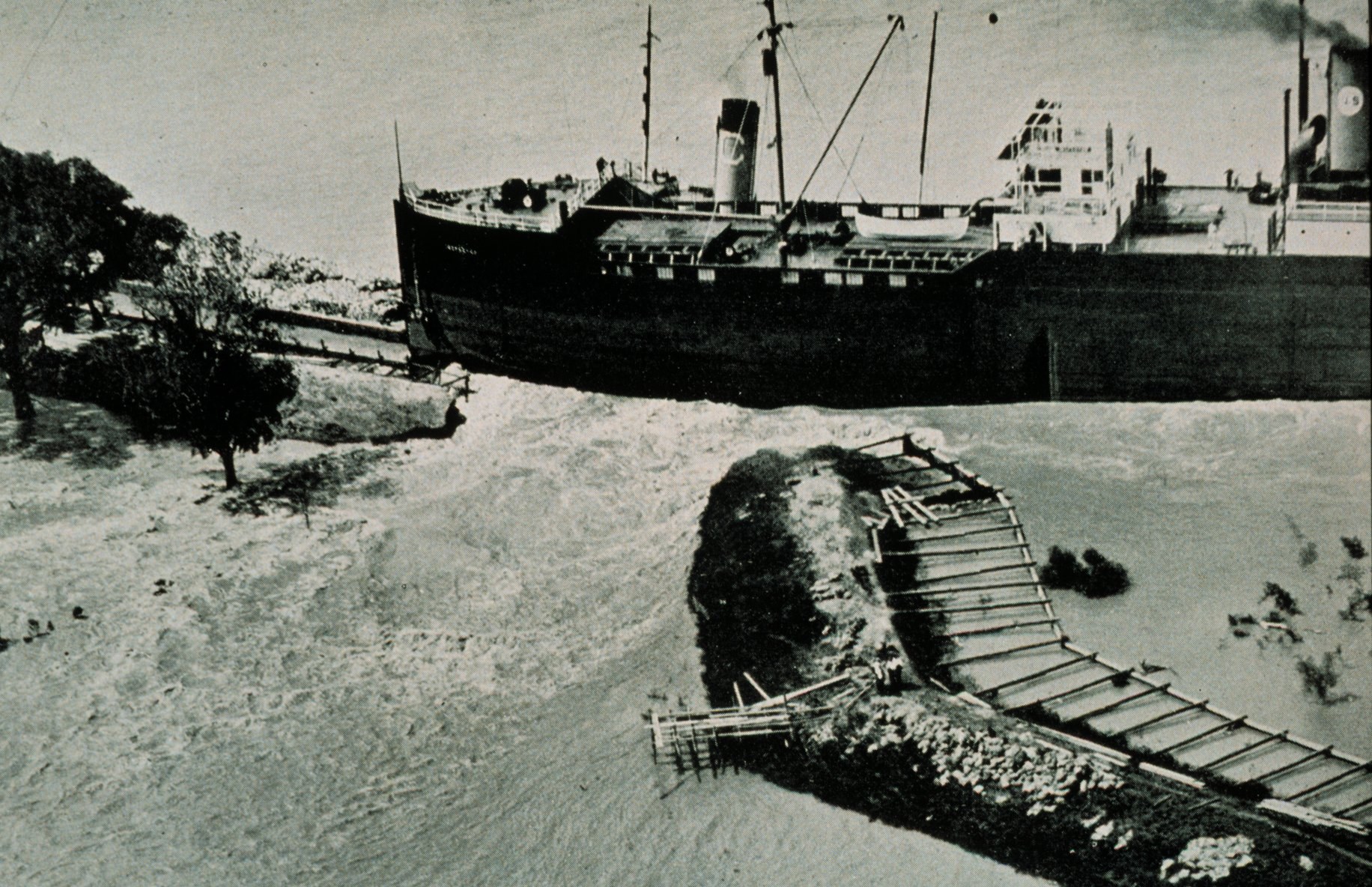
1927 Mississippi Flood Junior Louisiana. Credit: Archival Photography by Steve Nicklas, NOS, NGS (public domain), via Wikimedia Commons.
By April 25, the Mississippi River stood at 6.40 m (21.00 feet) at New Orleans while the main flood crest was still approaching from upstream. The river threat followed months of exceptional rainfall across the basin. New Orleans had already received about 283 mm (11.16 inches) of rain in February, compared with a monthly average of about 112 mm (4.4 inches), and more than 356 mm (14 inches) fell during the April 14–15 storm.
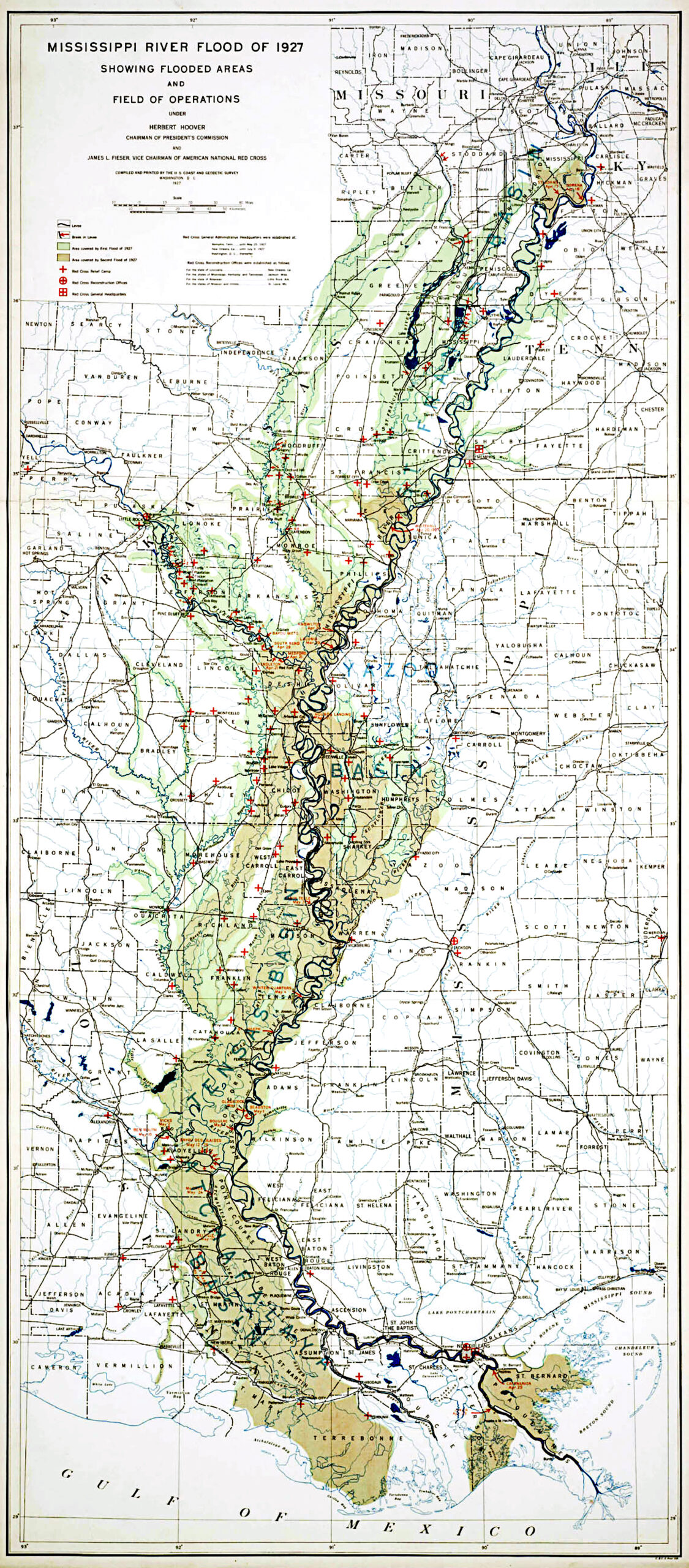
The April rainfall overwhelmed the drainage system in New Orleans while the river levees prevented the accumulated rainwater from draining toward the Mississippi. At the same time, floodwater generated farther upstream was moving south through a river system already under sustained pressure.
State officials believed the levees protecting New Orleans could fail. A deliberate opening below the city would give part of the Mississippi another route toward the Gulf and lower the stage at New Orleans, while officials feared that an uncontrolled break in a more dangerous location could inundate the city. Despite strong objections from residents downstream, Governor O. H. Simpson and his advisers accepted a request from New Orleans civic leaders to breach the levee at Caernarvon.
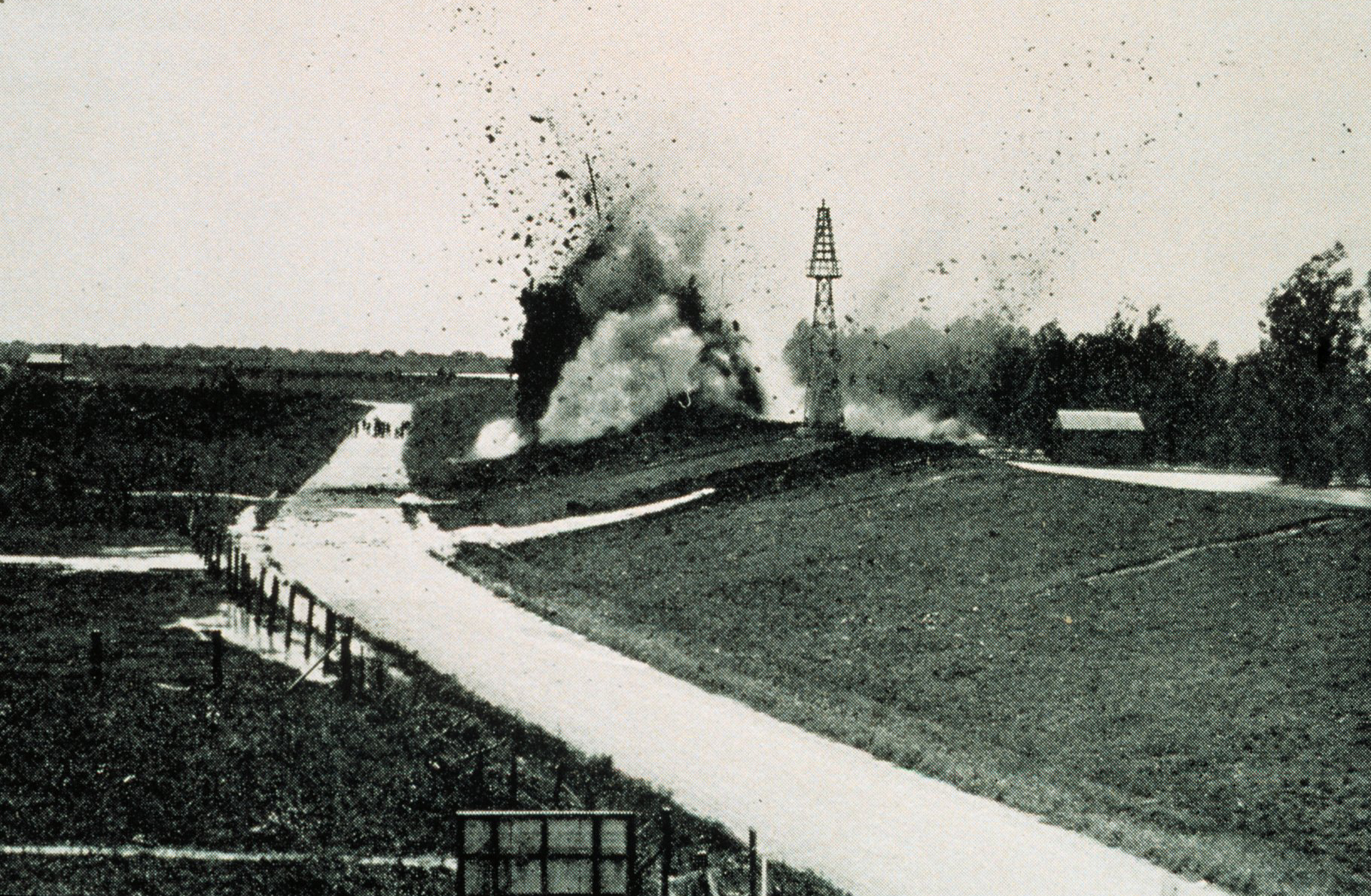
The U.S. Army Corps of Engineers did not conduct the demolition. An official Corps history records that Secretary of War Dwight Davis told Louisiana’s governor that he would not oppose destruction of the Caernarvon levee provided the Chief of Engineers and Mississippi River Commission did not object. Chief of Engineers Maj. Gen. Edgar Jadwin and the commission subsequently withheld their objections, but Jadwin specified that the Corps would neither participate in the demolition nor issue a permit for the breach.
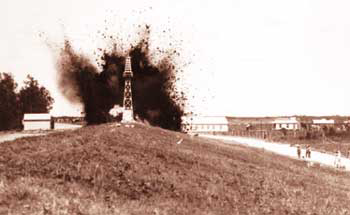
The first dynamite charges detonated at Caernarvon on April 29 and initially opened only a small flow through the levee. Two days later, diver Ted Herbert placed underwater charges that fully opened the crevasse, according to the Corps history. The Louisiana Endowment for the Humanities’ 64 Parishes account describes the work as a multi-day operation in which about 35 tonnes (39 short tons) of dynamite were eventually used to enlarge the channel.
The resulting opening discharged about 7 080 m3/s (250 000 cubic feet/s) from the Mississippi. The figure refers to the flow through the enlarged channel, while the 39-short-ton figure describes dynamite used over the broader operation rather than a single explosion on April 29.
For two days before the dynamiting began, the National Guard and major New Orleans retailers sent truck convoys into St. Bernard and Plaquemines parishes to evacuate about 10 000 residents whose homes and livelihoods were expected to be inundated after the levee was opened. The figure is the reported number of residents evacuated from the affected area, not a count of 10 000 individual houses.
Most evacuees stayed with relatives. Residents without somewhere else to go were brought to a warehouse in New Orleans, where the temporary accommodation was segregated by race, with white evacuees housed on one floor and Black evacuees on another.
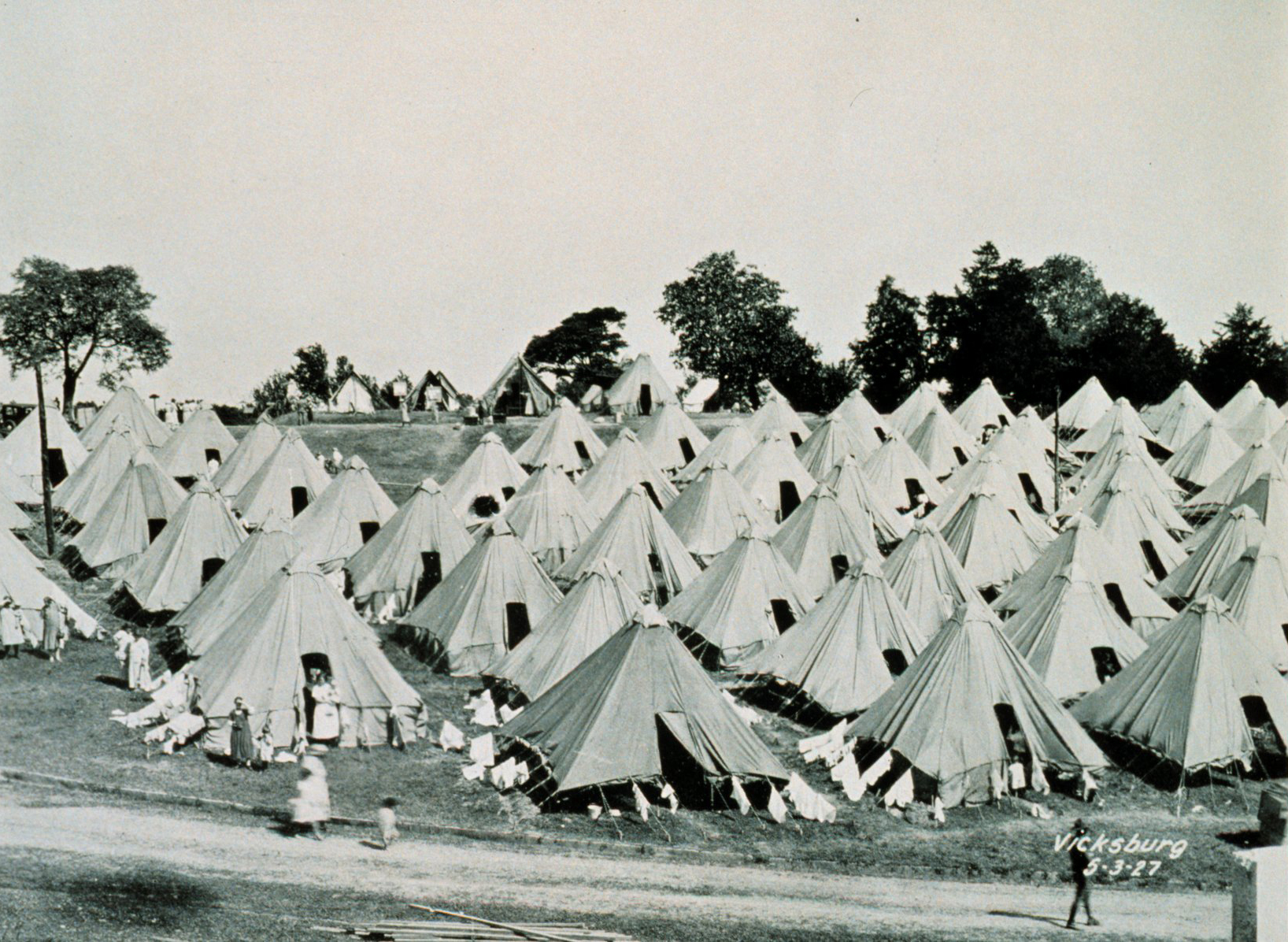
New Orleans financial leaders had promised compensation for property losses caused by the deliberate flooding. They initially expected claims against the compensation fund to total about USD 2 million to USD 6 million, but claims ultimately reached about USD 35 million.
The payments fell far short of the losses claimed. According to 64 Parishes, people who received compensation obtained an average of only about USD 274, while thousands received nothing. Claimants also had to navigate a complicated compensation system under which claims were divided into categories and partial payments were not permitted.
The artificial crevasse nevertheless had a measurable hydraulic effect. The National Weather Service reports that dynamiting the levee lowered the river at New Orleans by about 0.15 m (0.5 feet) before the flood crest passed the city. NWS records the river at 6.40 m (21.00 feet) on April 25 and a later crest of about 6.31 m (20.7 feet) on May 15.
That reduction is separate from the historical judgment about whether the sacrifice was ultimately necessary. A later natural levee breach relieved additional pressure on New Orleans. The Louisiana Endowment for the Humanities account concludes that, in hindsight, the Caernarvon blasting had been unnecessary. Authorities ordering the breach on April 29 did not know that those later failures would relieve the river before the feared inundation of New Orleans occurred.
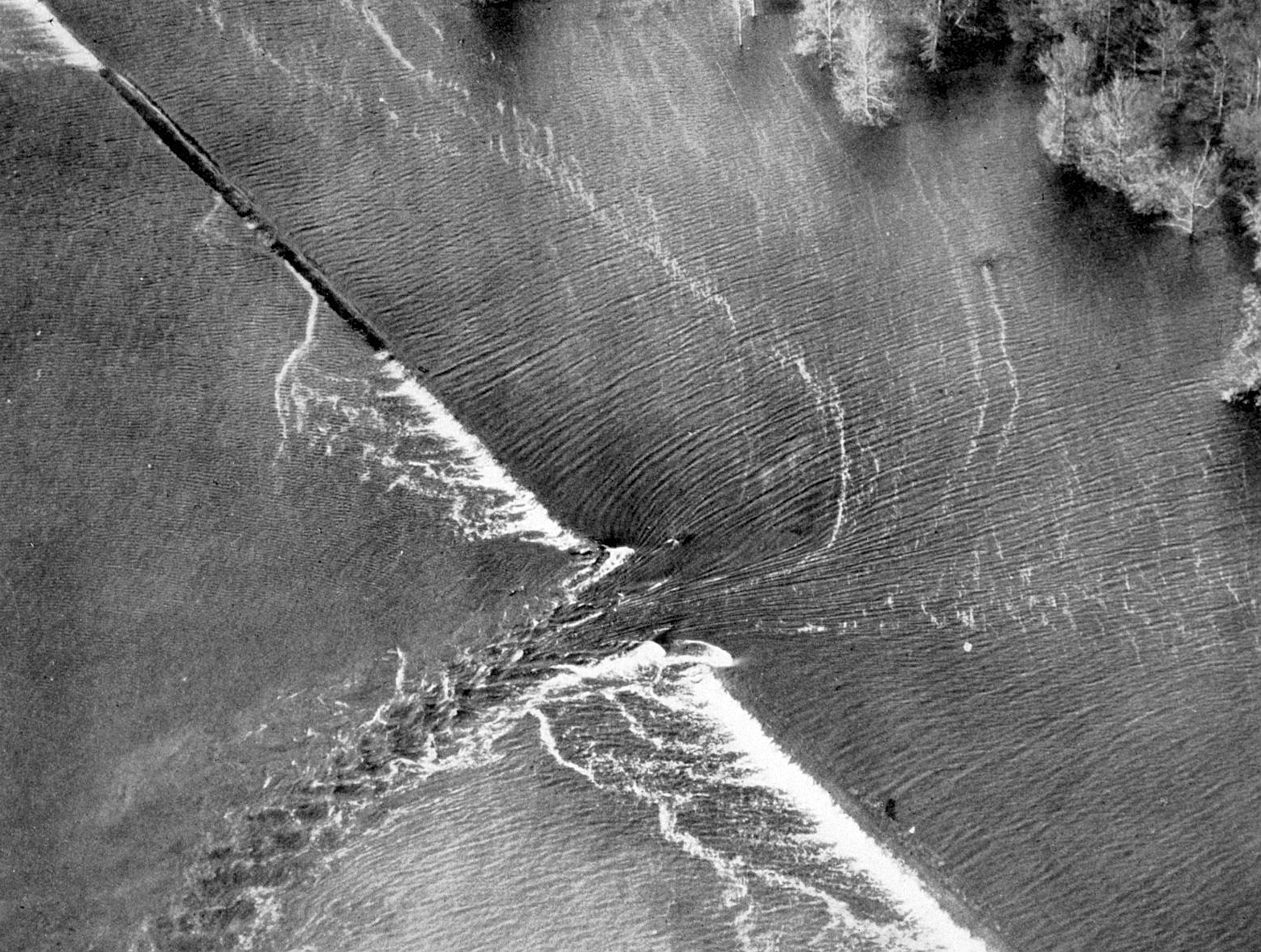
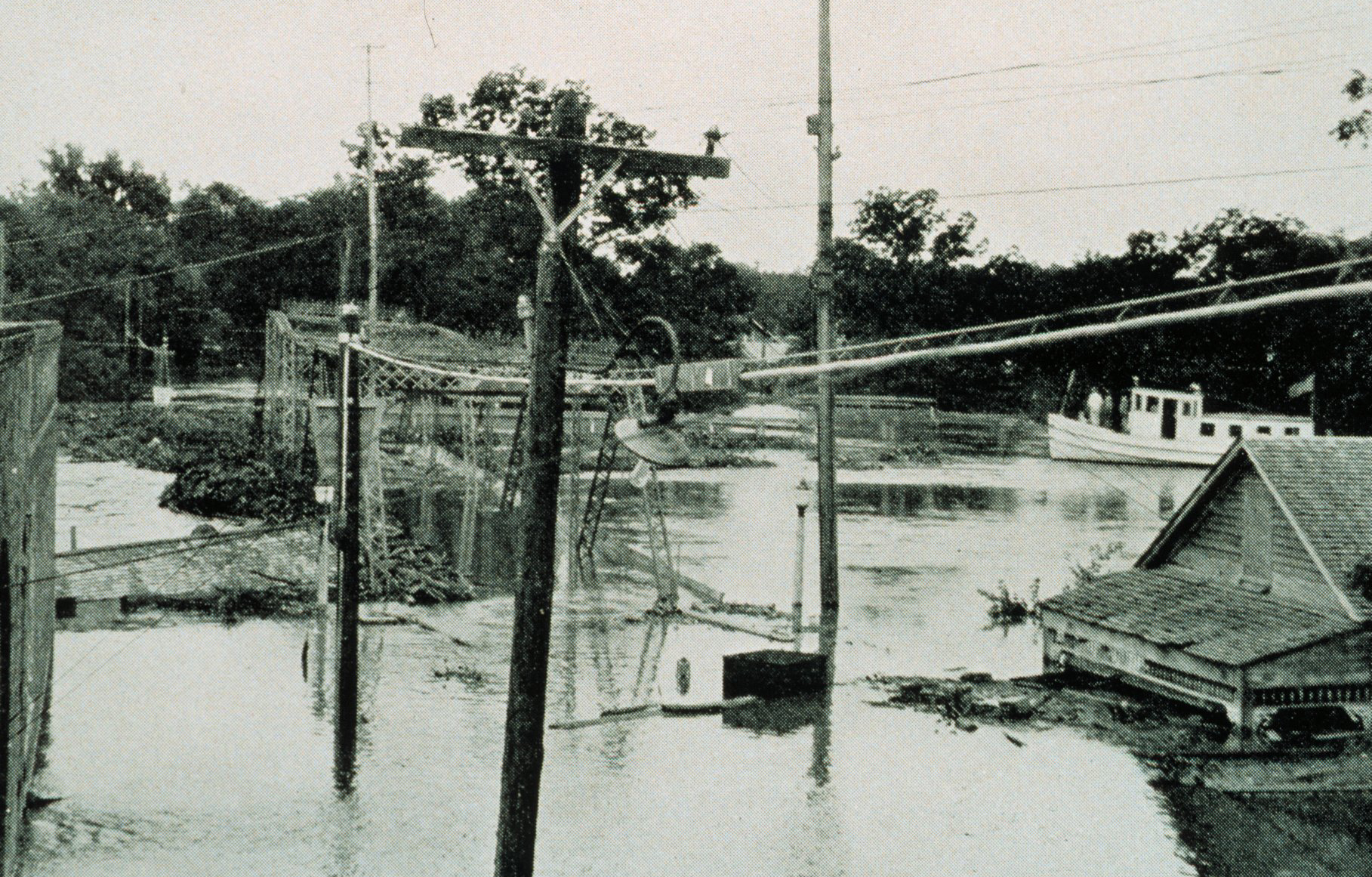
The Caernarvon evacuation represented only one part of a far larger displacement crisis across the Mississippi Valley. The Great Flood inundated about 67 300 km2 (26 000 mi2) in 170 counties and parishes across seven states and drove an estimated 931 159 people from their homes, according to the Louisiana Endowment for the Humanities. In Louisiana alone, about 25 900 km2 (10 000 mi2) across 20 parishes went underwater.
Flooding continued elsewhere in Louisiana after New Orleans escaped the feared river inundation. A major Atchafalaya River levee failure occurred at Melville on May 17, while other floodwater moved through the Bayou Teche basin and eventually reached communities including Breaux Bridge, St. Martinville, New Iberia, Jeanerette, Franklin and Morgan City. Those inundations belonged to the wider 1927 flood and were not produced by the Caernarvon artificial crevasse.

The 1927 disaster also changed federal flood-control policy. The Flood Control Act of 1928 placed the federal government in a much larger role in managing the Lower Mississippi, while the Corps of Engineers and Mississippi River Commission moved away from reliance on levees alone and developed floodways, reservoirs, spillways and other measures designed to give extreme river flows controlled routes away from vulnerable areas.
Caernarvon remains a documented case in which authorities facing a genuine flood threat intentionally transferred part of that risk from New Orleans to communities downstream. The intervention lowered the river at the city, but subsequent natural failures changed the course of the flood before New Orleans suffered the disaster officials feared, leaving the evacuation, inundation and unresolved compensation claims as consequences of a measure that proved unnecessary in hindsight.
References:
1 Great Flood of 1927 – 64 Parishes, Louisiana Endowment for the Humanities – May 13, 2011 (updated February 19, 2024)
2 Johnson, L. R. (2011). Situation Desperate: U.S. Army Engineer Disaster Relief Operations, Origins to 1950. Office of History, Headquarters, U.S. Army Corps of Engineers. U.S. Government Publishing Office
3 Top Weather Events of the 20th Century within the NWSFO New Orleans/Baton Rouge Service Area – National Weather Service New Orleans/Baton Rouge

I’m a science journalist and researcher at The Watchers, contributing to the Epicenter edition, where I cover peer-reviewed scientific research and emerging discoveries across Earth and space sciences. With a background in astronomy and a passion for environmental science, I’ve worked in shark and coral conservation in Fiji, conducting reef and shark-behavior research, contributing to mangrove restoration, and earning PADI Open Water and Coral Reef Certifications. I bring a blend of scientific rigor and storytelling to illuminate the discoveries shaping our planet and beyond.
Published in the last 24 hours
- A fish filmed 600 meters below the Pacific has a transparent head, and its eyes rotate inside it to follow prey Epicenter
- So much water builds up in the Amazon each April that it shifts Earth’s center of mass toward South America Epicenter
- Hurricane Katrina swept eight aquarium dolphins out to sea in Mississippi in 2005, and 12 days later they were found still swimming together Epicenter
- Antarctic moss began growing again after at least 1,530 years frozen in permafrost Epicenter
