
AI reveals hidden fault movements beneath the San Andreas Fault
Artificial intelligence has uncovered a hidden chapter in the behavior of California’s San Andreas Fault, revealing that silent fault movements occur more frequently than scientists realized and may influence nearby seismic activity. The study, published on June 9, 2026, in Nature Communications, reports that researchers identified 92 short-duration slow slip events beneath the Parkfield segment of the fault, including 21 that had escaped years of manual inspection.
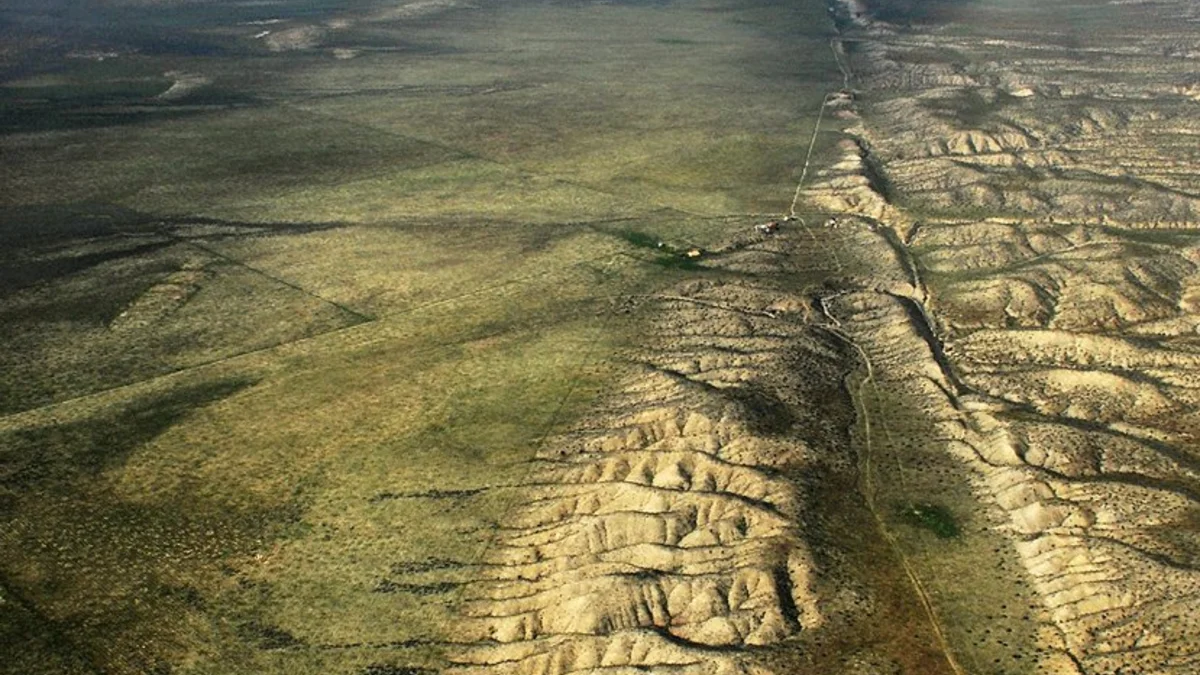
Aerial photo of San Andreas Fault looking northwest onto the Carrizo Plain with Soda Lake visible at the upper left. Credit: John Wiley
Working with one of the world’s most closely monitored fault systems, researchers from the GFZ Helmholtz Centre for Geosciences, EarthScope and Stanford University built the most comprehensive catalog yet of these elusive events. Fourteen of the newly discovered slow slip events were independently confirmed by nearby creepmeters, strengthening evidence that the signals represent genuine aseismic fault movement.
The discovery fills a long-standing observational gap between earthquakes, which release energy within seconds, and larger slow-slip episodes that can unfold over days or weeks. Instead, these newly cataloged events typically lasted 25–100 minutes, revealing a previously hidden form of fault movement that conventional monitoring methods had struggled to detect.
Parkfield has long occupied a unique place in earthquake science. The central California segment of the San Andreas Fault is one of the most heavily instrumented fault systems on Earth, making it a natural laboratory for studying how tectonic stress accumulates and is released. Despite decades of continuous monitoring, the smallest transient slip events remained buried within enormous volumes of noisy geophysical data.
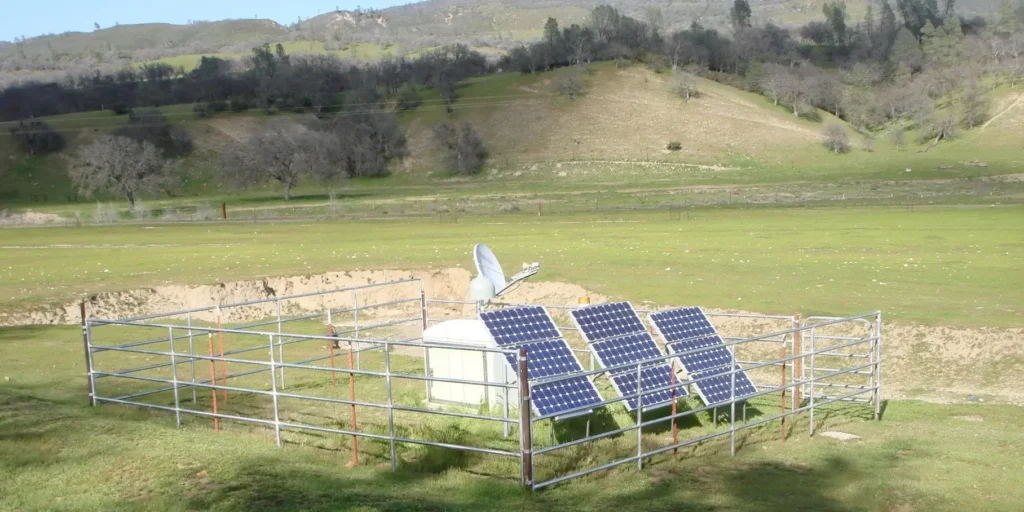
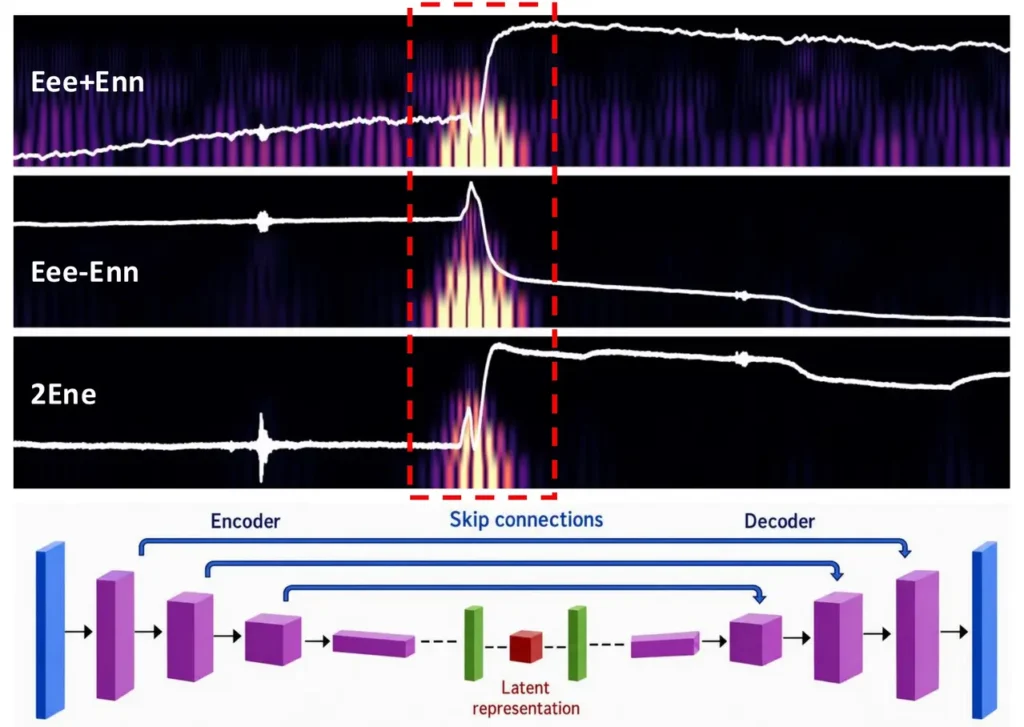
To uncover those hidden signals, the team analyzed eight years of continuous borehole strainmeter observations using an unsupervised deep-learning workflow. Instead of searching for predefined patterns, the algorithm learned to recognize recurring deformation signatures on its own, separating likely tectonic events from environmental and instrumental noise.
“Faults can move in ways that do not generate strong seismic waves and therefore escape traditional earthquake detection methods. We wanted to know whether important fault slip processes might be hidden within years of continuous deformation measurements,” said lead author Dr. Zahra Zali.
The automated workflow recovered about 90% of the slow-slip events listed in an existing manually compiled catalog while identifying 21 previously unknown events.
Fourteen of those newly recognized episodes were also recorded by nearby creepmeters, strengthening the conclusion that the signals reflected genuine aseismic fault slip rather than instrumental artifacts.
After identifying the events, the researchers calculated where the slips most likely originated. Their analysis indicates the transient deformation occurred at shallow depths, generally less than 4 km (2.4 miles), and was predominantly consistent with the right-lateral motion that characterizes the San Andreas Fault.
These quiet fault movements don’t appear to happen in isolation.
When the researchers overlaid their new slow-slip catalog with records of low-frequency earthquakes (LFEs), a clear temporal pattern emerged. LFE activity consistently increased after the occurrence of slow-slip events, with the strongest relationship observed for earthquakes occurring within 10 km (6.2 miles) of the reference strainmeter and at depths shallower than 20 km (12.4 miles). The pattern suggests that transient aseismic slip can modify stress conditions within the fault system and influence subsequent low-frequency seismic activity.
“Our results show that these slow fault movements are not isolated phenomena. They appear to be linked to changes in seismic activity, which suggests that slow slip may play an important role in how stress evolves along active faults,” said Prof. Patricia Martínez-Garzón of the GFZ Helmholtz Centre for Geosciences.
The AI-driven catalog also challenges a long-standing assumption about the physics of slow-slip events.
For years, many studies have described slow-slip events using a linear moment-duration relationship. The Parkfield observations instead point to an approximately cubic moment-duration scaling law, placing these short-duration events much closer to the scaling behavior observed for ordinary earthquakes. While the researchers note that additional observations will help better constrain the geometry of these events, the findings add new evidence that at least some forms of aseismic fault slip may follow earthquake-like physical scaling.
Without machine learning, many of these events would likely have remained hidden within years of continuous strain measurements. As geophysical monitoring networks continue to expand, researchers increasingly face datasets too large for manual analysis. The Parkfield study demonstrates how AI can sift through continuous observations, identify subtle deformation patterns and reveal tectonic behavior that conventional workflows can miss.
The researchers stress that the newly detected events are not earthquakes and should not be interpreted as evidence that a damaging earthquake is imminent. Instead, they provide a clearer view of how stress is redistributed between major earthquakes. By illuminating this previously hidden part of the fault-slip spectrum, the work offers scientists another tool for understanding how active faults evolve through time and how silent deformation fits into the broader earthquake cycle.
References:
1 Zali, Z., Martínez-Garzón, P., Mencin, D. et al. Slow slip modulates low-frequency seismicity on the Parkfield segment of the San Andreas Fault. Nat Commun 17, 5137 (2026). https://doi.org/10.1038/s41467-026-74095-9
2 San Andreas Fault: Hidden movements revealed by artificial intelligence – GFZ – July 9, 2026

I’m a science journalist and researcher at The Watchers, contributing to the Epicenter edition, where I cover peer-reviewed scientific research and emerging discoveries across Earth and space sciences. With a background in astronomy and a passion for environmental science, I’ve worked in shark and coral conservation in Fiji, conducting reef and shark-behavior research, contributing to mangrove restoration, and earning PADI Open Water and Coral Reef Certifications. I bring a blend of scientific rigor and storytelling to illuminate the discoveries shaping our planet and beyond.
Published in the last 24 hours
- In the winter of 1811–12, earthquakes near New Madrid, Missouri, shook so hard that witnesses saw the Mississippi River flow backward, and the shaking left a brand-new lake in Tennessee Epicenter
- In 2019, the Ronald Reagan Presidential Library hired hundreds of goats to eat 13 acres of brush around it; months later the Easy Fire surrounded the library, and the fire break the goats left behind slowed the flames before they reached the building Epicenter
- A fish filmed 600 meters below the Pacific has a transparent head, and its eyes rotate inside it to follow prey Epicenter
- In 1927, Louisiana dynamited a Mississippi River levee to save New Orleans, flooding the homes of about 10,000 people downstream, and the city turned out never to need it Epicenter
