• Restless Region 1515 just produced an M-class solar flare again

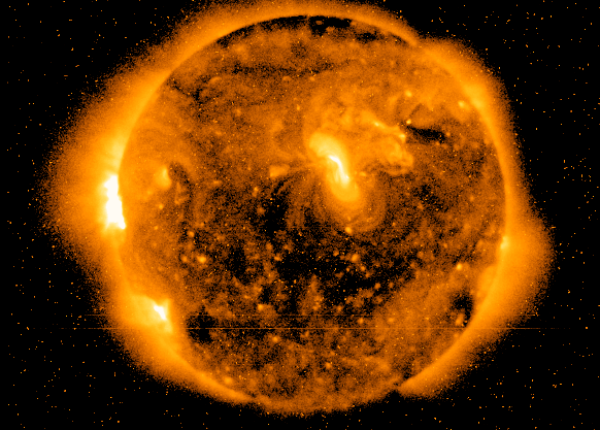
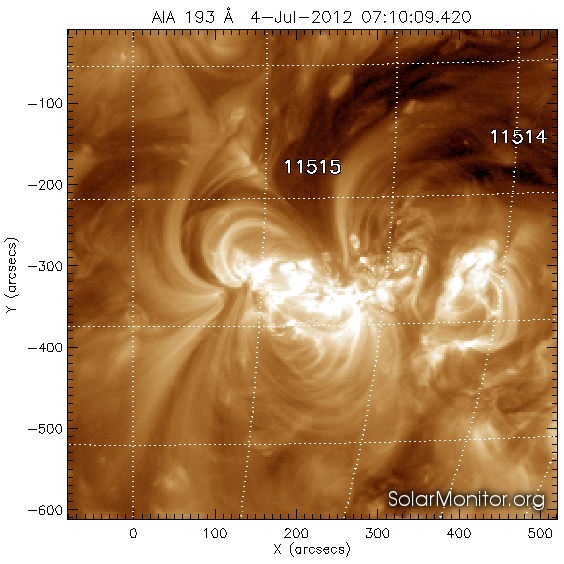
    After series of C-class flares, for last couple of hours, Region 1515 just produced another M-class solar flare. On July 4, 2012 an M2 solar flare peaked at 04:37 UTC. The event started at 04:37 and ended at 04:45 UTC.A Type IV radio emission was measuered.Type IV

  • Moderate to high solar activity for beginning of July

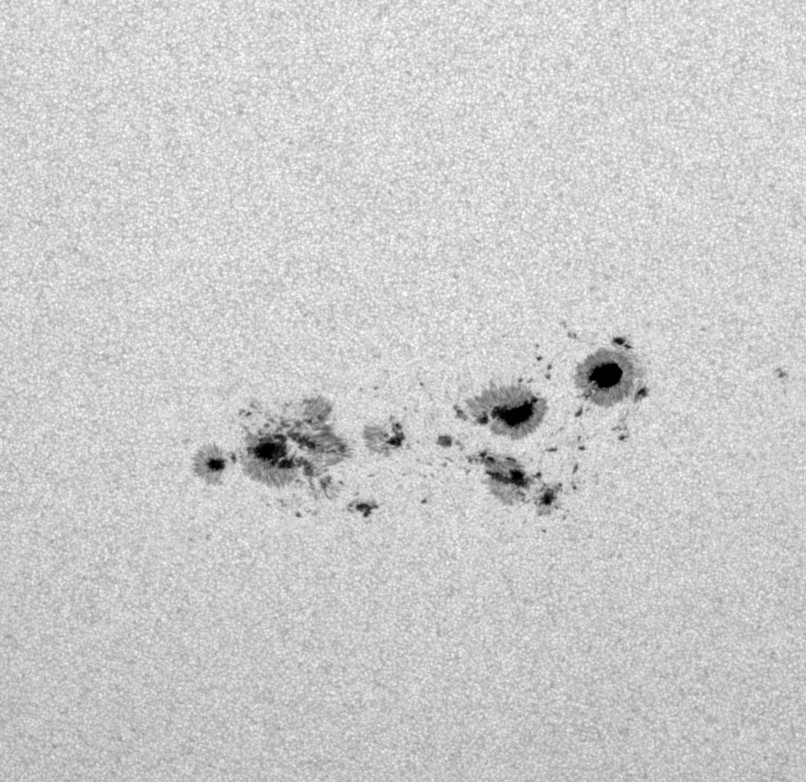
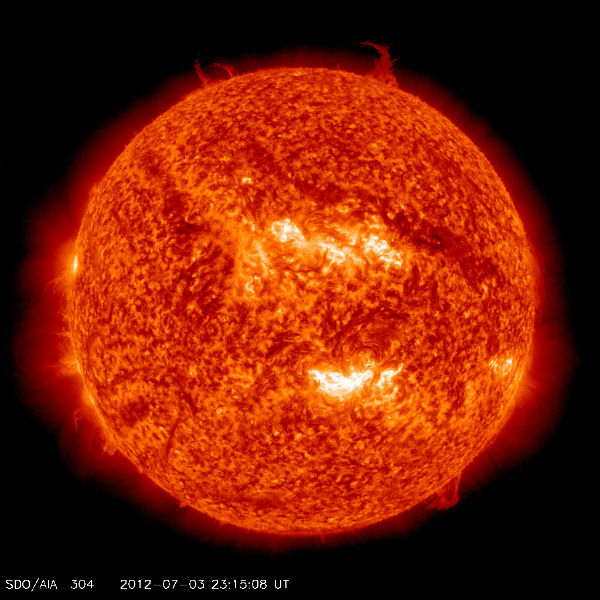
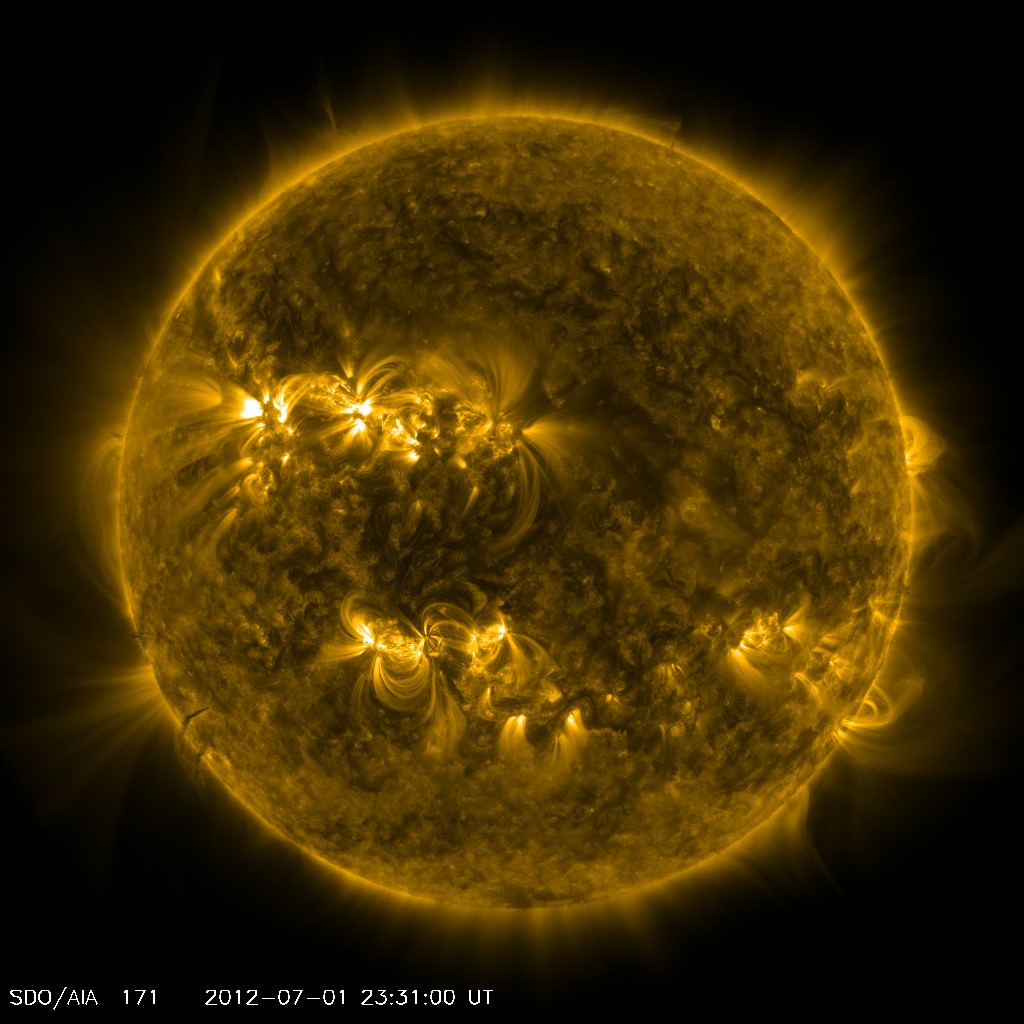
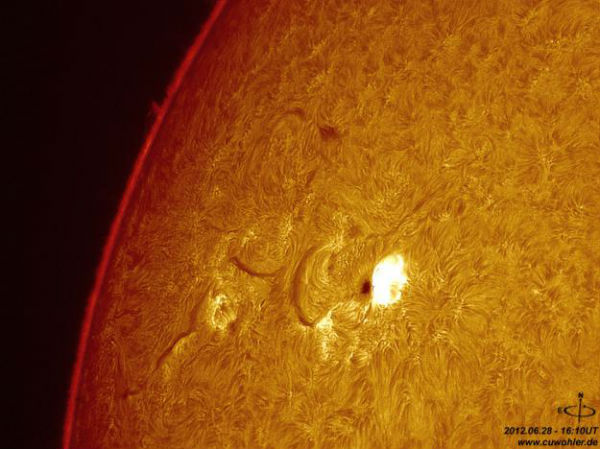
    Sprawling Sunspot Cluster 1515 is now directly facing the Earth. This region is responsible for generating at least 5 M-Class solar flares within the past few days, including M5.6 and M3.8 events on Monday. So far on Tuesday, numerous C-Class flares have been detected

  • Another M-class solar flare peaked at 20:07 UTC – M3.8

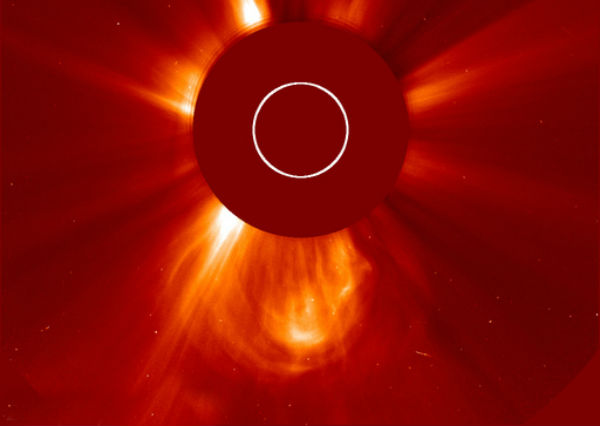
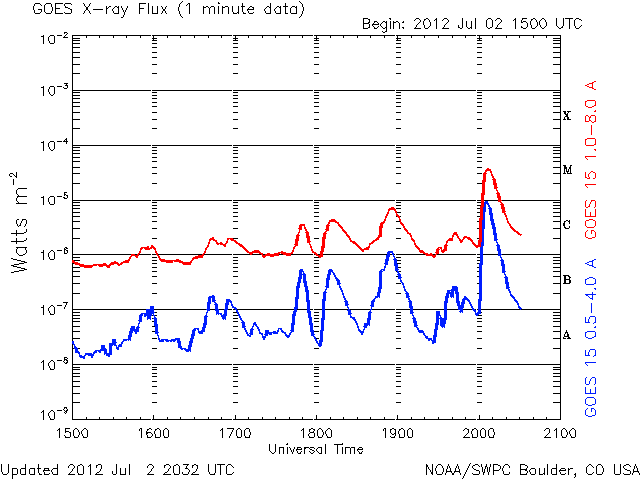
    Sunspot 1515 just produced another M-class solar flare. The event started 19:59, peaked 20:07 at M3.8 and ended at 20:13 UTC, July 2, 2012. This large Sunspot cluster could generate a major solar flare within the next couple of days.This is a second M-class solar

  • Solar flare reaching M5.6 took place at 10:52 UTC

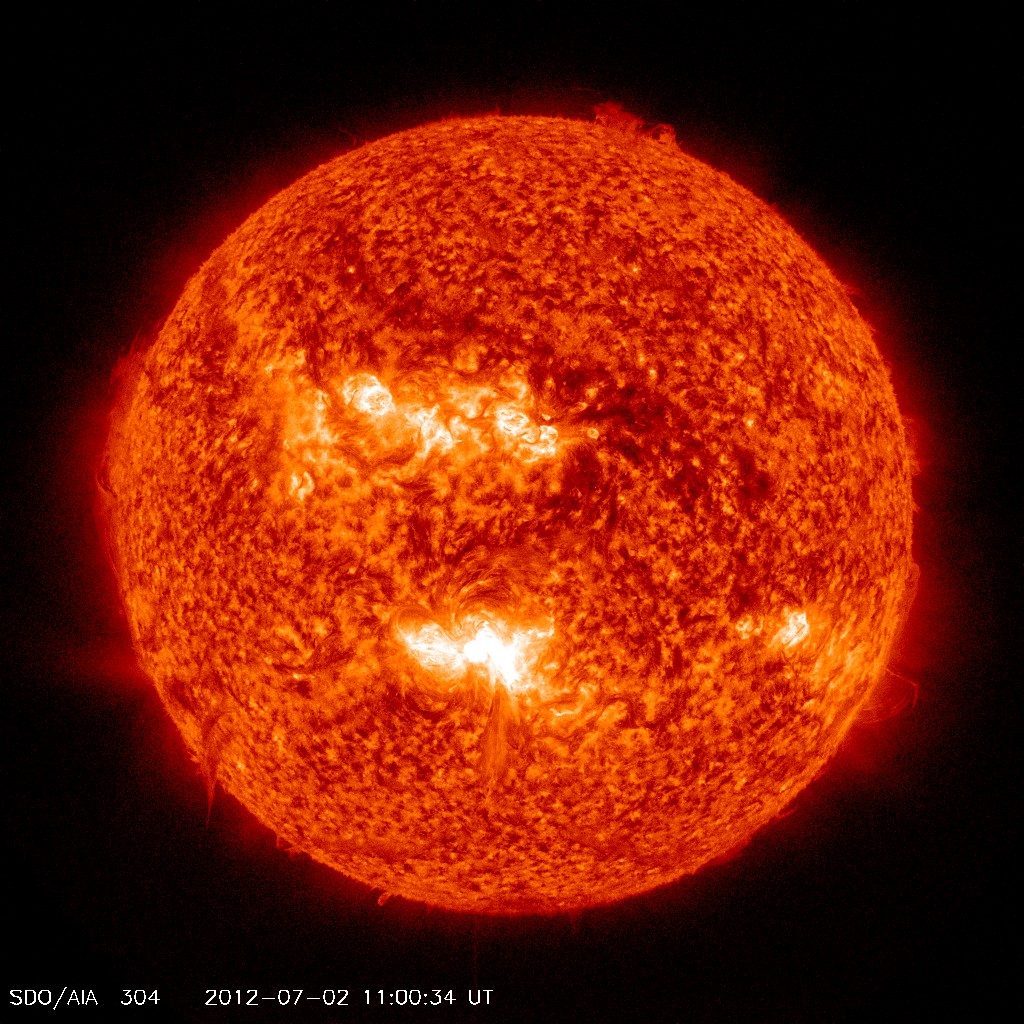
    An M-class solar flare reaching M5.6 peaked at 10:52 UTC on July 2, 2012 from Region 1515. An R2 Moderate radio blackout was reported. This event generated a 10cm Radio Burst (TenFlare) along with a Type II Sweep Frequency Event. This region is in a great location for

  • M2.8 solar flare peaked at 19:18 UTC

    Region 1513 (N16E03) produced an M2.8 solar flare on July 01, 2012 at 19:18 UTC.Region 1513 did not show any significant growth or decay during the period of June 31 – July 1. Region 1515 (S17E17) continued to grow in areal coverage and is now 850 millionths.

  • A moderate M1.6 solar flare around Sunspot 1513

    Sunspot AR1513 is crackling with impulsive M-class solar flares. A moderate solar flare reaching M1.6 took place at 18:32 UTC Saturday afternoon. The flare was centered around Sunspot 1513. This is second M-class solar flare today.The geomagnetic field is

  • Sunspot 1513 generated M1.0 solar flare

    Sunspot 1513 produced a quick M1.0 solar flare at 12:52 UTC on June 30. Sunspots 1513 and 1515 have Beta-Gamma magnetic configurations that harbors energy for strong solar flares. NOAA forecasters estimate a 40% chance of continued M-flares during the next 24 hours