• Comparing Sunspot 1339

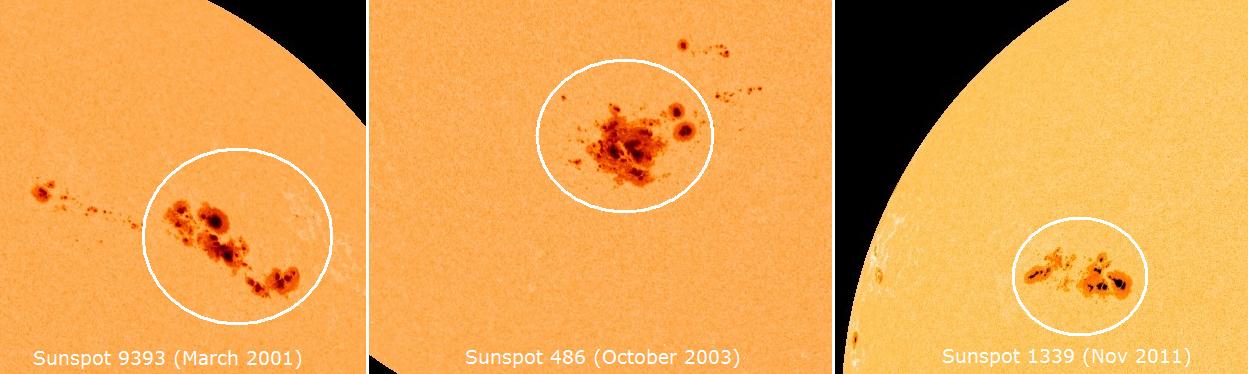
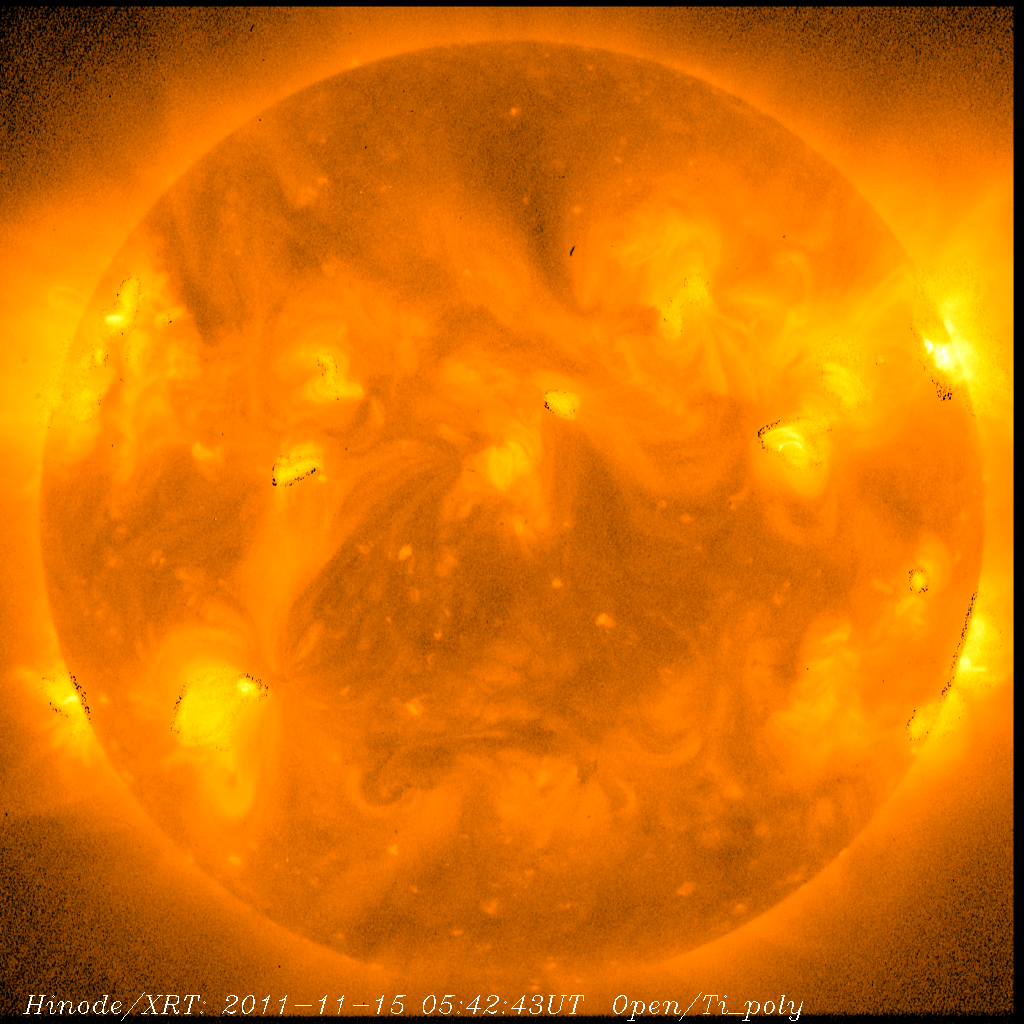
    Sunspot 1339 is indeed one of the largest Sunspot groups in years. Here is a size comparison of 1339 vs. a couple of the largest Sunspots from Cycle 23. Sunspot 9393 was responsible for the second largest Solar Flare in recorded history (X20) back in April 2001.

  • Sun’s Active Region 1339 facing Earth

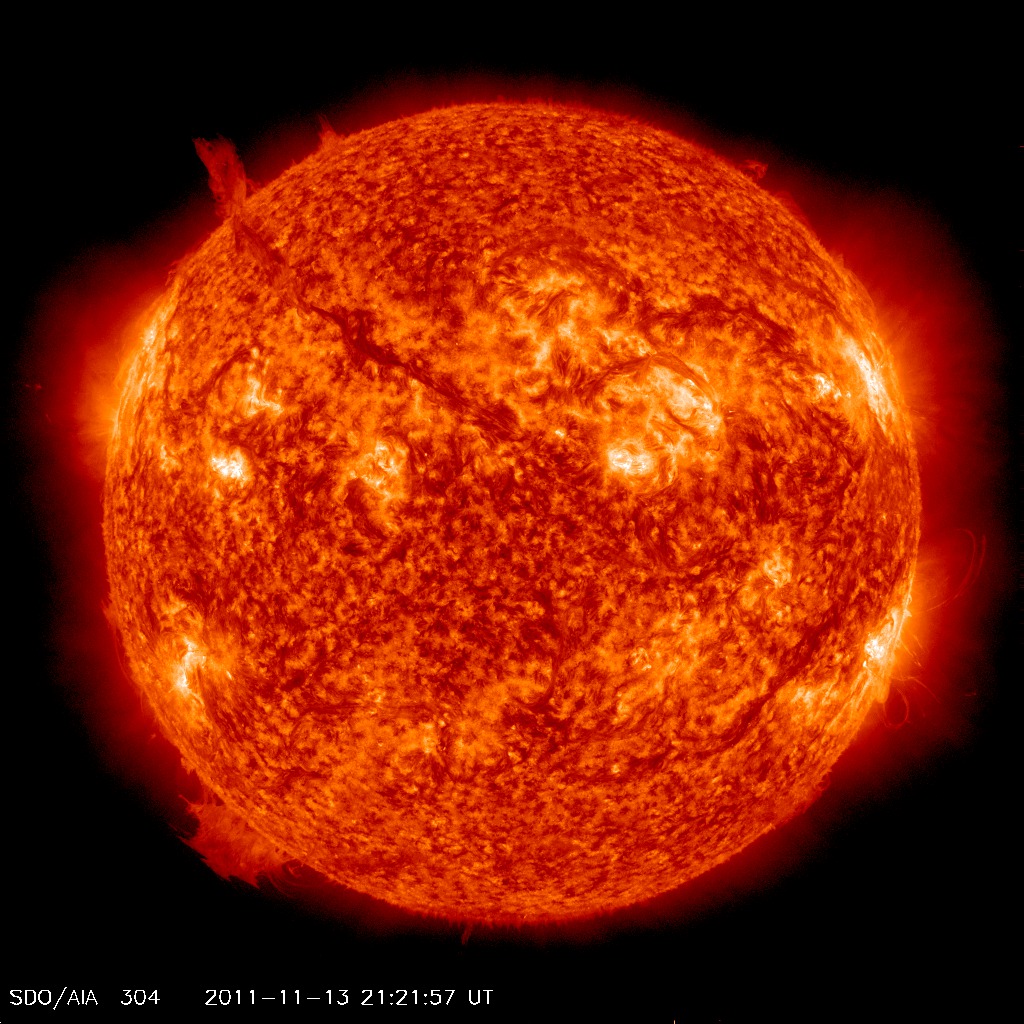
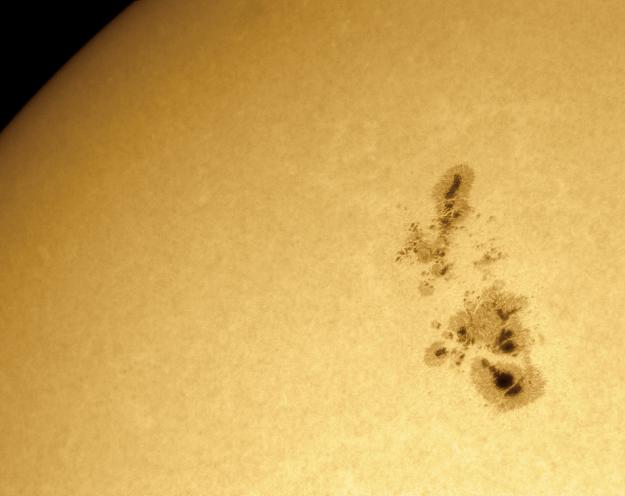
    If you look in sun direction in time of sunset you could see the largest sunspots since 2005 . Active region 1339 is now visible from the Earth. These huge sunspots have been slowly rotating to face the Earth since November 3, 2011. The largest of these sunspots,

  • A Guide for Solar Watchers – Part 1

    A Guide for Solar Watchers pt.1 – Sun basics

    For all those who don't quit understand what is happening with our Sun and what is space weather we decided to make A Guide for Solar Watchers. We will start with solar basics – structure, characteristics, solar

  • Big sunspot starting to release X-class solar flares

    NOAA forecasters have upgraded the chance of X-class solar flares today to 20%. The source would be AR1339, one of the biggest sunspots in many years. The active region rotated over the sun’s eastern limb two days ago and now it is turning toward Earth.The Radio

  • Large sunspot group harbors energy for M-class solar flares

    A large sunspot group is rotating over the sun’s northeastern limb, possibly signaling an uptick in solar activity. Measuring some 40,000 km wide and at least twice that in length, the behemoth active region is an easy target for backyard solar

  • Minor geomagnetic storm subsiding

    The solar wind was at increased levels Tuesday morning and combined with a south tilting Bz, it stirred up a minor geomagnetic storm at high latitudes. Things have since returned to quieter levels.Solar activity increased to moderate levels Monday with three M-Class

  • Three M-class solar flares at northeast limb

    An M1.1 Solar Flare peaked at 15:08 UTC Monday morning and was centered around a new region located on the Northeast Limb. Stay Tuned for increasing solar activity.The second and third M-Class Flares of the day has taken place around the new region hiding on the

  • Solar cycle 24 on its way

    Science has only just begun to understand how cyclical changes in the Sun effect Earth’s weather and climate. But the more technological human society grows, the more vulnerable we may become.Activity on the Sun is due to reach its peak around early 2014, so expect

  • Subsiding geomagnetic storm

    The intense geomagnetic storm of Oct. 24-25 (described below) has subsided and US skies are returning to normal. If you missed the show, don’t worry. The Northern Lights will be back. For much of the past few years, the sun has been in a quiet state; but solar activity