• Spinning comet rapidly slowed down during close approach to Earth

    Astronomers at Lowell Observatory observed comet 41P/Tuttle-Giacobini-Kresak last spring and noticed that the speed of its rotation was quickly slowing down. A research team led by David Schleicher studied the comet while it was closer to the Earth than it has ever…
  • Volcanic eruptions linked to social unrest in Ancient Egypt

    Around 245 BCE Ptolemy III, ruler of the Ptolemaic Kingdom in Egypt, made a decision that still puzzles many historians: After pursuing a successful military campaign against the kingdom's nemesis, the Seleucid Empire, centered mainly in present-day Syria and…

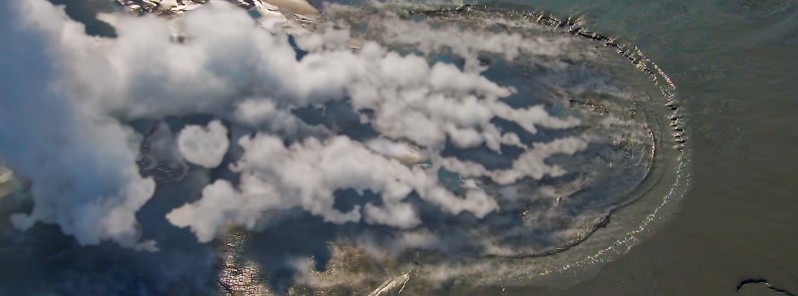
  • Scientists determine source of world’s largest mud eruption

    On May 29, 2006, mud started erupting from several sites on the Indonesian island of Java. Boiling mud, water, rocks and gas poured from newly-created vents in the ground, burying entire towns and compelling many Indonesians to flee. By September 2006, the largest…

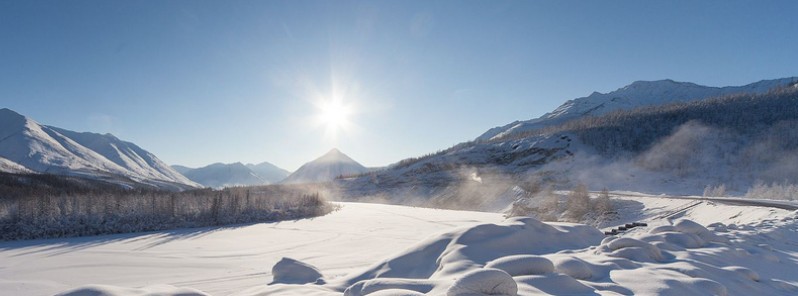
  • Winter cold extremes linked to high-altitude polar vortex weakening

    Over the last decades, the stratospheric polar vortex has shifted towards more frequent weak states which can explain Eurasian cooling trends in boreal winter in the era of Arctic amplification. When the strong winds that circle the Arctic slacken, cold polar air…

  • Giant tsunami reshaped California coastline

    New evidence suggests a gigantic tsunami hit the California coast 900 years ago, removing three to five times more sand than any El Niño storm in history. Since large tsunamis hit the northwestern US every 300 to 500 years and the last occurred in January…

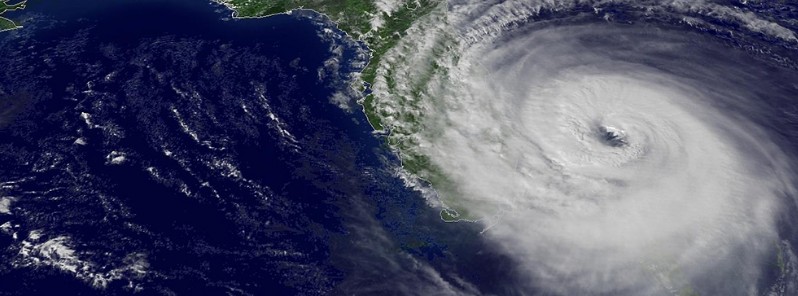
  • 12 000 years ago, Florida hurricanes heated up despite chilly seas

    According to new research by Michael Toomey and his colleagues from The Geological Society of America's Journal Geology, Category 5 hurricanes may have slammed Florida repeatedly during the chilly Younger Dryas, 12 000 years ago, as hurricane-suppressing effects…