Large earth crack swallows cattle in Hermosillo municipality, Sonora, Mexico
A large earth crack opened in Ejido J. Cruz Gálvez, located in the Hermosillo municipality of Sonora, Mexico, on September 6, 2024, swallowing four cows.


A large earth crack opened in Ejido J. Cruz Gálvez, located in the Hermosillo municipality of Sonora, Mexico, on September 6, 2024, swallowing four cows.
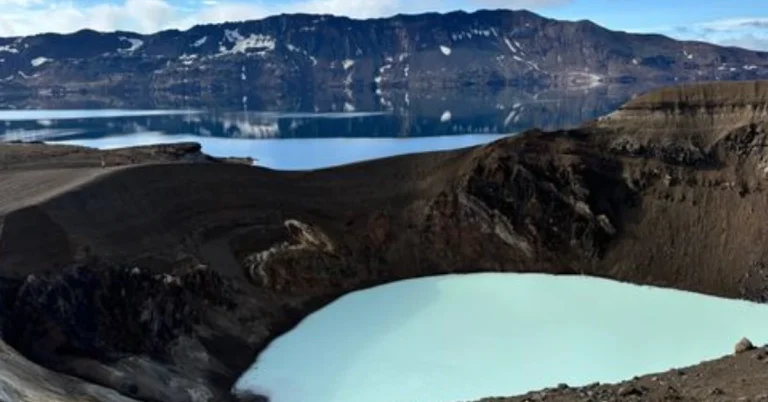
Askja volcano in Iceland remains under close watch as scientists record a 12 cm (4.7 inches) uplift over the past year. The ongoing monitoring efforts have identified significant magma accumulation at a depth of 3 km (1.9 miles), yet there is no immediate threat of eruption. The last eruption at this volcano took place in 1961 (VEI 2).
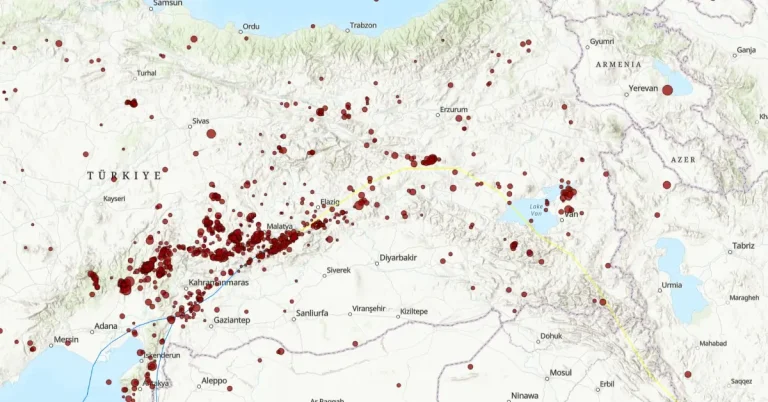
A prominent Turkish geoscientist known for his accurate earthquake predictions issued a new warning concerning an imminent seismic event in Turkey. Speaking on a televised program, Prof. Dr. Naci Gorur detailed the likelihood of a significant earthquake, predicting a magnitude of at least 7.4 in the region spanning Bingol, Tunceli, and Erzincan provinces.
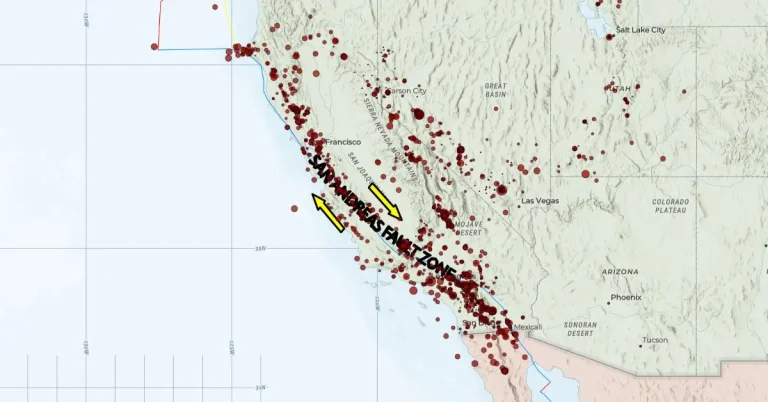
A recent study by Társilo Girona of the University of Alaska Fairbanks and Kyriaki Drymoni of Ludwig-Maximilians-Universität in Munich proposed a new machine learning technique for predicting big earthquakes months in advance. The study, published in Nature Communications on August 28, 2024, intended to improve earthquake predictions and public safety.

An amazing dayling fireball was seen and heard over Eastern Cape, South Africa on Sunday, August 25, 2024. Initially thought of as space junk, it was later confirmed to be a car-sized meteor that entered the atmosphere between 06:30 and 07:00 UTC (08:30 and 09:00 LT). Reports of the following sonic boom were heard more than 200 km (124 miles) away from the site of the original sighting.

A large landslide struck the Pedersen Lagoon in Alaska at around 12:55 UTC on August 7, 2024, generating a 17 m (56 feet) high local tsunami. The landslide was confirmed by aerial photos of the region from August 9. Preliminary data suggests a total volume of 2 million m3 (6.5 million feet3).
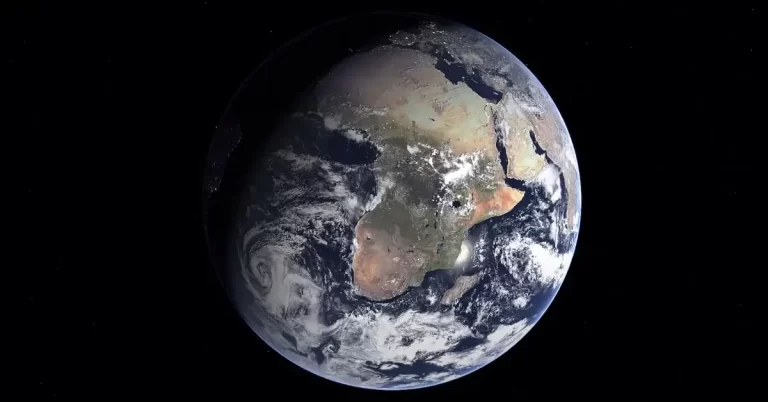
Researchers discovered that Earth’s rotational slowing occurs in a staircase pattern rather than a flat drop. This pattern, discovered after intensive geological and astronomical investigation, shows alternating periods of stability and fast change in Earth’s rotation over the last 650 million years.

An analysis of data from Alpha Magnetic Spectrometer (AMS) aboard the International Space Station has revealed an unexpected surplus of cosmic rays made of deuterons — atomic nuclei made up of a proton and a neutron.
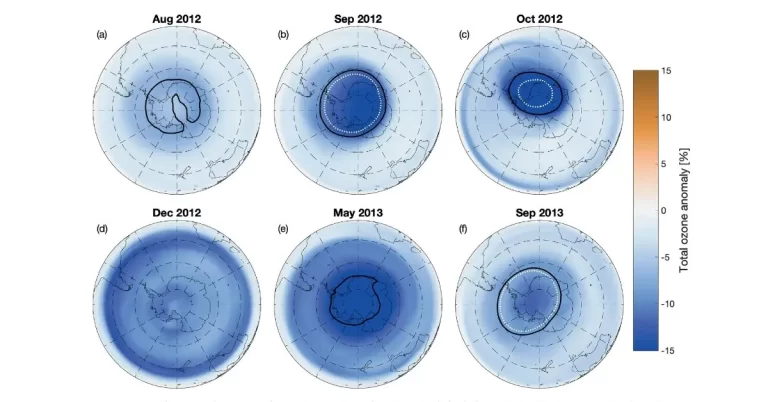
A comprehensive study led by Grigoriy Doronin, using data from NASA’s Aura MLS and NOAA’s SWPC, examined mesospheric ozone depletion due to solar proton events (SPEs) over the past two decades. The study, which ran from 2004 to 2024, demonstrated the considerable impact of high-energy protons from the Sun on ozone levels, indicating notable changes in depletion patterns across the northern and southern hemispheres.

New research investigated the influence of extreme solar particle events on the Earth’s ozone layer and climate, concentrating on how these events interact with varying geomagnetic field strengths and providing crucial insights into possible hazards to human health and ecological stability.
