Major X2.1 and long-duration X1.0 solar flares erupt from AR 3842
A major solar flare measuring X2.1 erupted from Active Region 3842 at 19:13 UTC on October 7, 2024. The event started at 19:02 and ended at 19:31 UTC.


I'm a dedicated researcher, journalist, and editor at The Watchers. With over 20 years of experience in the media industry, I specialize in hard science news, focusing on extreme weather, seismic and volcanic activity, space weather, and astronomy, including near-Earth objects and planetary defense strategies. You can reach me at teo /at/ watchersnews.bigscoots-staging.com.

A major solar flare measuring X2.1 erupted from Active Region 3842 at 19:13 UTC on October 7, 2024. The event started at 19:02 and ended at 19:31 UTC.

Comet C/2023 A3 (Tsuchinshan–ATLAS), discovered in January 2023 by the Tsuchinshan Observatory and the ATLAS project, reemerged from behind the Sun in September and garnered attention from astronomers across the world due to its rapid brightening. On October 7, 2024, the comet entered the LASCO C3 field of view, beginning a series of rare observations accessible to more than just astronomers with specialized equipment.
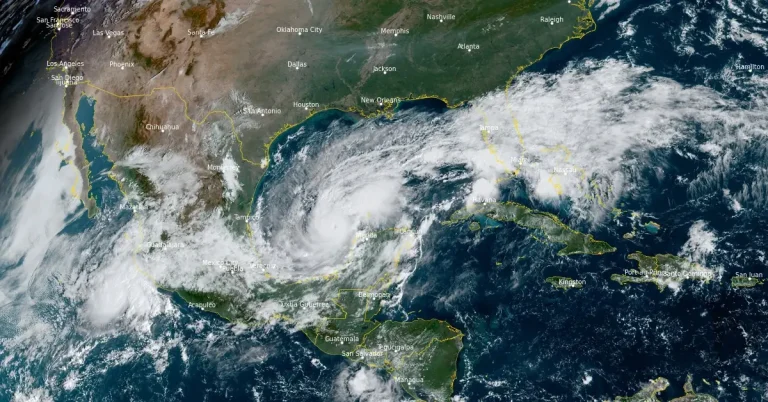
Hurricane “Milton” rapidly intensified on Monday, October 7, 2024, and is now a major category 4 hurricane on the Saffir-Simpson Hurricane Wind Scale. The National Hurricane Center (NHC) expects Milton to become a Category 5 hurricane today, making it the strongest Gulf of Mexico hurricane this late in the calendar year in the satellite era (since 1966). Milton is forecast to move near or just north of the Yucatán Peninsula today and Tuesday, then cross the eastern Gulf of Mexico and approach the west coast of the Florida Peninsula by Wednesday.

A severe dust storm caused a 60-car pileup on US Highway 95 near Genesee, Idaho, on October 4, 2024, injuring several people. Authorities reported no fatalities, but the highway was closed for hours as crews cleared the wreckage and investigated the crash.
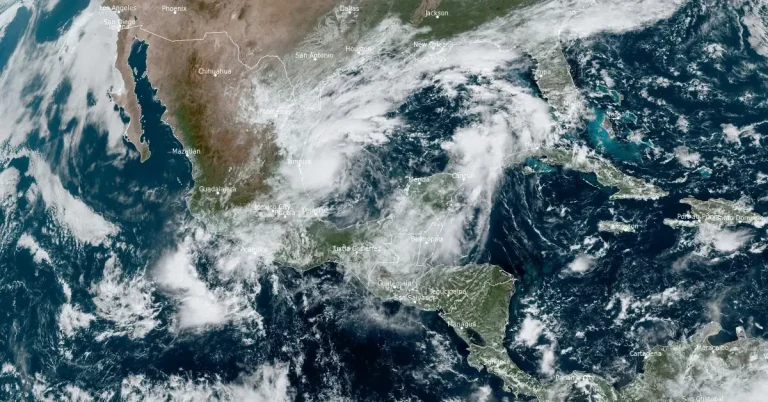
Tropical Storm “Milton” formed in the Gulf of Mexico at 17:25 UTC on October 5, 2024, as the 13th named storm of the 2024 Atlantic hurricane season. The current forecast track takes it right toward Florida, strengthening into a hurricane before making landfall.

At least three coronal mass ejections (CMEs) are expected to strike Earth from October 5 to 7, prompting a G3 – Strong Geomagnetic Storm Watch, with the possibility of G4 – Severe geomagnetic storm conditions.

A major solar flare measuring X9.0 erupted from Active Region 3842 at 12:18 UTC on October 3, 2024. The event started at 12:08 and ended at 12:27 UTC. This is thus far the strongest solar flare of Solar Cycle 25.

New activity/unrest was reported for 3 volcanoes from September 25 to October 1, 2024. During the same period, ongoing activity was reported for 23 volcanoes.

A major solar flare measuring X7.1 erupted from Active Region 3842 at 22:20 UTC on October 1, 2024, producing a CME that most likely has an Earth-directed component. This is the second-strongest solar flare of Solar Cycle 25.

A strong and shallow earthquake registered by the USGS as M6.6 hit the Tonga Region at 20:05 UTC on October 2, 2024. The agency is reporting a depth of 10 km (6.2 miles). EMSC is reporting the same magnitude and depth.
