M7.6 solar flare erupts from Region 3981
A moderately strong solar flare measuring M7.6 erupted from Active Region 3981 at 11:04 UTC on February 6, 2025. The event started at 10:47 and ended at 11:16 UTC.


I'm a dedicated researcher, journalist, and editor at The Watchers. With over 20 years of experience in the media industry, I specialize in hard science news, focusing on extreme weather, seismic and volcanic activity, space weather, and astronomy, including near-Earth objects and planetary defense strategies. You can reach me at teo /at/ watchers.news.

A moderately strong solar flare measuring M7.6 erupted from Active Region 3981 at 11:04 UTC on February 6, 2025. The event started at 10:47 and ended at 11:16 UTC.

A moderately strong solar flare measuring M8.8 erupted from Active Region 3981 at 03:58 UTC on February 3, 2025. The event started at 03:52 and ended at 04:04 UTC.

An impulsive solar flare registered as M5.1 erupted from Active Region 3977 at 14:04 UTC on February 2, 2025. The event started at 13:58 and ended at 14:08 UTC. With the region positioned at the center of the solar disk, the likelihood of Earth-directed activity remains elevated in the coming days. Meanwhile, the solar wind continues to be influenced by a positive polarity coronal hole high-speed stream, potentially leading to geomagnetic disturbances.

A bright fireball lit up the sky over Ontario, Canada, on January 28, 2025. Witnesses reported that the event lasted a few seconds, with colors ranging from white to orange and green. The American Meteor Society (AMS) estimated that the fireball’s path began above Combermere and traveled south toward Marmora.

A major flood event is underway in northern Queensland, Australia, on Sunday, February 2, 2025, after parts of the region received between 500 and 1 000 mm (19.7 – 39.4 inches) of rain in the 48 hours leading up to 09:00 LT today. At least one person has drowned in floodwaters after an SES boat capsized. The region is forecast to receive additional heavy rainfall, with some areas expected to see up to 500 mm (19.7 inches) of additional rain over the next 24 hours.

A large fireball entered Earth’s atmosphere over the Otago area, South Island, New Zealand around 10:00 UTC (23:00 LT) on January 31, 2025, producing loud, house-shaking sonic booms. There is a possibility pieces of the object survived and ended up somewhere in the Eyre Mountains.

A strong solar flare measuring M6.7 erupted from Active Region 3978 at 14:06 UTC on January 31, 2025, producing a coronal mass ejection (CME). The event started at 13:40 and ended at 14:25 UTC. This is the strongest solar flare since M7.4 on January 17.

An extended period of landfalling atmospheric river (AR) activity will bring heavy precipitation to Northern and Central California starting January 31, 2025, and continuing into the following week. The event is expected to cause significant hydrologic impacts, with heavy rain, high-elevation snow, and potential flooding.
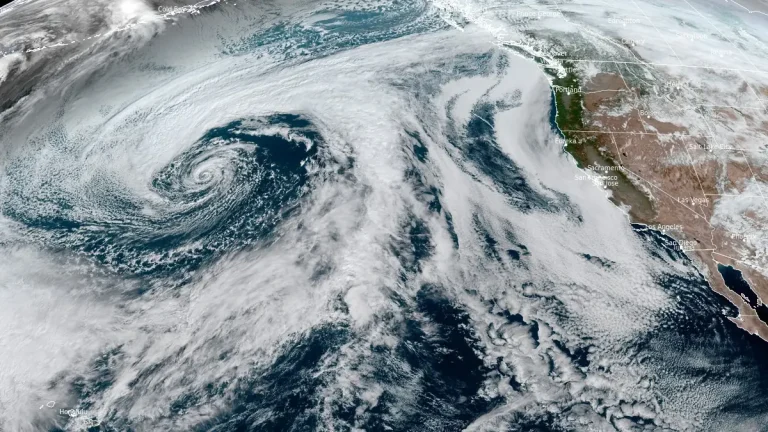
Forecast confidence in a high-impact atmospheric river (AR) event has steadily increased since January 27, 2025, and CW3E is now warning about a major AR event expected to begin this Friday, January 31 along the U.S. West Coast, and potentially continue into early next week. The most recent forecast from the NCEP Global Ensemble Forecast System (GEFS) is showing >50% probability of an AR 4 or greater over along the California coast between Santa Cruz and Mendocino Counties.
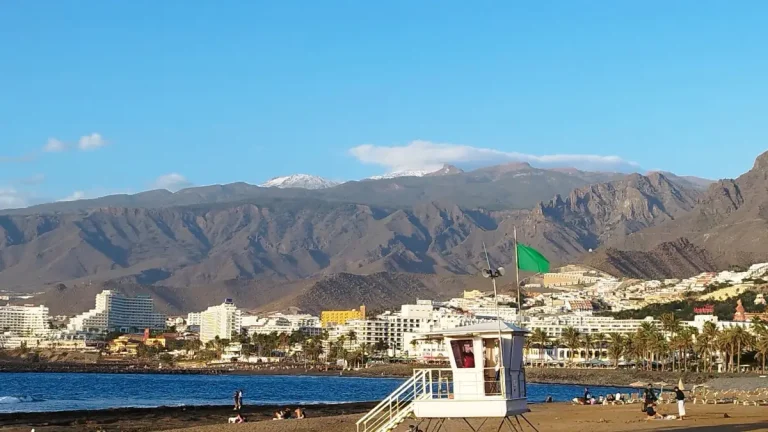
The Scientific Committee for the Evaluation and Monitoring of Volcanic Phenomena (CCES) has confirmed that the Teide volcano in Tenerife, Spain is exhibiting anomalous geophysical activity, characterized by increased seismicity, geodetic deformation, and gas emissions. While there are no indications of an imminent eruption, experts acknowledge an elevated likelihood of volcanic activity in the medium to long term.
