I'm a dedicated researcher, journalist, and editor at The Watchers. With over 20 years of experience in the media industry, I specialize in hard science news, focusing on extreme weather, seismic and volcanic activity, space weather, and astronomy, including near-Earth objects and planetary defense strategies. You can reach me at teo /at/ watchers.news.

  • Very bright, slow-moving bolide illuminates night sky over Moscow, Russia

    A bright green bolide, a natural meteoroid entering Earth’s atmosphere, illuminated the skies over Moscow, Russia, at around 00:30 UTC on October 27, 2025. The object produced several bright flashes and visible fragmentation as it moved across the sky, leaving a persistent trail. Analysis of multiple videos confirms its natural origin, distinguishing it from any satellite or rocket re-entry.
  • PHIVOLCS reports multiple short-lived eruptions at Taal volcano

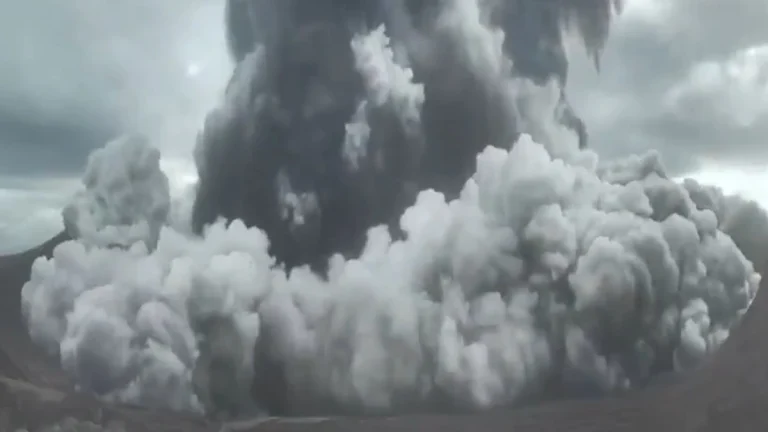
    Four short-lived eruptions were recorded at the northeastern portion of the Taal Main Crater between October 25 and 26, 2025, producing dense plumes 1 200–2 100 m (3 900–6 900 feet) high and minor ashfall over nearby barangays in Laurel and Agoncillo, Batangas Province. PHIVOLCS classified the events as minor phreatic and phreatomagmatic eruptions, with associated shockwaves and localized pyroclastic density currents, but maintained Alert Level 1 (low-level unrest) over the volcano.

  • Strong M6.0 earthquake hits Solomon Islands

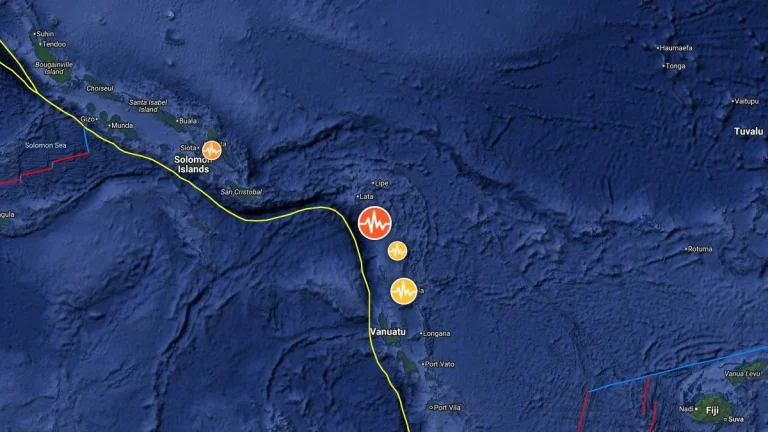
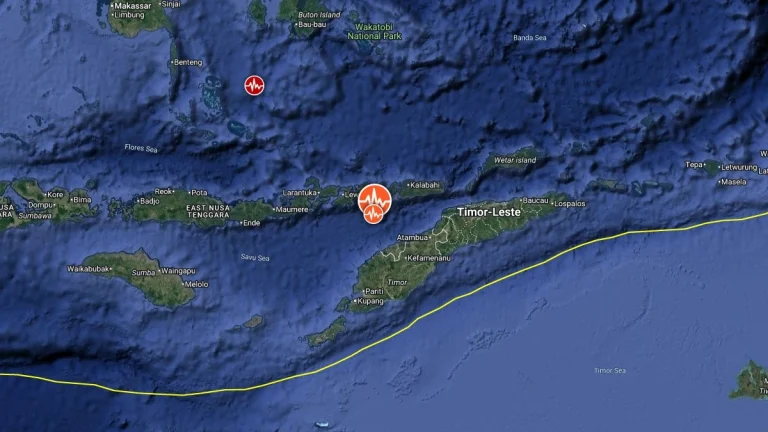
    A strong earthquake registered by the USGS as M6.0 struck southeast of Lata, Solomon Islands at 23:28 UTC on October 25, 2025. The agency is reporting a depth of 54.4 km (33.8 miles). EMSC is reporting M6.0 at a depth of 65 km (40.4 miles). There is no tsunami threat from this earthquake.

  • Lahar from Mount Semeru traps truck near Gladak Perak, Lumajang, Indonesia

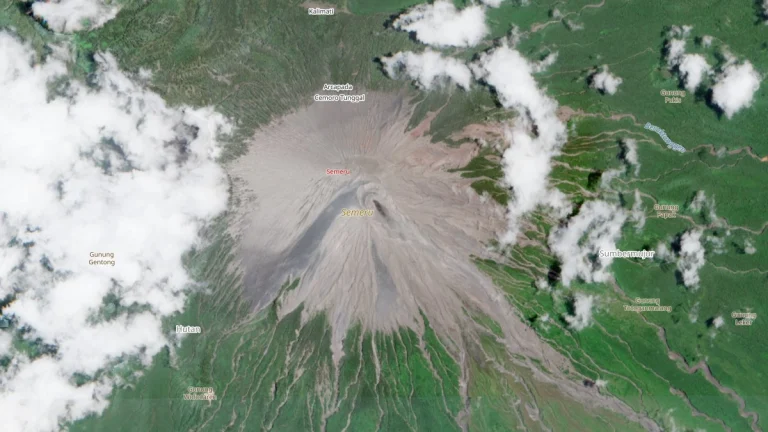
    A secondary lahar flow originating from remobilized pyroclastic and tephra deposits on the southern flank of Mount Semeru, Indonesia, occurred on October 21, 2025, trapping a truck near Gladak Perak Bridge in Lumajang Regency, East Java. The rain-induced lahar, classified as a cold, non-eruptive sediment-water flow, moved through the Besuk Kobokan drainage, carrying a dense slurry of volcanic debris and runoff.

  • Extremely high particulate levels recorded as Delhi’s air pollution worsens after Diwali

    Air quality across New Delhi, India, deteriorated sharply between October 19 and 21, 2025, reaching “very poor” and “severe” levels at multiple monitoring stations. According to the Central Pollution Control Board (CPCB), the 24-hour average AQI rose from 296 on October 19 to 345–346 on October 20–21, prompting Stage II measures of the Graded Response Action Plan (GRAP) across the National Capital Region.

  • Rare tornado hits Paris, France, killing one and causing major structural damage

    A deadly tornado struck the Val-d’Oise department, north-east of Paris, France, at around 17:45 LT (15:45 UTC) on October 20, 2025, killing one person and injuring nine, four critically. The violent, short-lived storm collapsed several construction cranes in Ermont, caused widespread roof damage, and uprooted trees across neighbouring municipalities.

  • Strong earthquake swarm shakes Katla volcanic system beneath Mýrdalsjökull, Iceland

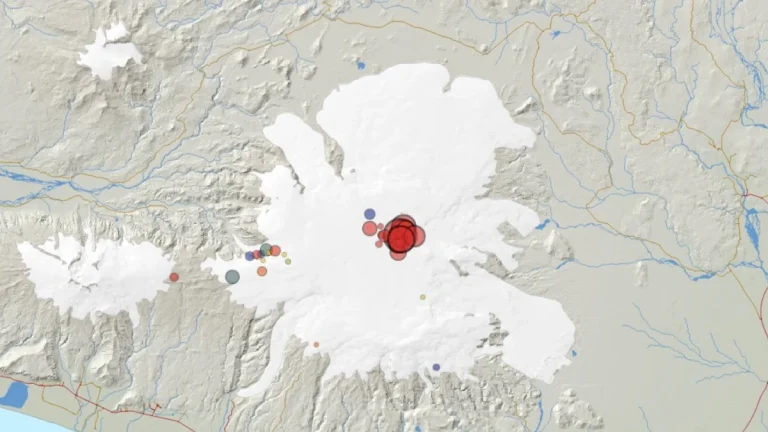
    A strong seismic swarm began beneath Iceland’s Mýrdalsjökull glacier, part of the Katla volcanic system, around 10:30 UTC on October 20, 2025. Several earthquakes above magnitude 3 were recorded, the largest reaching M4.5 at 10:51 UTC. The Icelandic Meteorological Office reports no felt activity and no changes in river levels, conductivity, or deformation, indicating no immediate signs of eruption at the Katla volcano or glacial flooding.

  • Taftan volcano reawakens after 710 000 years of sleep, revealing hidden hazards

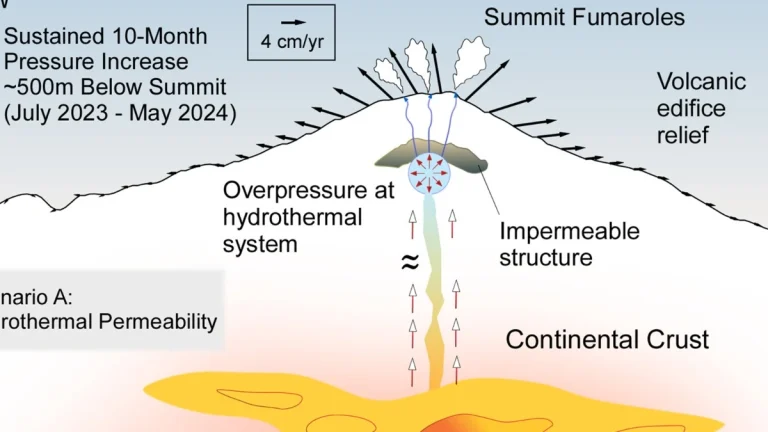
    A quiet, trigger-less swelling at Taftan volcano in southeastern Iran has exposed hidden instability within one of the country’s most remote volcanic systems. Using Sentinel-1 satellite InSAR enhanced by a new common-mode filtering method, scientists detected a ten-month summit uplift of about 9 cm (3.5 inches) between July 2023 and May 2024, marking the first confirmed volcanic unrest in the Makran subduction arc, where even long-silent volcanoes can awaken without warning and reveal unmonitored hazards.