
G2 – Moderate geomagnetic storms expected
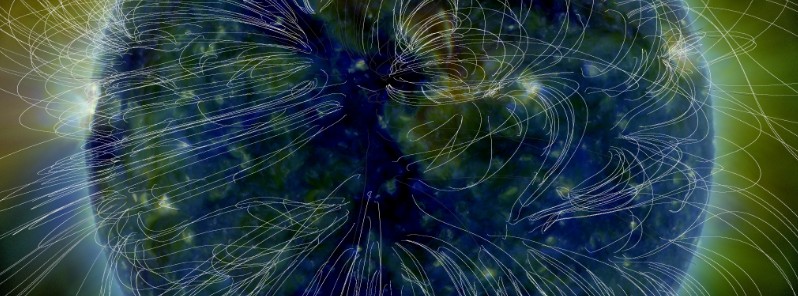
Image credit: NASA/SDO AIA / LMSAL
Geomagnetic storms reaching G2 – Moderate levels are expected over the next 48 hours due to the influence of a geoeffective coronal hole in combination with an Earth-directed component of coronal mass ejection (CME) produced on May 13.
The first effects are expected to be felt late May 15 (UTC) when geomagnetic field levels are expected to reach active levels due to anticipated arrival of a co-rotating interaction region (CIR) in advance of a recurrent, positive polarity coronal hole high speed stream (CH HSS).
Quiet to active conditions are expected on May 16, with isolated G1 – Minor geomagnetic storm conditions likely due to the arrival of the aforementioned CH HSS coupled with the May 13th CME. Unsettled to G1 storm conditions are expected on May 17 with isolated G2 – Moderate levels likely due to persistent HSS/CME influence.

ASSA detected coronal holes – SDO AIA 193 on May 15 compared with May 14 UCOHO data
The aforementioned CME was produced by an eruptive filament located near S60E10, observed in H-alpha imagery starting to lift off at approximately 13:00 UTC on May 13. An associated CME was observed in LASCO coronagraph imagery beginning at 17:12 UTC on May 13.
Although the majority of the ejecta appeared to be on a southern trajectory, there seems to be an Earth-directed component. WSA-Enlil model output suggests an arrival at Earth late on May 16.

Teo Blašković founded The Watchers in 2011 and edited it until 2026, covering seismic and volcanic activity, extreme weather, space weather and near-Earth objects. Articles on this page are his archive.
Published in the last 24 hours
- High Risk of excessive rainfall covers Florida’s Space Coast as St. Johns River near Cocoa reaches 5.67 m
- Four small asteroids will pass close to Earth from November 21 to 23
- Cyclone Akvan weakens after landfall near Gopalpur; more than 300 000 evacuated in Odisha, India
- A broad low over southeastern Florida and the northwestern Bahamas has a 30 percent chance of subtropical or tropical development within 48 hours and a 50 percent chance within 7 days, the National Hurricane Center says
