Bright fireball lights up the night sky in Japan’s Makurazaki City
A bright fireball lit up the sky of Makurazaki City in Japan on Sunday, August 11, 2024, at around 11:13 UTC (20:13 local time).

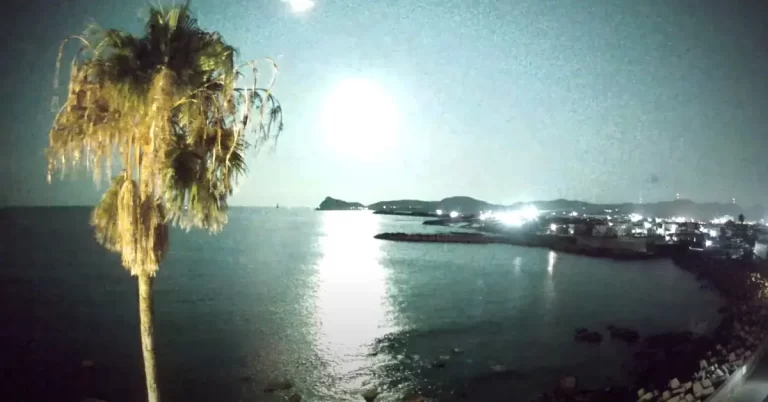
A bright fireball lit up the sky of Makurazaki City in Japan on Sunday, August 11, 2024, at around 11:13 UTC (20:13 local time).
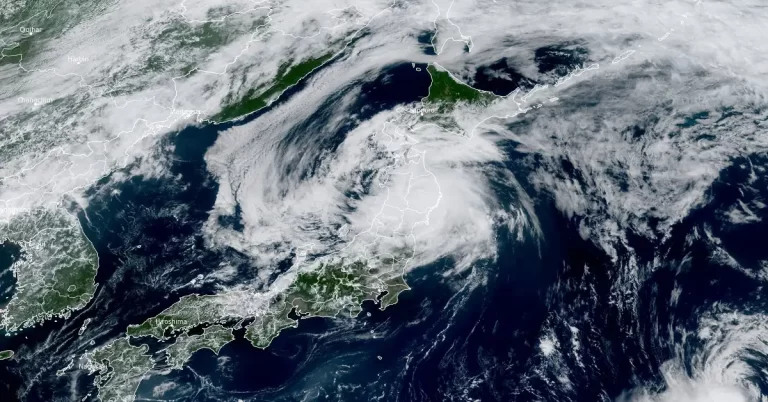
Tropical Storm “Maria” made landfall in Japan’s Iwate Prefecture at 08:30 local time (LT) on Monday, August 12, 2024, bringing record-breaking rainfall to the affected regions.
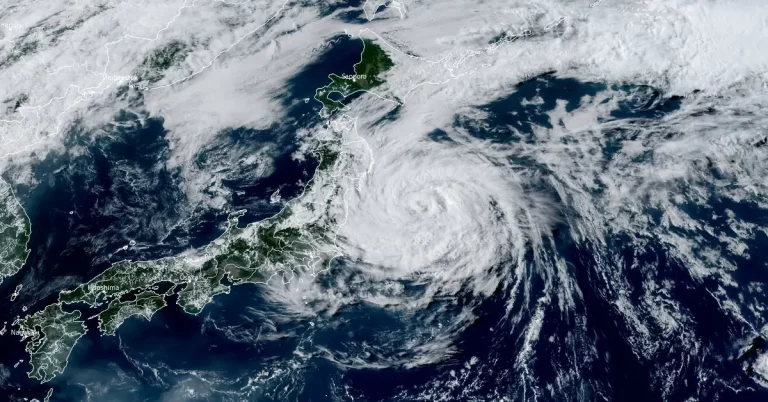
Severe Tropical Storm “Maria” is set to make landfall in Miyagi Prefecture on August 12, 2024, making it only the second recorded cyclone to strike the region since 1951, according to the Japan Meteorological Agency (JMA). Maria is the 5th named storm of the 2024 Pacific typhoon season.

The Japan Meteorological Agency (JMA) issued its first megaquake advisory on Thursday, August 8, 2024, several hours after the M7.1 earthquake hit near the coast of Kyushu. The advisory warns that if a major earthquake were to occur in the future, strong shaking and large tsunamis would be generated.
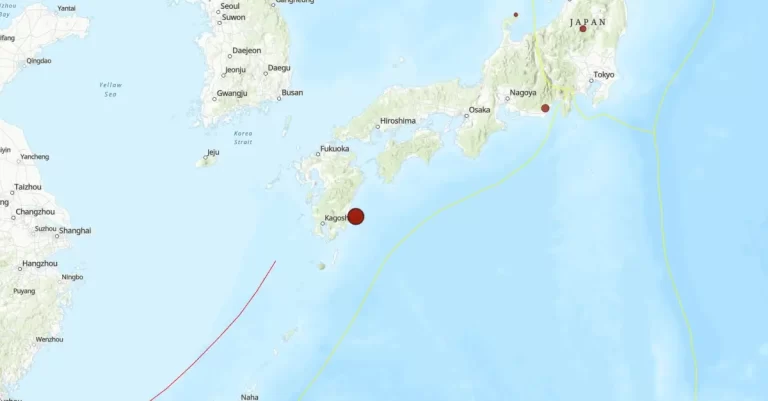
A very strong and shallow earthquake registered by the Japan Meteorological Agency (JMA) as M7.1 hit near the coast of Kyushu, Japan at 07:43 UTC on August 8, 2024. The agency is reporting a depth of 30 km (18.6 miles). USGS is reporting M7.1 at a depth of 25 km (15.5 miles); EMSC M7.1 at a depth of 35 km (21.7 miles).
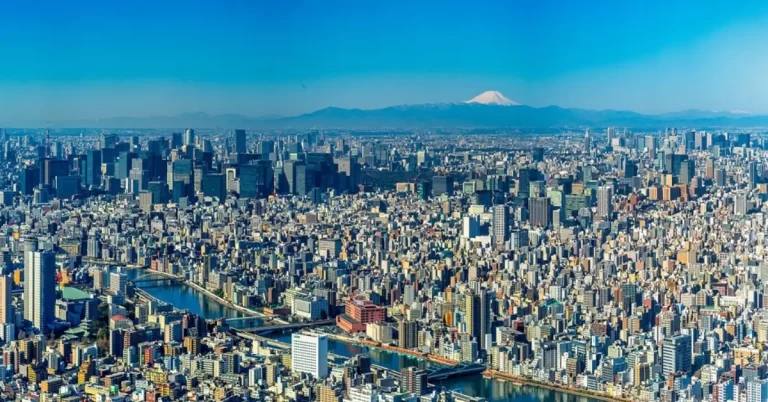
Japan has recorded its hottest July ever, with an average temperature of 26.2 °C (79.2 °F), according to the Japan Meteorological Agency (JMA).

Satellite images taken on July 19, 2024, suggest Japan’s Iwo-Jima volcano, also known as Ioto and Ogasawara-Iojima, has entered a new eruptive period.

A strong explosive eruption was registered at Sakurajima volcano, Japan at 04:58 UTC on July 20, 2024.

The Japan Meteorological Agency issued extreme heat warnings on July 7, 2024, after parts of Japan broke record heat levels. On the same day, Shizuoka touched 40 °C (104 °F), marking its highest recorded temperature since records began in 1940. The heatwave has led to four deaths and over 2 000 hospitalizations.
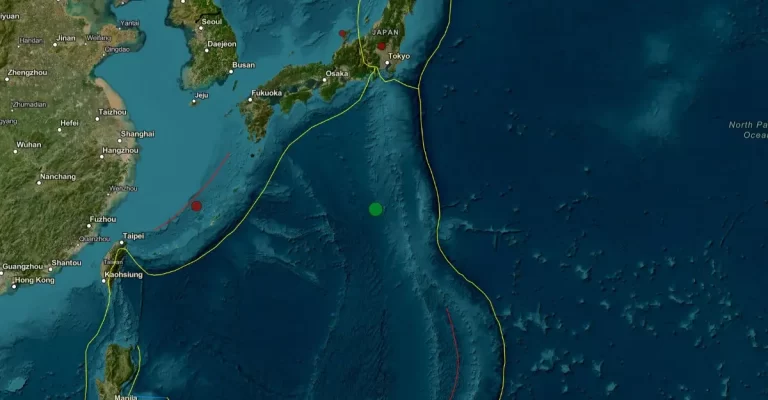
A deep earthquake registered by the Japan Meteorological Agency (JMA) as M6.3 hit off the west coast of Ogasawara Islands at 20:02 UTC on July 7, 2024. The agency is reporting a depth of 530 km (329 miles). USGS is reporting M6.2 at a depth of 571 km (354 miles).
