
Antarctic moss began growing again after at least 1,530 years frozen in permafrost
Antarctic moss tissue preserved 110 cm (43 inches) inside a permafrost bank on Signy Island produced new shoots after at least 1 530 years frozen, showing that intact multicellular plant tissue can remain viable on a millennial timescale. The finding was reported in 2014, but research published in 2026 has returned to the same island’s buried moss record as its ice cap retreats at rates reaching about 20 m/year (66 feet/year).
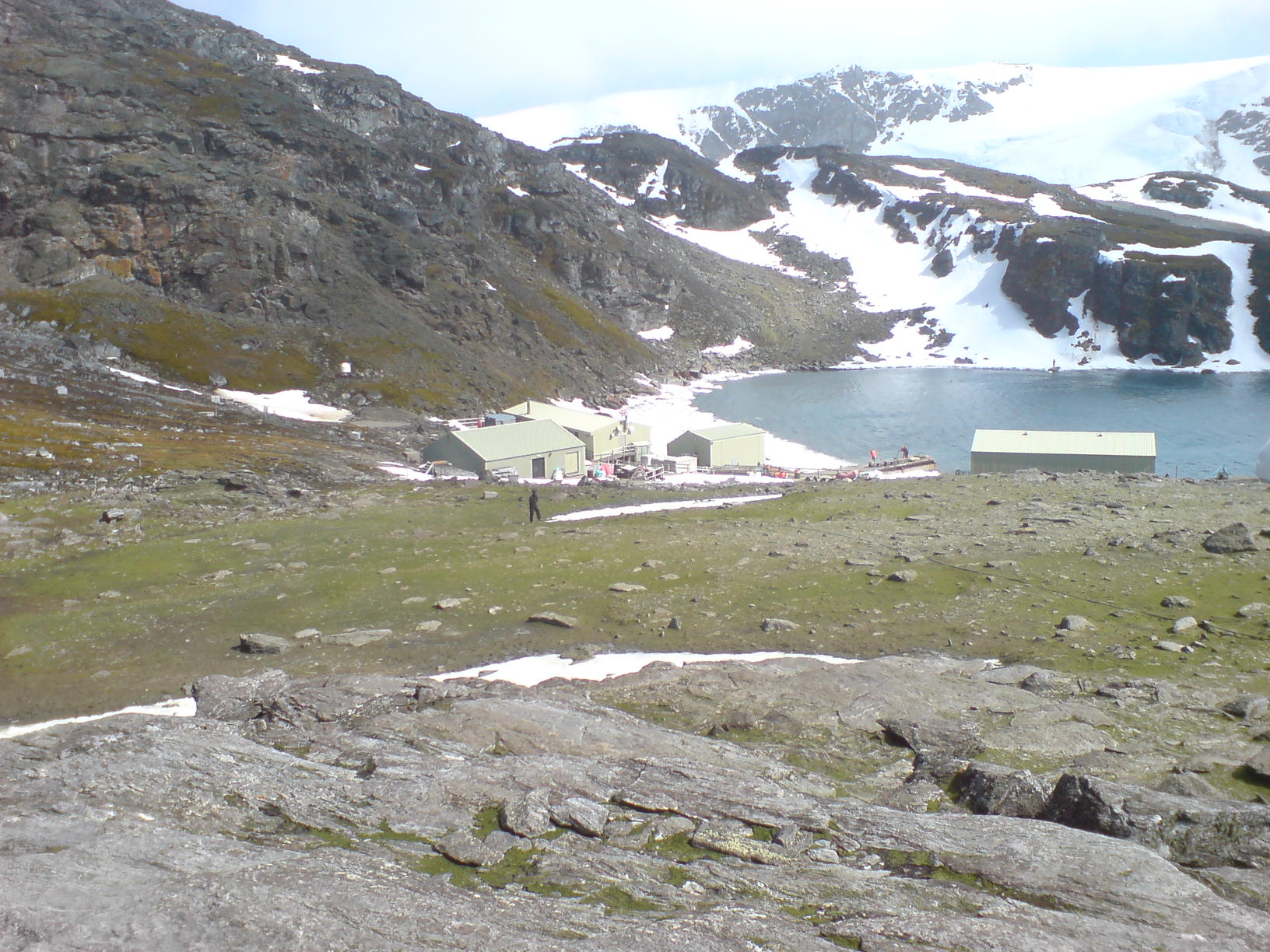
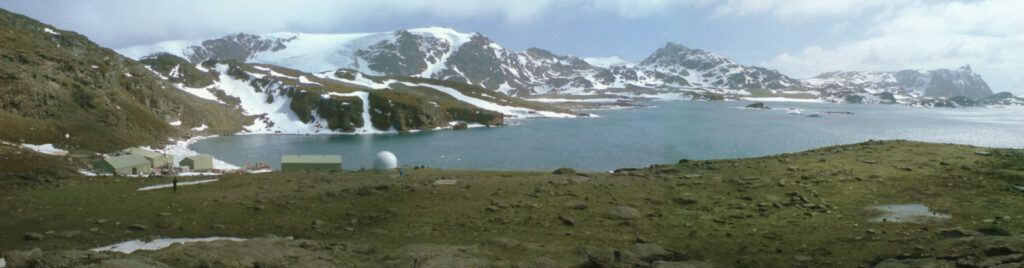
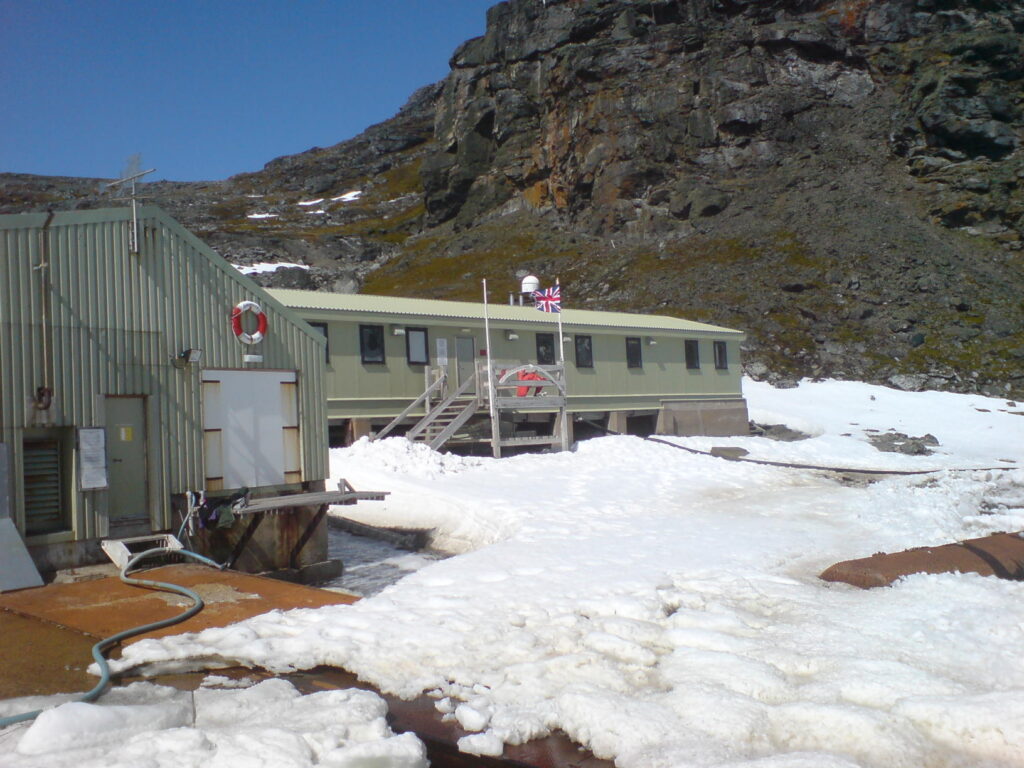
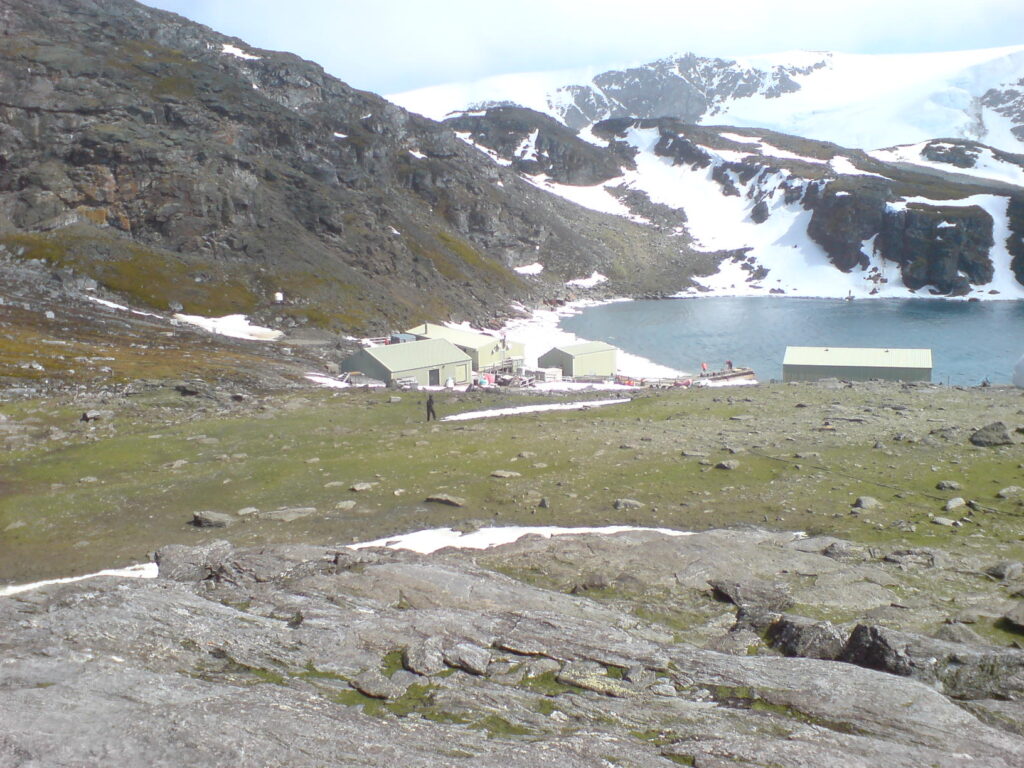
Factory Cove and Signy Research Station on Signy Island in the South Orkney Islands. Credit: Ben Tullis (CC BY 2.0), via Wikimedia Commons.
Roads et al. (2014) examined a 138 cm (54 inches) core taken from an actively growing bank of Chorisodontium aciphyllum on Signy Island in the South Orkney Islands. The surface 1–3 cm (0.4–1.2 inches) remained green, an unfrozen light-brown layer extended to 23 cm (9 inches), and material deeper in the bank had become incorporated into permafrost while retaining recognizable stems, leaves and rhizoids.
The study addressed how long a bryophyte could remain capable of direct regeneration after prolonged freezing. Mosses tolerate severe environmental stress and can enter cryptobiosis, a reversible state in which metabolic activity falls to extremely low levels. Before the Signy work, direct regeneration from preserved whole-moss material had been confirmed over periods measured in decades rather than millennia.
Previous work had already pushed that boundary farther. Bryophytes exposed by retreating ice at Teardrop Glacier in the Canadian Arctic had remained buried for roughly 400 years, with some field material showing green growth and laboratory cultures regenerating from processed tissue. The Signy experiment differed because new shoots arose directly from old gametophytes preserved inside the permafrost core.
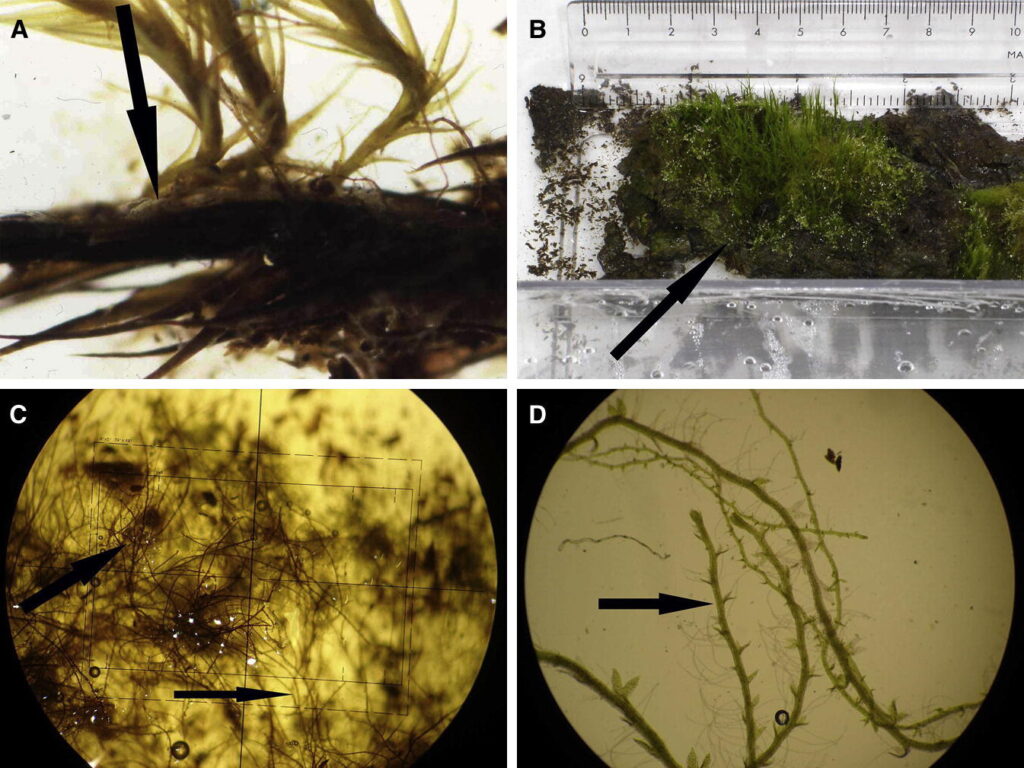
The critical result came from 110 cm (43 inches) below the surface. Four new shoots of C. aciphyllum developed on the freshly cut face of the core, and examination with forceps and a dissecting microscope found them firmly attached to gametophytes already present in the frozen material. A gametophyte is the leafy stage of the moss life cycle, so the physical attachment was central to the conclusion that the new shoots arose from preserved plant tissue rather than from newly introduced material.
The time required for visible growth generally increased with depth. Growth appeared after 27 days at 7 cm (2.8 inches), after 40 days at 30 cm (12 inches) and after 55 days at 110 cm (43 inches). Material from the basal section behaved differently: new growth from rhizoids at 121–138 cm (48–54 inches) became visible after 22 days.
Microscopic examination showed that growth above 30 cm (12 inches) and at 110 cm (43 inches) developed as branches from existing gametophytes. In the deepest material, green protonema grew from preserved dark-brown rhizoids before producing shoots. Protonema are filamentous early-growth structures from which leafy moss shoots can develop.
The age behind the headline came from gametophyte material immediately adjacent to the regrowth at 110 cm (43 inches). Accelerator mass spectrometry produced a conventional radiocarbon age of 1 754 ± 32 years BP. After calibration, the material was dated to 1 533–1 697 calibrated years BP.
Roads and colleagues therefore concluded that the gametophytes had remained preserved in permafrost for at least 1 530 years. The wording “at least” matters because those gametophytes were already living tissue before becoming incorporated into the permanently frozen layer and could have been several decades to a small number of centuries old at the time of burial.

Regeneration was not limited to the headline species. New shoots of the liverwort Cephaloziella sp., considered most likely to be C. varians, also developed from the 121–138 cm (48–54 inches) basal material. The 1 533–1 697-year radiocarbon measurement was taken beside the growth at 110 cm (43 inches), however, and was not assigned directly to those deepest liverwort-bearing samples.
Modern contamination was an obvious alternative explanation. Roads et al. considered the probability extremely low because the new growth appeared on fresh-cut surfaces inside the permafrost core and sporophytes of C. aciphyllum were not known from the maritime Antarctic. Other mosses on Signy Island do produce mature sporophytes, so a store of viable contaminating spores would also be expected to generate a broader mixture of species rather than predominantly the species already forming the core.
The evidence does not make contamination logically impossible. The study instead assembled several independent observations that made recent contamination difficult to reconcile with the pattern of regrowth. That distinction is important because the experiment’s strength lies in the physical continuity between preserved tissue and new growth rather than in an absolute exclusion of every alternative.
The result was also a laboratory regeneration experiment, not an observation of ancient moss naturally growing out of deep permafrost in the field. The core was collected on Signy Island and returned to the University of Reading for study. The regenerated shoots therefore establish long-term viability of buried tissue under experimental growth conditions; they do not show that deeply buried moss normally re-emerges without exposure or disturbance.
The 1 530-year result is not the oldest regeneration achieved from ancient frozen plant tissue. Yashina et al. (2012) regenerated fertile flowering plants from placental tissue inside immature fruits recovered from Siberian permafrost and radiocarbon-dated to 31 800 ± 300 years. That work required in-vitro tissue culture and clonal micropropagation, whereas the Signy shoots arose directly from preserved bryophyte gametophytes and rhizoids.
The distinction places the Antarctic experiment on a different part of the frozen-plant survival spectrum. The Signy study did not recover the oldest plant tissue ever grown in a laboratory; it substantially extended the demonstrated timescale over which structurally preserved bryophyte tissue could resume growth directly.
Moss banks make that survival physically possible because they accumulate vertically. New tissue continues growing near the surface while older shoots become buried beneath it, and on Signy Island those older layers progressively enter permafrost. Roads et al. found intact stems, leaves and cell walls throughout the sampled profile despite the darkening and burial of the old material.

A separate study published in 2026 returned to Signy’s buried mosses for a different scientific purpose. Huisman et al. used radiocarbon-dated moss exposed around the retreating ice cap to reconstruct the timing of neoglacial ice advance across the island.

The 2026 dataset contained 32 radiocarbon-dated moss samples. Twenty-seven had burial dates between 1000 and 1400 CE, while four samples dated to before 1000 CE. The oldest interval extended back to 218–517 CE, pushing the minimum onset of the reconstructed neoglacial advance several centuries earlier than previous local estimates based on material collected near the 1975 ice margin.
The burial dates are minimum constraints on ice advance rather than a continuous year-by-year record of glacier movement. Ice must first reach and cover vegetation before the moss becomes part of the buried record, and an ice margin can advance, pause or retreat over long periods. The authors therefore did not treat the radiocarbon sequence as evidence of uninterrupted linear expansion.
Modern observations show the direction has reversed. Comparison of the 1975 ice outline with more recent mapping and satellite imagery showed horizontal retreat of about 150–800 m (490–2 625 feet), depending on location. The western side experienced the largest retreat, reaching about 800 m (2 625 feet), while the southern and south-eastern margins retreated by roughly 300–400 m (980–1 310 feet).
Across the south-eastern area, mean retreat over approximately 50 years was about 8 m/year (26 feet/year). Satellite comparisons showed faster retreat in the most recent interval, averaging about 20 m/year (66 feet/year) during 2020–2023. Measurements around Manhaul Rock also indicated vertical ice thinning of about 0.5 m/year (1.6 feet/year) over roughly five to six decades.
The researchers compared the modern retreat with an estimated historical advance rate derived from moss burial dates near past and present ice margins. Assuming an average advance between about 1300 and 1600 CE, they calculated approximately 1.3 m/year (4.3 feet/year), compared with the modern 50-year retreat average of about 8 m/year (26 feet/year).
That produced the study’s estimate that the modern ice cap is retreating roughly six times faster than its reconstructed historical advance. The authors cautioned that the comparison depends partly on the accuracy of the 1975 map and that continuous linear advance over three centuries was unlikely, so the sixfold figure is a broad comparison between reconstructed long-term advance and observed modern retreat rather than a like-for-like measurement.
The 2014 and 2026 studies therefore extract different information from the same kind of preserved biological material. The earlier experiment tested whether deeply frozen moss tissue remained viable. The later study used the ages of buried mosses to constrain when ice expanded over previously vegetated ground.
Roads et al. proposed that millennial-scale survival in moss banks could provide a refugium during prolonged periods of ice or snowfield advance, reducing the need for all vegetation to recolonize from distant ice-free areas after retreat. Their experiment demonstrated survival for at least 1 530 years, but survival across an entire glacial cycle lasting tens of thousands of years remains untested.
Further retreat on Signy Island is expected to expose additional buried moss around the ice margin, giving researchers more material from which minimum ages of past ice advance can be reconstructed. The living and preserved moss banks therefore carry two different records at once: biological evidence of how long some plant tissue can remain viable in permafrost and chronological evidence of how the island’s ice has moved across vegetated ground.
References:
1 Roads, E., Longton, R. E., & Convey, P. (2014). Millennial timescale regeneration in a moss from Antarctica. Current Biology, 24(6), R222–R223. DOI: 10.1016/j.cub.2014.01.053
2 Huisman, S. N., Snijders, R. H., Dee, M., Hodgson, D. A., Convey, P., Cornelissen, J. H. C., & Bokhorst, S. (2026). Reconstructing neoglacial ice advance on Signy Island, Maritime Antarctica, from moss burial ages. Quaternary Science Reviews, 389, 110145. DOI: 10.1016/j.quascirev.2026.110145
3 Yashina, S., Gubin, S., Maksimovich, S., Yashina, A., Gakhova, E., & Gilichinsky, D. (2012). Regeneration of whole fertile plants from 30,000-y-old fruit tissue buried in Siberian permafrost. Proceedings of the National Academy of Sciences, 109(10), 4008–4013. DOI: 10.1073/pnas.1118386109

I’m a science journalist and researcher at The Watchers, contributing to the Epicenter edition, where I cover peer-reviewed scientific research and emerging discoveries across Earth and space sciences. With a background in astronomy and a passion for environmental science, I’ve worked in shark and coral conservation in Fiji, conducting reef and shark-behavior research, contributing to mangrove restoration, and earning PADI Open Water and Coral Reef Certifications. I bring a blend of scientific rigor and storytelling to illuminate the discoveries shaping our planet and beyond.
Published in the last 24 hours
- A new model of Antarctica’s Thwaites Glacier that lets seawater seep beneath its grounded ice projects up to about 30 millimeters of sea-level rise by 2100 from that glacier alone, roughly twice the earlier average projection, in a scenario its authors call a lower bound Epicenter
- A fish filmed 600 meters below the Pacific has a transparent head, and its eyes rotate inside it to follow prey Epicenter
- In 1927, Louisiana dynamited a Mississippi River levee to save New Orleans, flooding the homes of about 10,000 people downstream, and the city turned out never to need it Epicenter
- So much water builds up in the Amazon each April that it shifts Earth’s center of mass toward South America Epicenter
