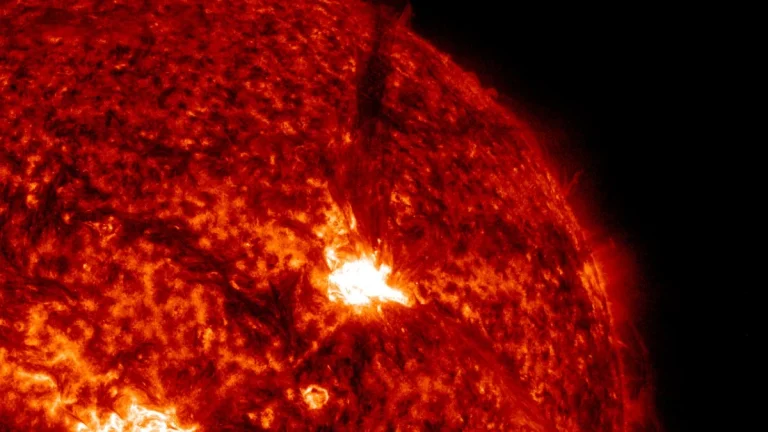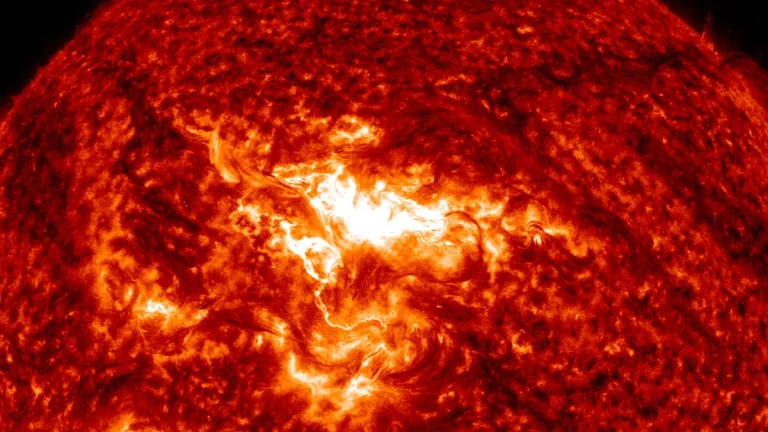
• Solar activity increases to high levels, Earth-directed CMEs possible in days ahead

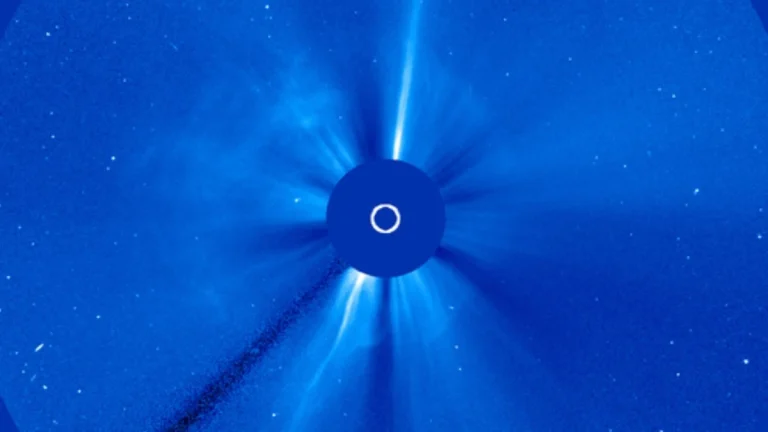
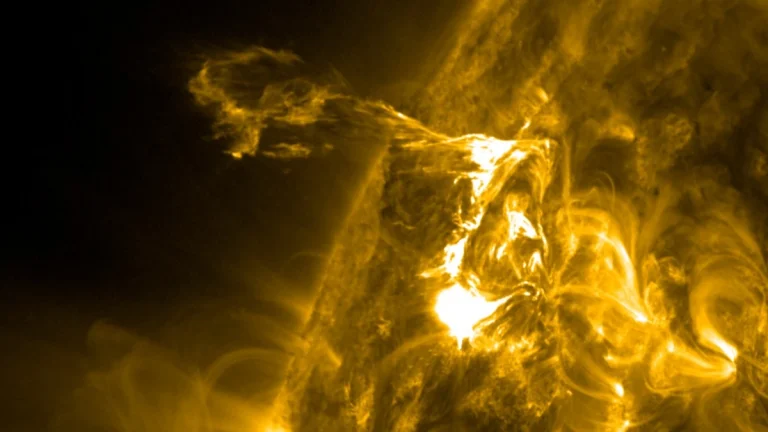
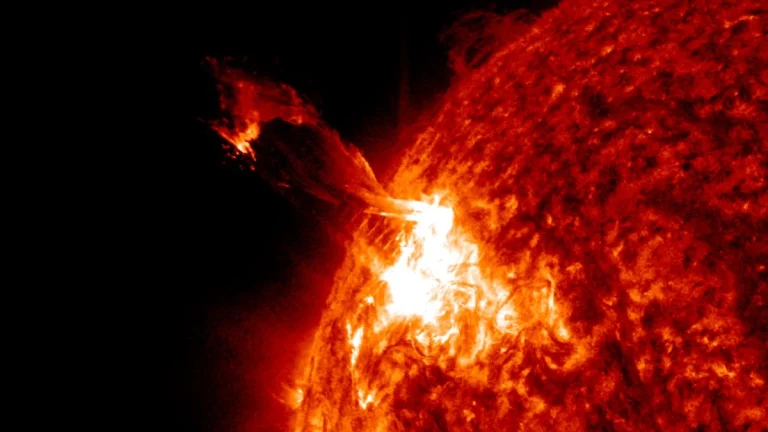
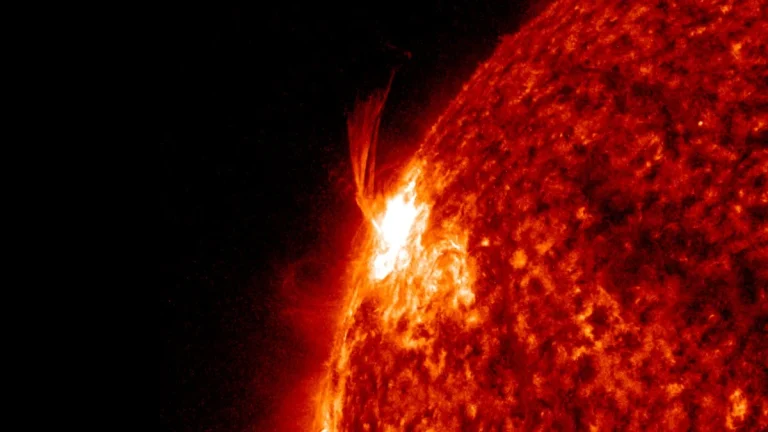
    Two powerful X-class solar flares erupted on November 4, 2025 — an X1.8 from Region 4274 and an X1.1 from a region just beyond the east limb — launching CMEs largely off the solar limb. NOAA forecasts G1 – Minor to G2 – Moderate geomagnetic storming from late November 6 into 7 as Earth may experience a glancing shock from the flares combined with a coronal hole high-speed stream.

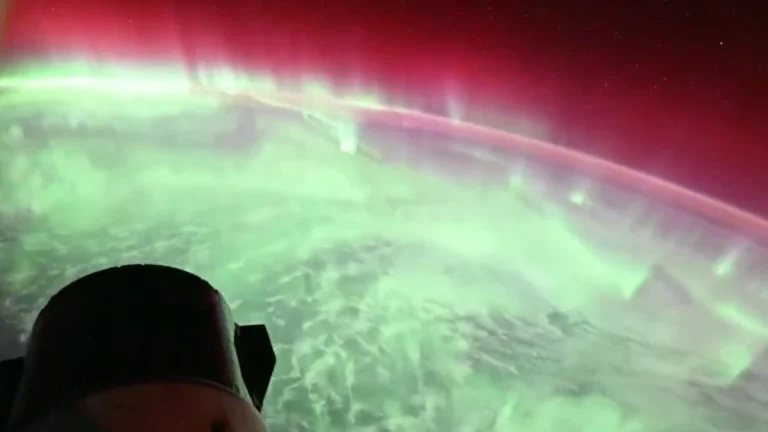
  • Earth’s electrical rings released rare energy leak during recent G2 geomagnetic storm

    A G2 – Moderate geomagnetic storm on October 18, 2025, produced an extremely bright red SAR arc visible from the United States to northern Europe. The event showed an unusually efficient release of energy from Earth’s ring current system, challenging current understanding of how the planet’s magnetic field interacts with the atmosphere.

  • Multiple CMEs heading toward Earth, impacts expected between October 15 and 17

    Two coronal mass ejections (CMEs) launched from Active Region 4246 on October 13, 2025, are heading toward Earth and are expected to impact Earth over the next couple of days, according to NOAA’s Space Weather Prediction Center (SWPC). Model output indicates arrival around mid to late October 17, though forecasters note a possible earlier impact as both CMEs interact with earlier ejecta from the same region.

  • Positive polarity CH HSS sparks G3 – Strong geomagnetic storm

    A G3 (Strong) geomagnetic storm is in progress on October 2, 2025, driven by a positive-polarity coronal hole high-speed stream (CH HSS). The U.S. Space Weather Prediction Center (SWPC) issued an active warning valid until 12:00 UTC, with aurora sightings possible as far south as Pennsylvania, Iowa, and Oregon.

  • G3 – Strong geomagnetic storm on September 30

    Earth’s magnetic field reached G3 – Strong storm levels on September 30, driven by CME impacts and sustained southward IMF. The event was enhanced by seasonal Russell–McPherron geometry near equinox, increasing coupling efficiency. Storm strength has since eased to G2 and G1 as IMF weakened and Bz returned closer to neutral.

  • G3 – Strong geomagnetic storm sparks auroras down to Texas

    A geomagnetic storm that began late on September 14, 2025, intensified to G3 – Strong levels early on September 15, producing auroras visible as far south as Texas. The storm was driven by a negative polarity coronal hole high-speed stream (CH HSS) with possible influence from a coronal mass ejection (CME) launched on September 11.

  • G1 – Minor geomagnetic storm watch issued for September 14

    A G1 – Minor Geomagnetic Storm Watch was issued by NOAA’s Space Weather Prediction Center for September 14, 2025, anticipating weak power grid fluctuations, minor satellite impacts, and possible auroras at high latitudes. No storm activity is forecast for September 15 and 16.