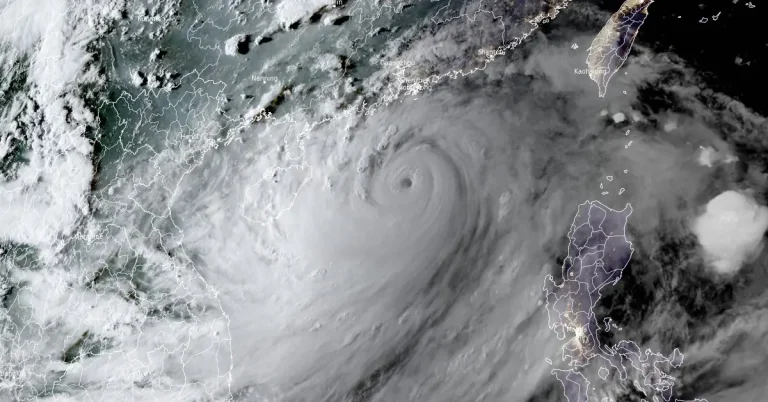
• Hurricane “Debby” makes landfall in Florida, historic rains expected in parts of Georgia and the Carolinas

    Hurricane “Debby” made landfall near Steinhatchee in Florida’s Big Bend at 11:00 UTC on Monday, August 5, 2024. Debby had minimum central pressure of 979 hPa and maximum sustained winds of 130 km/h (80 mph) at the time of landfall, making it a Category 1 hurricane on the Saffir-Simpson scale. It was moving NNE at 17 km/h (10 mph).

  • Powerful paroxysmal eruption at Etna, Aviation Color Code raised to Red, Italy

    Strombolian activity at Italy’s Etna volcano increased during the night of August 3 to 4, 2024, evolving into strong lava fountaining by 03:20 UTC on August 4. In response, the Aviation Color Code was raised from Orange to Red at 02:45 UTC, indicating a higher level of volcanic threat to air travel. The last significant eruption at Etna occurred on July 23.

  • More than 150 dead, 187 missing after large landslides in Wayanad, Kerala

    A series of large landslides caused by heavy rains struck Wayanad in the Indian state of Kerala at 03:00 local time (LT) on July 30, 2024. Revenue Minister K. Rajan’s office confirmed 54 deaths as of 12:36 LT, with over 100 people remaining missing. Rescue operations are currently underway, and over 250 people have been rescued according to the latest reports.

  • Cold wave alert as Australians face record-low temperatures, widespread frost outbreak 

    Millions of Australians are facing record-breaking sub-zero temperatures as an icy blast sweeps across the country from July 28 to August 2, 2024. A strong high-pressure ridge is causing dry conditions and frosty mornings, with temperatures plummeting below seasonal averages in New South Wales, Queensland, South Australia, and other regions.

  • Multiple Earth-directed CMEs, significant geomagnetic storming possible

    Solar activity was at very high levels over the past 24 hours, with a series of moderate to strong solar flares, including an M9.9 flare on July 28 with an Earth-directed component. This, coupled with the cannibal CME expected to arrive late on July 29 into July 30, suggests significant geomagnetic storming is possible, potentially in the range of G3 – Strong or even G4 – Severe on July 30.