• Supermoon followed by king tides

    On June 23, 2013 the full moon will not only be the closest to Earth for the year, but it will also appear the biggest full moon for 2013. It will be 14% bigger and 30% brighter than other full Moons of 2013. It is also known as a supermoon and it will be

  • The June solstice of 2013 falls on June 21, 2013

    The June solstice (also known as northern or summer solstice) of 2013 falls on June 21, 2013, at 5:04 UTC. Everywhere on our planet, no matter where you live, the solstice happens at the same moment for us all. You can easily find out the precise time of the

  • What lies beneath the Antarctic ice sheet

    NASA has released a new product called Bedmap2 with clear picture of Antarctica from the ice surface down to the bedrock below. Up until now, researchers used 10 years old collection of Antarctic data.

    The product was a result of work led by the British

  • Has Comet ISON stopped brightening?

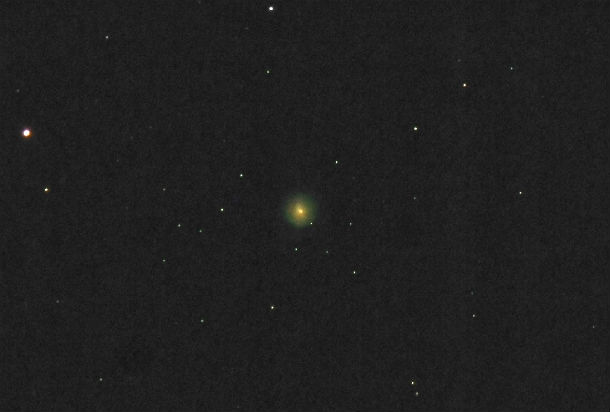
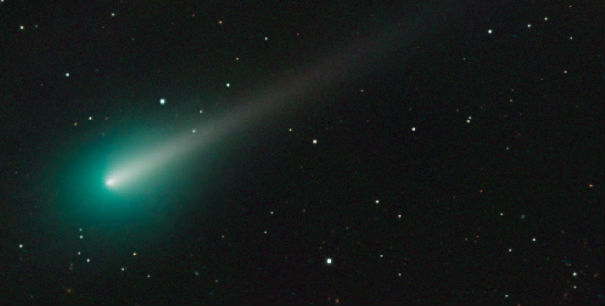
    Comet ISON is expected to become one of the most dazzling skywatching events while making a passage around the Sun later this year. In October of 2012 NASA's Jet Propulsion Laboratory (JPL) stated that Comet ISON (C/2012 S1) could reach magnitude -11.6, which

  • Massive and deep earthquake M 8.3 struck Sea of Okhotsk

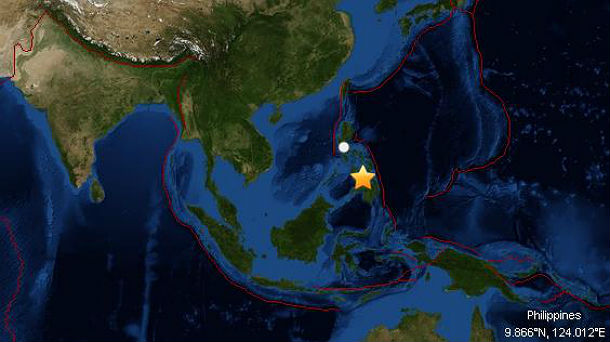
    A massive but deep earthquake M 8.3 struck Sea of Okhotsk on May 24, 2013 at 05:49 UTC. By preliminary reports, USGS has measured depth od 601 km, EMSC 599 km. The epicenter was about 403 km WNW of area previously reported for strong earthquake swarm,

  • Penumbral lunar eclipse on May 25, 2013

    The second lunar eclipse of 2013 occurs at the Moon's ascending node in Scorpius about 7° northwest of Antares (mv = +1.07). With a penumbral eclipse magnitude  of 0.0158, just 0.5 arc-minutes of the Moon's southern limb will pass into Earth's pale

  • Swarm of strong earthquakes shakes Kamchatka Peninsula

    A swarm of strong earthquakes is currently shaking Kamchatka Peninsula, Russian Far East. The strongest in series was M 5.9 (USGS), M 6.0 (EMSC), recorded at 20:44 UTC on May 19, 2013. Data for depth of this earthquake is still uncertain. USGS measured 16.5 km

  • 2.7 km wide Asteroid 1998 QE2 will fly past Earth on May 31, 2013

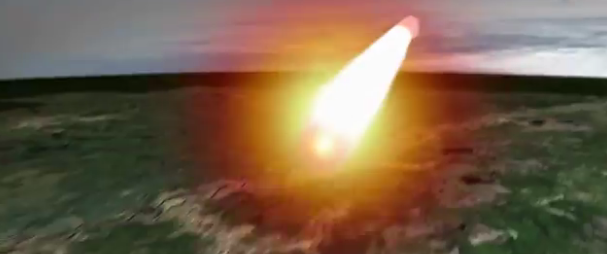
    Asteroid 1998 QE2 will fly past Earth at end of May at a distance of 5.8 million kilometers, or about 15 times the distance between Earth and the moon. The asteroid's size is estimated to be about 2.7 kilometers. It will make its closest approach on May