Strong explosion at Mount Dukono, Indonesia
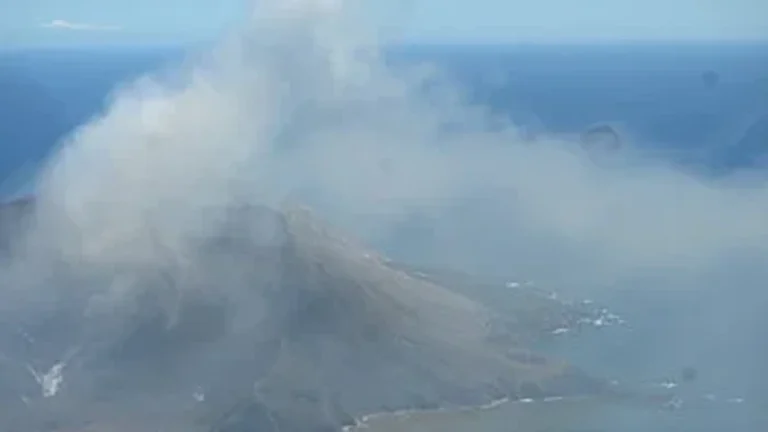
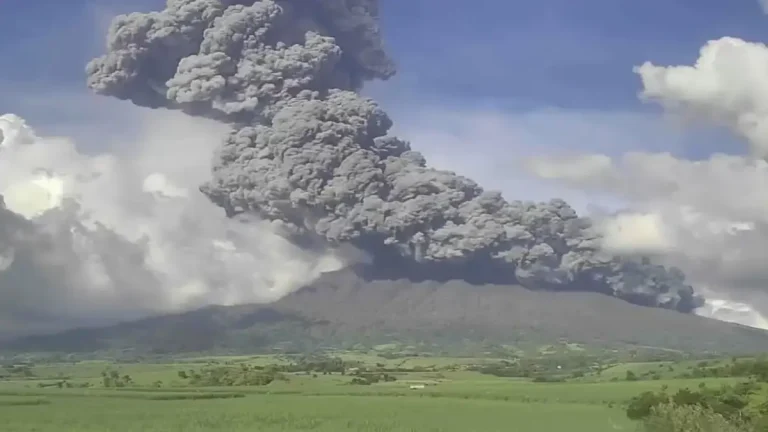
A strong explosion took place at Indonesia’s Dukono volcano at 06:15 local time (LT) on December 7, 2024, producing a tall ash column up to 6 km (20 000 feet) above sea level (a.s.l.).

A strong explosion took place at Indonesia’s Dukono volcano at 06:15 local time (LT) on December 7, 2024, producing a tall ash column up to 6 km (20 000 feet) above sea level (a.s.l.).

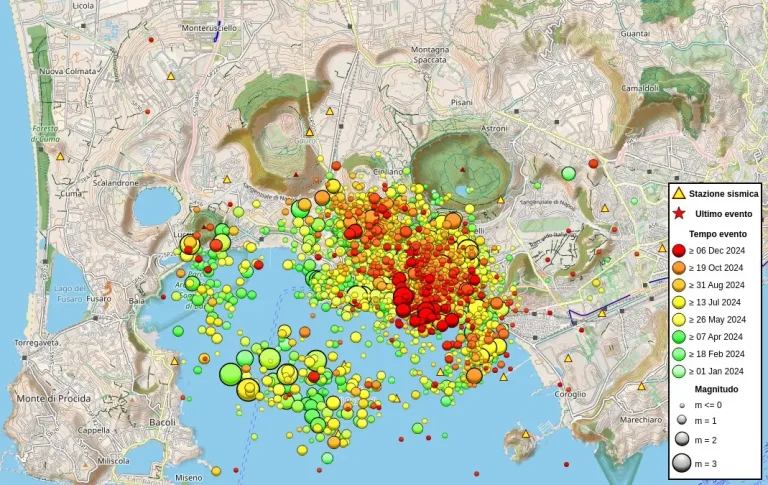
An earthquake swarm began in the Campi Flegri area in southern Italy at 04:33 UTC (05:33 local time (LT) on Friday, December 6, 2024, and ended by 17:14 UTC.

Increased seismic activity was observed at Indonesia’s Ranakah volcano over the past month, prompting the Center for Volcanology and Geological Hazard Mitigation (PVMBG) to raise the Alert Status for the volcano from Level 1 to Level 2 on December 3, 2024. The last eruption at this volcano took place in 1991.

New activity/unrest was reported for 7 volcanoes from November 27 to December 3, 2024. During the same period, ongoing activity was reported for 16 volcanoes.

Multiple ash emissions were recorded at Kanlaon volcano, Philippines over the past couple of days, with ash rising up to 750 m (2 460 feet) above the summit. The volcano remains under Alert Level 2.

Increased seismic activity has been recorded at Kilauea volcano over the past week, with an increase from 10 located events per day to 20 per day.

Taal Volcano experienced a minor phreatomagmatic eruption at 5:58 LT (21:58 UTC on December 2, 2024)on December 3. The eruption, lasting 4 minutes, released a dark plume that rose 2 800 m (9 186 feet) above Taal Volcano Island (TVI) and drifted west-southwest, as confirmed by the Philippine Institute of Volcanology and Seismology (PHIVOLCS).

A strong eruption took place at Bledug Kesongo mud volcano in Gabusan village area, Indonesia’s Central Java on Tuesday, December 3, 2024, ejecting mud up to 20 m (65 feet) into the air. The eruption follows two weaker ones on December 2.

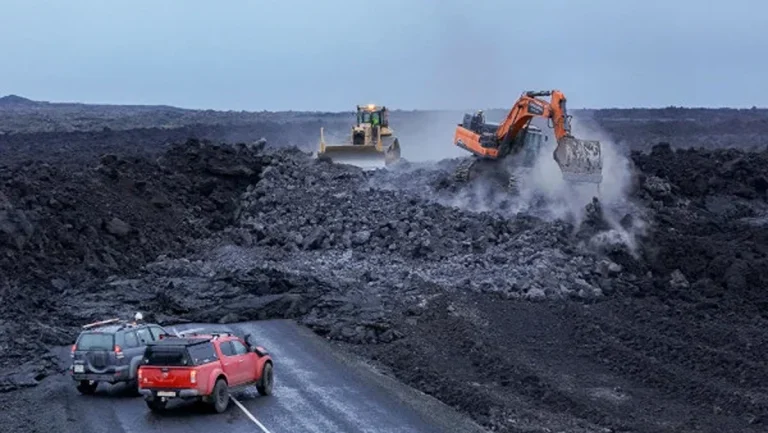
The eruption that started on November 20, 2024, at the Sundhnúks crater row near Grindavik, Reykjanes Penisula, Iceland is now the second largest in the volume of the eruptions that have occurred in the Sundhnúks crater row since December 2023.

Eruptive activity near Grindavik, Iceland, remains steady on November 28, 2024, with the eruption continuing from a single vent and lava flowing east and southeast. Gas pollution caused by northeast winds at 35 – 55 km/h (20 – 35 mph) was moving toward Grindavík today and was forecast to spread to nearby areas as the weather patterns change.