• Humanity rapidly depleting one third of Earth’s largest aquifers

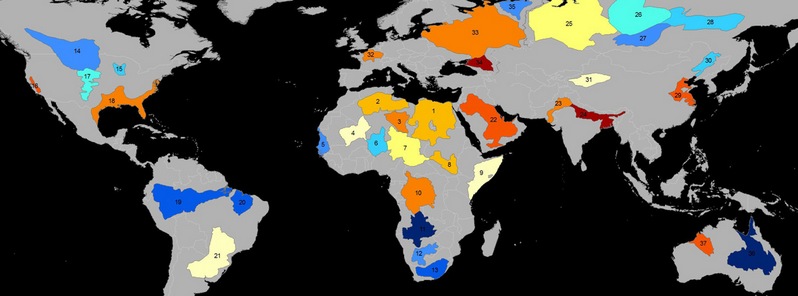
    In two new studies led by the University of California, Irvine (UCI), scientists mapped 37 of the world's largest underground basins using NASA's Gravity Recovery and Climate Experiment (GRACE) satellites and concludes that humanity is rapidly depleting one
  • North Korea hit by the worst drought in a century

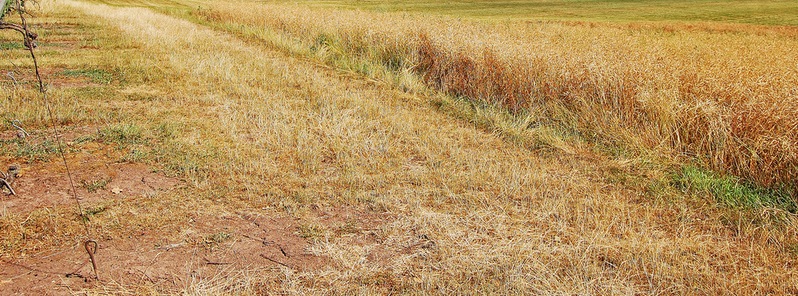
    North Korea is facing its worst drought in a century, according to state media. South Hwanghae, North Hwanghae, South Pyongan and South Hamgyong, the country's main rice growing provinces are already heavily affected, and the fear of food shortages is increasing.&qu

  • Satellite mapping reveals agricultural slowdown in Latin America

    For the first time, satellite mapping of Latin America shows that the continent's agricultural expansion has waned in the wake of the global economic downturn, according to UBC research."Nearly every agricultural region across Latin America slowed down in

  • Can organic crops compete with industrial agriculture?

    A systematic overview of more than 100 studies comparing organic and conventional farming finds that the crop yields of organic agriculture are higher than previously thought. The study, conducted by UC Berkeley researchers, also found that certain practices could furth

  • World is losing 2 000 hectares of farm soil daily to salt damage

    Salt-spoiled soils worldwide: 20% of all irrigated lands — an area equal to size of France. Extensive costs include $27 billion+ in lost crop value/year. UNU study identifies ways to reverse damage, says every hectare needed to feed world’s fast-growing popu

  • Sri Lanka bans glyphosate herbicide to avoid kidney disease risk

    Sri Lanka, the large island south of India, is home to more than 20 million people who are now saying "no" to Monsanto's Roundup. Sri Lanka's president has suddenly issued a ban on glyphosate herbicide, as new studies suggest that the chemical is a

  • Seed diversity has collapsed more than 12-fold since early 1900s

    From the looks of an average produce section in a typical American supermarket, it might seem like modern society has access to basically every major type of fruit, vegetable and herb one could want. But a survey conducted by the U.S. National Seed Storage Laboratory