I'm a dedicated researcher, journalist, and editor at The Watchers. With over 20 years of experience in the media industry, I specialize in hard science news, focusing on extreme weather, seismic and volcanic activity, space weather, and astronomy, including near-Earth objects and planetary defense strategies. You can reach me at teo /at/ watchers.news.

  • Queensland hit by very rare M5.1 earthquake, Australia

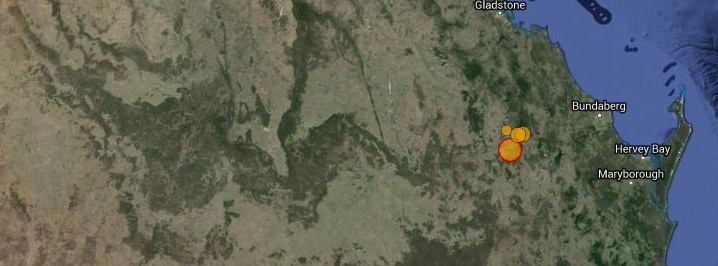
    A shallow M5.1 earthquake was registered 25 kilometers (15.5 miles) from the city of Eidsvold, Queensland, Australia at 02:57 AEDT on February 16, 2015 (15:57 UTC on February 15). Geoscience Australia (GA) is reporting depth of 15 km (9.32 miles).Numerous aftershock wer
  • Deep Space Climate Observatory (DSCOVR) successfully launched

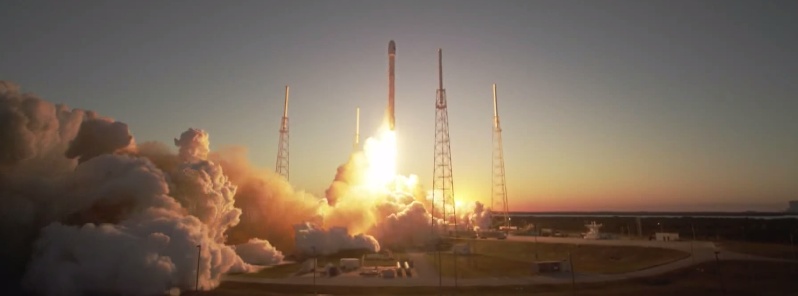
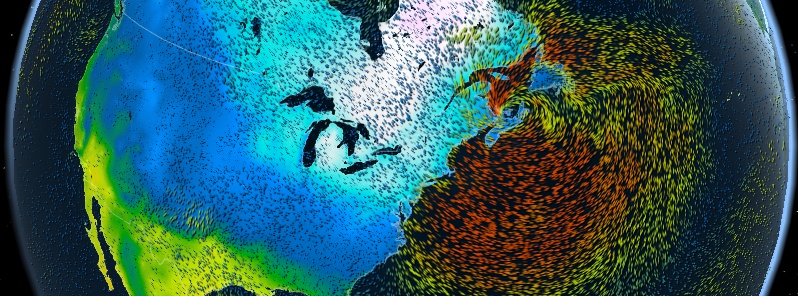
    After a few days of delay, the Deep Space Climate Observatory or DSCOVR was finally launched at 23:03 UTC on Wednesday, February 11, 2015.DSCOVR was launched on a SpaceX Falcon 9 rocket from the Space Launch Complex 40 at Cape Canaveral Air Force Station in Florida and

  • Active volcanoes in the world: February 4 – 10, 2015

    New activity was observed at 9 volcanoes from February 4 – 10, 2015. During the same period, ongoing activity was observed also at 9 volcanoes.New activity/unrest: Colima, Mexico | Fuego, Guatemala | Karymsky, Eastern Kamchatka (Russia) | Klyuchevskoy, Central Kamchatka

  • New videos released in honor of SDO’s 5th anniversary

    February 11, 2015 marks five years in space for NASA's Solar Dynamics Observatory, which provides incredibly detailed images of the whole Sun 24 hours a day.Capturing an image more than once per second, SDO has provided an unprecedentedly clear picture of how massiv

  • Very strong and deep M6.7 earthquake hits Jujuy, Argentina

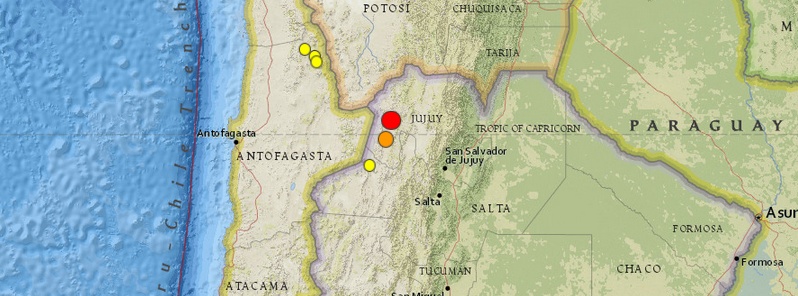
    A very strong and deep earthquake measuring M6.7 hit Jujuy, Argentina at 18:57 UTC on February 11, 2015. USGS is reporting depth of 190.8 km (118.5 miles). EMSC is reporting M6.6 at a depth of 180 km (111 miles).Epicenter was located 93 km (58 mi) W of El Aguilar, 128 k

  • Huge solar filament facing Earth

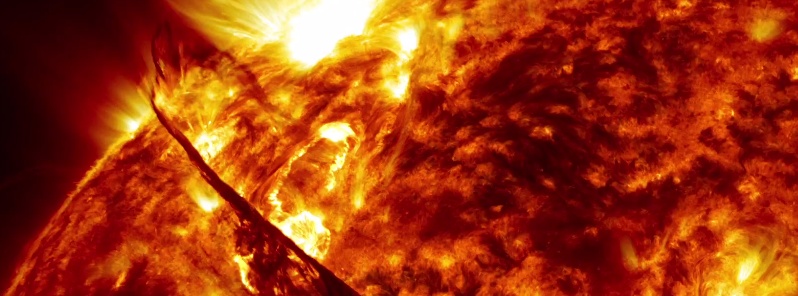
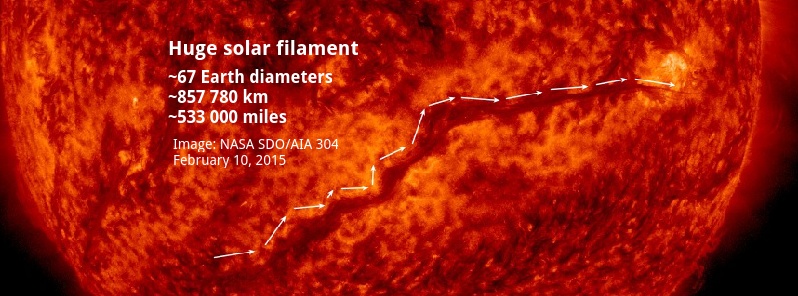
    A huge solar filament is facing Earth today and, if it doesn't erupt, will continue to do so in the coming days. Stretched out, it would be more than 857 780 km or 533 000 miles long, which is more than 67 Earth diameters. Image below shows this filament as…