Asteroid 2025 OS flew past Earth at just 0.03 lunar distances
A newly discovered asteroid designated 2025 OS flew past Earth at a distance of just 0.03 LD (0.00007 AU / 10 457 km / 6 498 miles) at 03:21 UTC on July 19, 2025.
I'm a dedicated researcher, journalist, and editor at The Watchers. With over 20 years of experience in the media industry, I specialize in hard science news, focusing on extreme weather, seismic and volcanic activity, space weather, and astronomy, including near-Earth objects and planetary defense strategies. You can reach me at teo /at/ watchers.news.

A newly discovered asteroid designated 2025 OS flew past Earth at a distance of just 0.03 LD (0.00007 AU / 10 457 km / 6 498 miles) at 03:21 UTC on July 19, 2025.

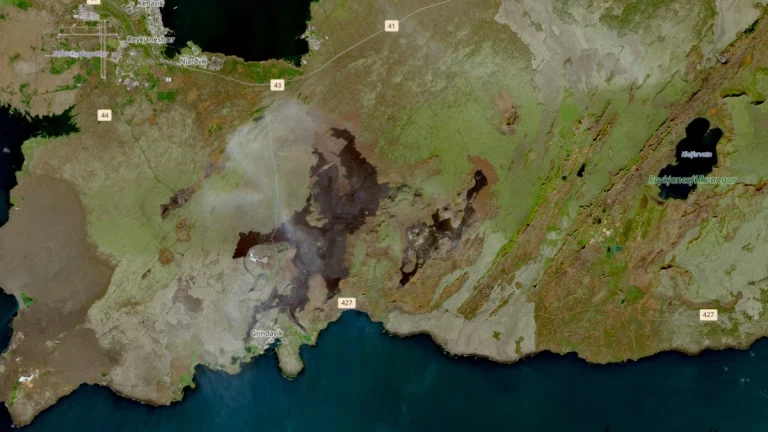
Volcanic haze and elevated levels of sulfur dioxide (SO2) from the Sundhnúk crater range eruption are affecting the western half of Iceland, especially the southwesternmost regions. The Icelandic Meteorological Office forecasts persistent volcanic haze in the south and west through Monday, due to slow and variable winds.

A strong earthquake registered by the USGS as M6.2 hit south of Sand Point, Alaska at 22:28 UTC on July 20, 2025. The agency is reporting a depth of 47.3 km (29 miles). EMSC is reporting the same magnitude and depth. The quake hit four days after powerful M7.3 struck the same region, triggering a Tsunami Warning.

A very strong earthquake registered by the USGS as M7.4 hit near the coast of the Kamchatka Peninsula, Russia at 06:49 UTC on July 20, 2025. The agency is reporting a depth of 20 km (12.4 miles). The quake was preceded by M5.0 at 06:02 and M6.7 at 06:28 UTC and followed by another M6.7 at 09:07 UTC.

New activity/unrest was reported for 7 volcanoes from July 9 to 15, 2025. During the same period, ongoing activity was reported for 18 volcanoes.

The Peruvian Geophysical Institute investigated a mound near Songoña in the Cusco region, dubbed the ‘smallest volcano in the world’ by local media, and confirmed it as a small mud volcano.

A very strong earthquake registered by the USGS as M7.3 hit Alaska Peninsula at 20:37 UTC on July 16, 2025. The agency is reporting a depth of 20 km (12.4 miles). EMSC is reporting the same magnitude and depth.
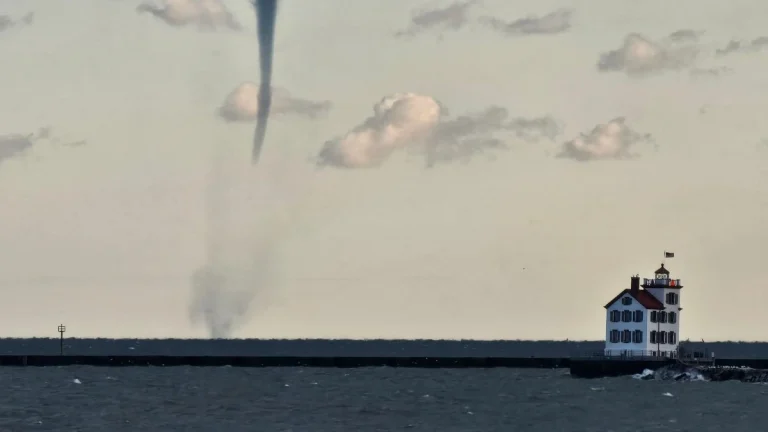
A large tornado was confirmed on the ground near Dodgeville, Wisconsin at approximately 12:28 CDT (17:28 UTC) on July 16, 2025, according to live video and trained spotter reports.

A fissure eruption began at the Sundhnúksgígar crater row, southeast of Litla-Skógfell, Iceland, around 03:54 UTC on July 16, 2025. The eruptive fissure is approximately 700–1 000 m (2 300–3 280 feet) long and appears to be propagating northward, with lava flowing southeast and no immediate threat to infrastructure.

A low-pressure system designated Invest 93L is moving westward across the Florida Peninsula on July 15, 2025, with a medium chance of tropical cyclone development in the northeastern Gulf by mid-week. The system could become a tropical depression or Tropical Storm Dexter later this week, potentially affecting the northern Gulf Coast with heavy rain and localized flooding.