Historic flooding hits Milwaukee region after record-breaking rainfall, Wisconsin
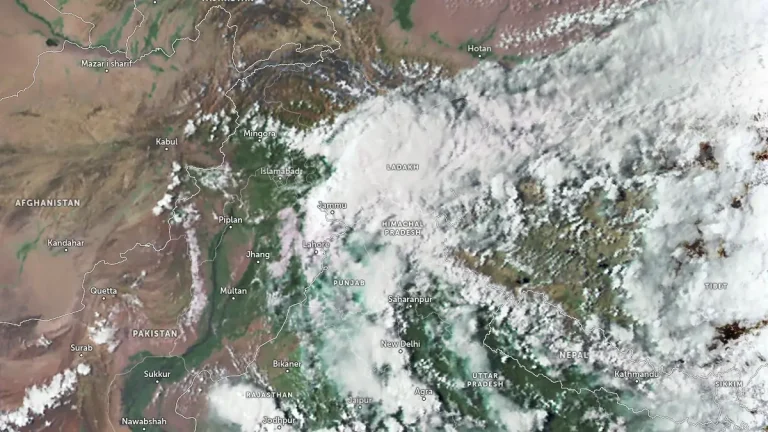
Milwaukee recorded its second-wettest day on August 9, 2025, with 146 mm (5.74 inches) of rain causing historic flooding across the city and nearby areas.
I'm a dedicated researcher, journalist, and editor at The Watchers. With over 20 years of experience in the media industry, I specialize in hard science news, focusing on extreme weather, seismic and volcanic activity, space weather, and astronomy, including near-Earth objects and planetary defense strategies. You can reach me at teo /at/ watchers.news.

Milwaukee recorded its second-wettest day on August 9, 2025, with 146 mm (5.74 inches) of rain causing historic flooding across the city and nearby areas.

A strong and shallow earthquake registered by the USGS as M6.1 hit Balikesir province in western Turkey at 16:53 UTC (19:53 local time) on August 10, 2025. The agency is reporting a depth of 10 km (6.2 miles). EMSC is reporting M6.0 at a depth of 8 km (5 miles).

More than 750 volcano-tectonic and hybrid earthquakes were recorded beneath the Teide–Pico Viejo volcanic complex in Tenerife, Canary Islands between August 6 and 7, 2025. This includes two seismic swarms at depths of 8–14 km (5–9 miles), with the largest event reaching M1.5.

Volcanic alert level at Kusatsu-Shiranesan’s Yugama crater, Japan was raised to Level 2 at 05:50 LT on August 4, 2025, following increased seismic activity and minor ground deformation since June.

A G2 – Moderate geomagnetic storm watch is in effect for August 8, 2025, due to an incoming coronal mass ejection (CME) and co-rotating interaction region from a coronal hole in the Sun’s southern hemisphere.

New activity/unrest was reported for 9 volcanoes from July 30 to August 5, 2025. During the same period, ongoing activity was reported for 22 volcanoes.

A moderately strong M4.4 solar flare erupted from Active Region 4168 at 15:53 UTC on August 5, 2025, producing a coronal mass ejection (CME). Initial modeling indicates most of the material was directed ahead of Earth’s orbit, with a glancing blow or shock arrival possible by late August 8.

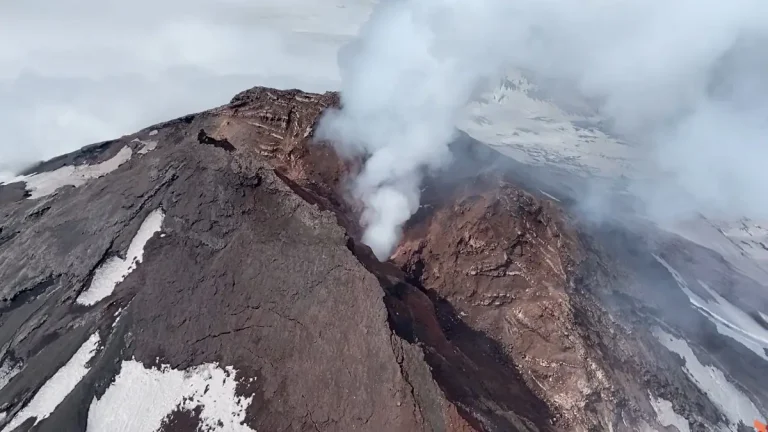
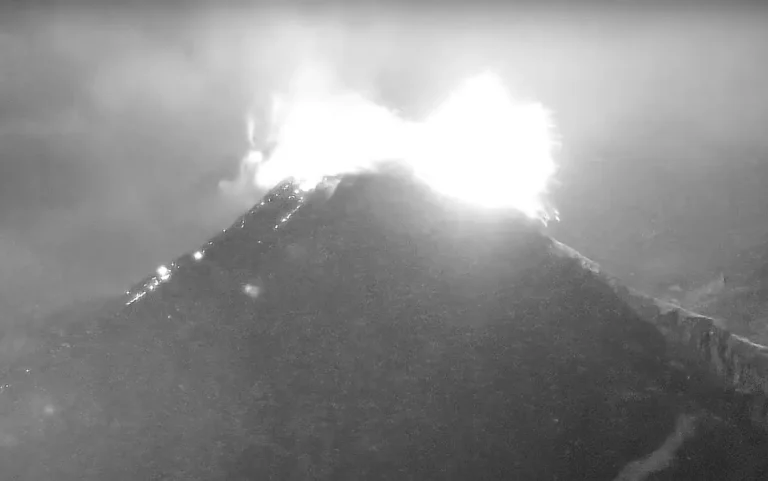
Eruptive activity at Klyuchevskoy volcano intensified after M 8.8 earthquake on July 29, 2025, with a large lava flow descending the WSW flank, continuous lava fountaining, and a significant ash plume. Based on volcanic tremor data and current eruptive behavior, a paroxysmal eruption is considered likely within the next 72 hours.

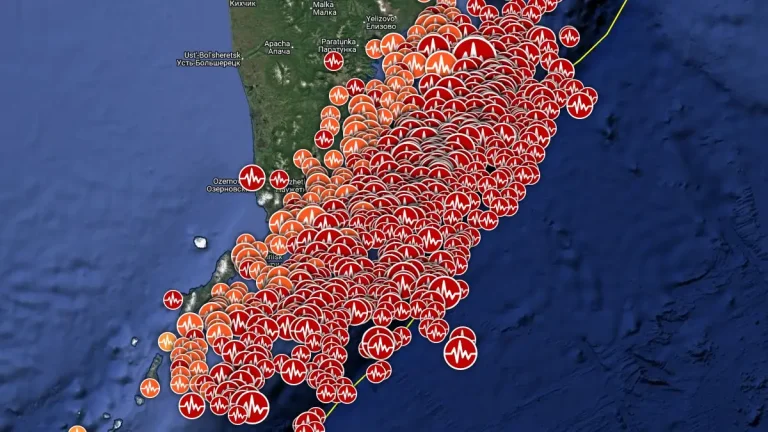
Preliminary data from KBGSRAS shows that the southern part of the Kamchatka Peninsula shifted southeastward by nearly 2 m (6.6 feet) after M8.8 earthquake on July 29. This is comparable in scale to displacement observed during the 2011 M9.1 Tōhoku earthquake in Japan.

A newly discovered asteroid designated 2025 PU flew past Earth at a distance of just 0.14 LD (0.00035 AU / 53 000 km / 33 000 miles) from the center of our planet at 21:42 UTC on August 2, 2025.