I'm a dedicated researcher, journalist, and editor at The Watchers. With over 20 years of experience in the media industry, I specialize in hard science news, focusing on extreme weather, seismic and volcanic activity, space weather, and astronomy, including near-Earth objects and planetary defense strategies. You can reach me at teo /at/ watchers.news.

  • Evacuations underway after Mayon volcano’s dome collapse and pyroclastic flows, Philippines

    Nearly 3 000 residents have been evacuated from communities around Mayon volcano in Albay Province, Philippines, after the Philippine Institute of Volcanology and Seismology (PHIVOLCS) raised the alert status to Level 3 on January 6, 2026. The evacuation follows intensified dome collapse events, pyroclastic density currents, and ongoing effusive lava extrusion at the summit.

  • Rapid ice breakup causes flood in Kanas Scenic Area, northwest China

    A sudden ice flood occurred on January 5, 2026, in the Kanas Scenic Area of Xinjiang, China, sending large ice blocks rushing downstream in the Kanas River. The short-lived event was captured on video and later described by local authorities as a localized “ice flood” caused by ice breakup due to warmer temperatures.

  • Japan braces for another heavy snow event following early-January traffic paralysis

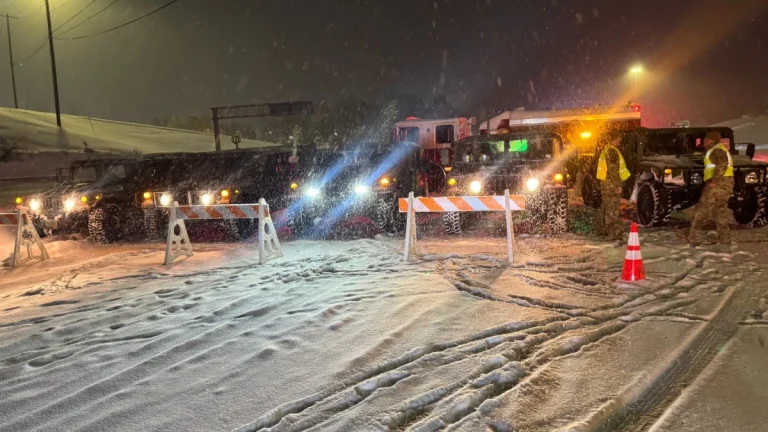
    Japan Meteorological Agency (JMA) forecasts heavy snowfall around January 11–12, 2026, as a strong cold surge moves over Honshu, with warning-level accumulations expected along the Sea of Japan side including Hokuriku and Tohoku. Regional observatories report the potential for five-day snowfall totals exceeding 160 percent of seasonal averages, a rare magnitude for this time of year. This follows the early-January snowstorm that immobilized about 3 000 vehicles over a 23 km (14 miles) stretch of the Sanyō Expressway in western Japan.

  • Severe multi-state heatwave drives extreme bushfire risk across southern Australia

    Australia is enduring one of its most intense heatwaves since the 2019–20 Black Summer, with extreme temperatures, strong winds and dry lightning fuelling catastrophic fire danger across multiple states. Emergency-level bushfires have been reported in South Australia and Victoria, while BOM forecasts indicate the threat will intensify through Friday, before cooler air reaches southern regions at the weekend.

  • Strong M6.5 earthquake hits Guerrero, Mexico

    A strong earthquake registered by the USGS as M6.5 struck Guerrero, Mexico, at 13:58 UTC (07:58 LT) on January 2, 2026. The agency is reporting a depth of 35 km (21.7 miles). EMSC is reporting the same magnitude and depth. The USGS issued a Yellow alert for shaking-related fatalities and a Green alert for economic losses.

  • Scientists identify rare jet-forced wind pattern behind 2025 Los Angeles urban firestorm

    When powerful northerly winds swept through Los Angeles on January 7, 2025, they unleashed one of the most destructive urban firestorms in U.S. history. A new study attributes those winds to a rare “jet-forced Santa Ana” pattern — a collision of upper-level atmospheric forces that produced gusts over 35 m/s (80 mph), destroyed more than 16 000 structures, and killed 31 people. The event struck ahead of the first winter rain, after months of near-record dryness that left vegetation tinder-dry.

  • Shallow M6.0 earthquake hits southeast Indian Ridge

    A shallow earthquake registered by the USGS as M6.0 struck the southeast Indian Ridge at 01:53 UTC on January 1, 2026. The agency is reporting a depth of 10 km (6.2 miles). EMSC is reporting the same magnitude and depth.