I'm a dedicated researcher, journalist, and editor at The Watchers. With over 20 years of experience in the media industry, I specialize in hard science news, focusing on extreme weather, seismic and volcanic activity, space weather, and astronomy, including near-Earth objects and planetary defense strategies. You can reach me at teo /at/ watchers.news.

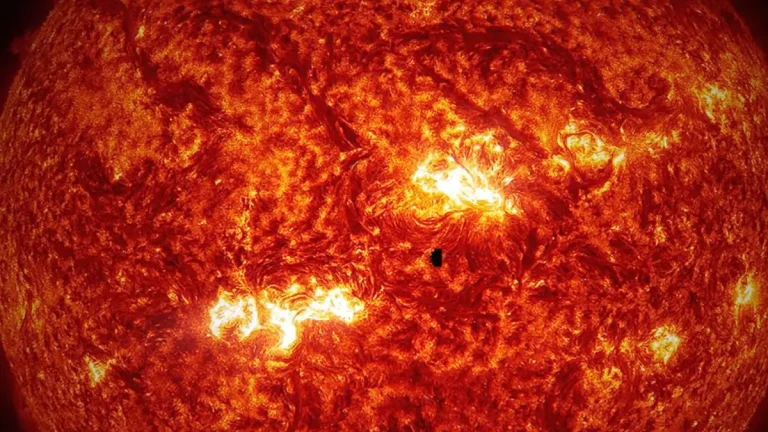
  • Major X8.1 solar flare erupts from AR 4366 following explosive growth

    A major X8.1 solar flare erupted from Active Region 4366 at 23:57 UTC on February 1, 2026, following rapid magnetic expansion and intense flaring throughout the day. The region also produced an X1.0 flare at 12:33 UTC on February 1 and an X2.8 event at 00:36 UTC and an X1.6 at 08:14 UTC on February 2, accompanied by more than 20 M-class flares since 02:00 UTC on February 1.
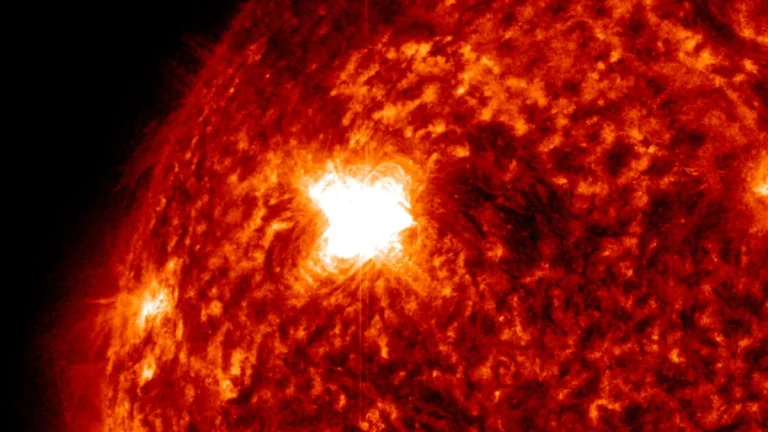
  • Major X1.0 flare erupts from Region 4366, Earth-directed CMEs possible in days ahead

    A major X1.0 solar flare erupted at 12:33 UTC on February 1, 2026, from Active Region 4366, following a sequence of strong M-class flares earlier in the day, including M6.6 and M6.7 flares within two hours. The event started at 11:52 and ended at 12:38 UTC. With the region now rotating toward the center of the solar disk and maintaining a complex beta-gamma-delta magnetic configuration, conditions are favorable for Earth-directed CMEs in the days ahead.

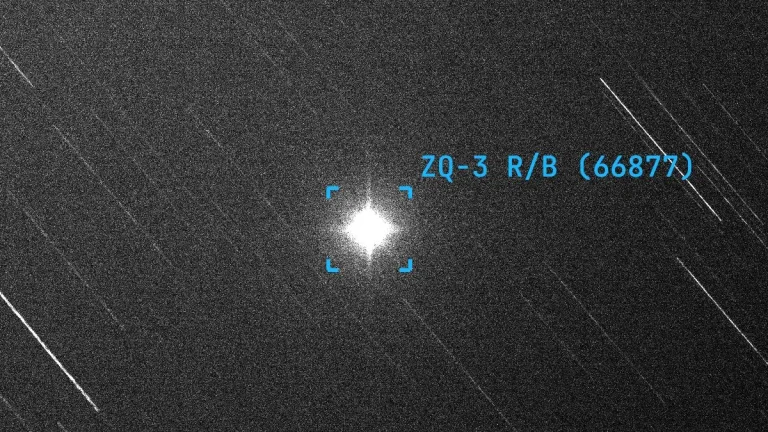
  • Chinese ZQ-3 R/B rocket stage expected to re-enter atmosphere over Europe today

    An uncontrolled atmospheric re-entry of the Chinese ZQ-3 R/B second stage, weighing about 11 tonnes, is expected over Europe on January 30, 2026. EU Space Surveillance and Tracking (EU SST) reports a predicted re-entry centered near 11:20 UTC ± 48 minutes. National sensors coordinated through the Finnish Meteorological Institute (FMI) and EU SST Operations Centres are tracking the object and assessing potential airspace impacts south of Denmark and in the Baltic region.

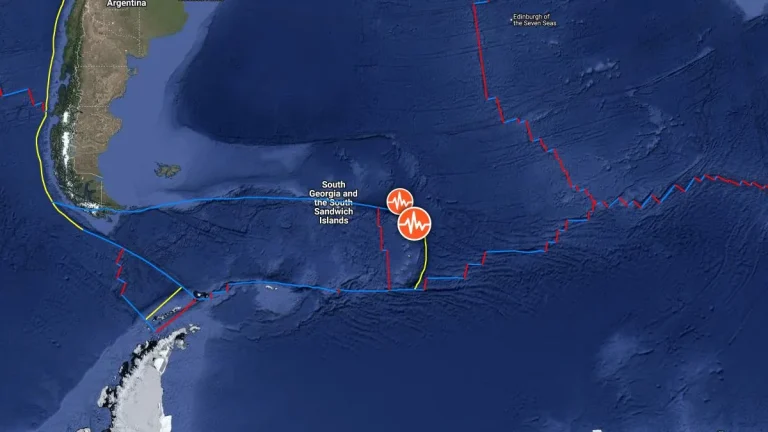
  • M6.0 earthquake hits South Sandwich Islands region

    A strong earthquake registered by the USGS as M6.0 struck the South Sandwich Islands region at 07:30 UTC on January 29, 2026. The agency is reporting a depth of 74.7 km (46 miles). EMSC is reporting M6.0 at a depth of 26 km (16 miles). There is no tsunami threat from this event.

  • SOLAR-1 reaches Lagrange point 1, beginning NOAA’s new operational era in space-weather observation

    A new operational space-weather satellite, named SOLAR-1, took position between Earth and the Sun on January 23, 2026, about 1.6 million km (1 million miles) from Earth. The observatory begins the transition of U.S. space-weather monitoring from research missions to continuous hazard surveillance, enabling earlier detection of solar storms that can affect satellites, communications, and power systems.

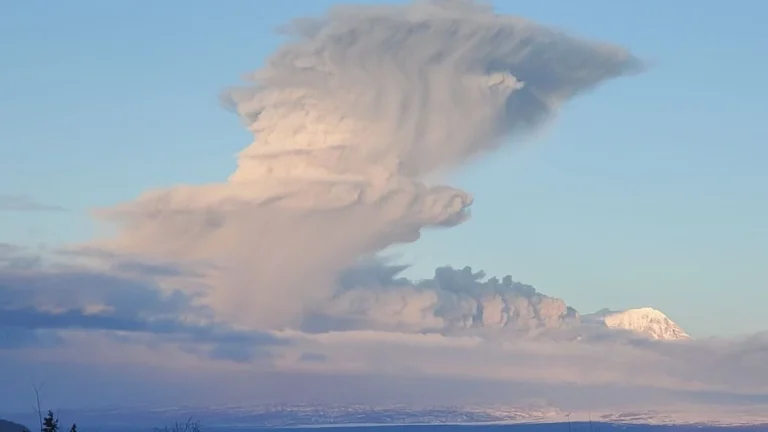
  • Sheveluch eruption produces ash to 9 km (30 000 feet) a.s.l., possible light ashfall in nearby districts, Russia

    An explosive pulse at Sheveluch volcano, Kamchatka, Russia, around 04:54 UTC on January 28, 2026, sent ash to about 9 km (30 000 feet) above sea level, with a plume drifting west over the Kamchatka Peninsula. Tokyo VAAC advisories through 12:00 UTC indicate continuing ash, with tops between 6 km (19 700 feet) and 7 km (23 000 feet) after the initial 9 km (30 000 feet) eruption.

  • NWS increases confidence in heavy snow across the Carolinas and southern Virginia as Arctic air deepens

    A surge of Arctic air will spread across the central and eastern United States from Friday, January 30, 2026, bringing the longest duration of cold in several decades to parts of the region. Forecast confidence has increased for a winter storm to develop along the East Coast over the weekend, with the highest likelihood of heavy snowfall across the Carolinas and southern Virginia, and gusty coastal winds extending into the Mid-Atlantic.

  • Rare gulf-effect snow setup appears in model guidance for Florida this weekend

    Forecast models are indicating a rare possibility of gulf-effect snow developing over parts of the Florida Gulf Coast during the weekend of January 31 – February 1, 2026. The setup could briefly produce isolated snow flurries near Tampa and along the coast as Arctic air flows across the warm Gulf of Mexico. The probability remains very low and is dependent on the precise alignment of wind, temperature, and moisture conditions.

  • Victoria sets new all-time temperature record of 48.9°C (120°F) amid severe heatwave, Australia

    Temperatures across southeastern Australia reached record levels on January 27, 2026, with the Bureau of Meteorology confirming a new all-time high of 48.9°C (120°F) at Walpeup and Hopetoun in Victoria. The readings surpassed the previous state record of 48.8°C (119.8°F) set in 2009, amid severe to extreme heatwave conditions extending across Victoria, South Australia, and inland New South Wales.