
Seoul records heaviest daily rain and warmest temperature for November, South Korea

Image credit: Andrew Rochfort
Unseasonably heavy rains hit central regions in South Korea on Thursday, November 19, 2020, with Seoul receiving 68.2 mm (2.7 inches)– the heaviest daily rain record for November since modern record-keeping started in 1907, according to the Korea Meteorological Administration (KMA). On the same day, the capital also recorded its warmest November day with a low of 17.1 °C (62.8 °F).
As of 23:00 UTC on November 18 (08:00 LT on November 19), 68.2 mm (2.7 inches) of rain fell in the capital city, exceeding the previous daily record of 67.4 m (2.6 inches) set on November 7, 1916.
It is the heaviest rainfall recorded in the city for the month of November since modern weather data-keeping began 113 years ago. The amount of rain that fell in Seoul on Thursday was about four times the normal for this time of the year.
As a result, some roads were flooded, including the area near the Gwanghwamun Square in central Seoul.
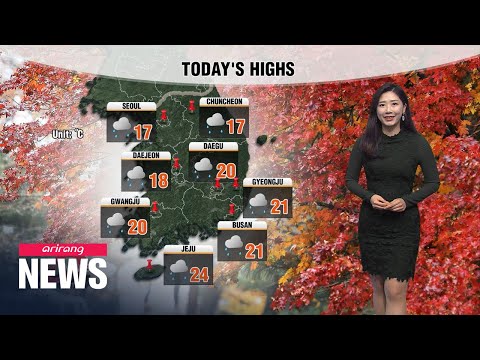
KMA said precipitation is forecast to further increase for the rest of the day as Seoul and central regions, including portions of Gangwon and South Chungcheong, are being lashed by strong rains of up to 20 mm (0.8 inches) per hour, accompanied by lightning and thunder.
"The humid and warm air created by the low atmospheric pressure clashed with cold air coming from the northwest, resulting in heavy rainfall," explained a KMA official.
Despite the unseasonal heavy downpour, Seoul's morning low was 17.1 °C (62.8 °F)– the highest on record for November, beating the previous record of 16.4 °C (61.5 °F) set on November 5, 2011.

Published in the last 24 hours
- When Arctic air reached South Florida in January 2020, Miami fell to 40°F and the National Weather Service warned residents to watch for cold-stunned iguanas dropping out of the trees Epicenter
- In May 2024, the strongest solar storm in 20 years put northern lights over the southern US, and across the Plains, GPS-guided tractors built to plant within an inch drifted about 10 feet off their rows Epicenter
- In 1943, a flight instructor in Texas flew a two-seat training plane into the eye of a hurricane because he was curious, then landed and took the base weatherman up for a second pass Epicenter
- A soy sauce maker used fire to guide villagers through Japan’s 1854 tsunami, then funded a seawall that protected most of Hiro in 1946 Epicenter
