
Rare huge sinkhole found in Donglan County, China
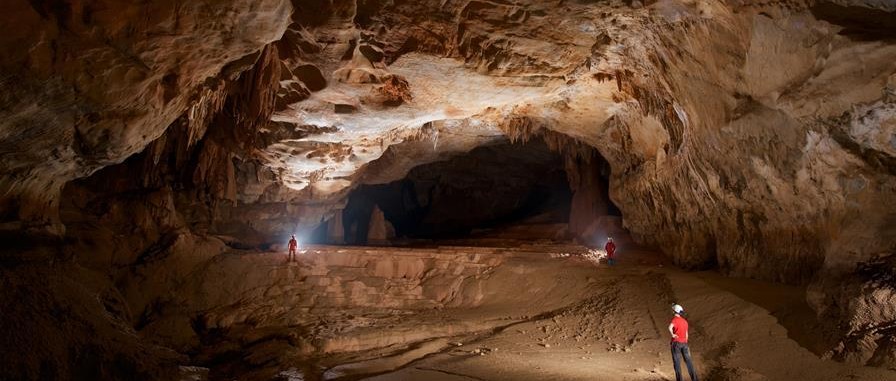
Image credit: Exploring huge sinkhole in Donglan County, Hechi City of south China's Guangxi Zhuang Autonomous Region. Image copyright: Xinhua
Scientists have discovered a rare huge sinkhole in south China's Guangxi Zhuang Autonomous Region. The discovery was made during an eight-day expedition by scientists from France and China that began on February 26.
Although such sinkholes, also known as dolines, have already been found in China, it is rare to find one of this size.
While sinkholes found in Guangxi are normally around 250 meters (820 feet) deep, the newly discovered hole stretches 16.5 km (10.25 miles) long and is 420 meters (1 377 feet) deep. It has waterfalls, lakes, rivers, unique geological formations and a broad range of different sized stalagmites.
The expedition explored 12 sinkholes Donglan County, Guangxi and discovered a variety of species, including bats, snakes, and some invertebrates that have not been able to be identified yet.
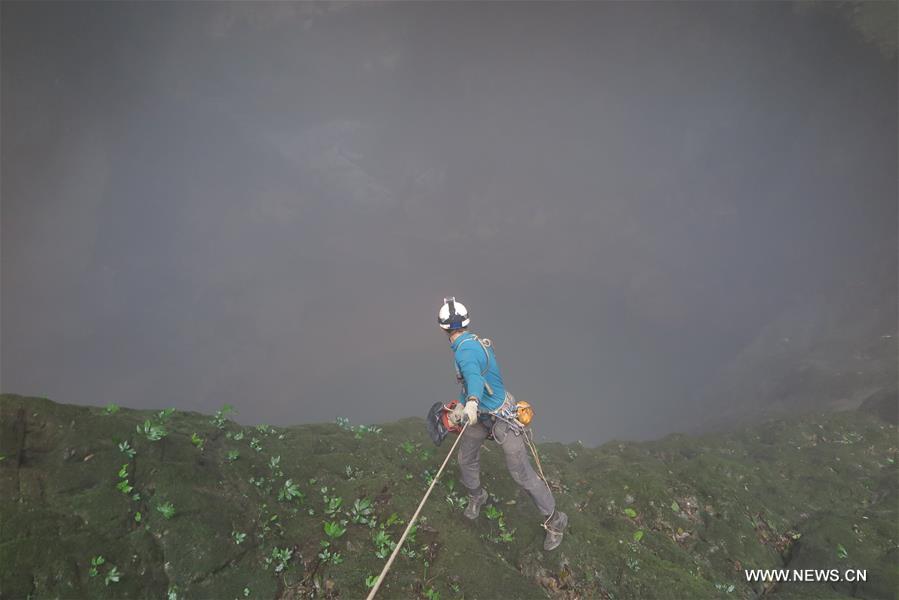
Explorer preparing to enter a sinkhole in Donglan County, Hechi City of south China's Guangxi Zhuang Autonomous Region. Image copyright: Xinhua
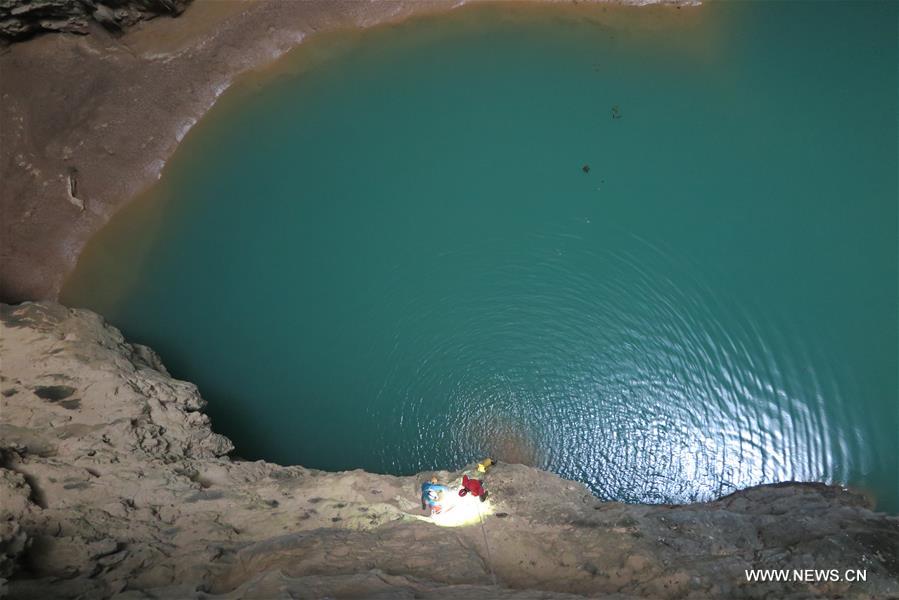
Groundwater found at a huge sinkhole in Donglan County. Image copyright: Xinhua
The largest sinkhole in Guangxi region is 613 m (2 011 feet) deep and 420 m (1 377 feet) wide. According to Xinhua, there is a forest at its bottom, covering more than 10 000 square meters (107 639 square feet). The world's largest sinkhole is 660 m (2 165 feet) deep with an area of 119 million cubic meters (420 million cubic feet) found in the Chongqing Municipality of China.
According to IBT, sinkholes are common in China and have been a growing concern. 54 were reported in 2007, 94 in 2008, and 129 in 2009. In August 2012, 99 sinkholes appeared in Beijing in a period of 22 days.
Dolines are special geological landscape formations found in karst regions, formed by repeated cave-ins of underground caves. They are common in China, Mexico and Papua New Guinea.

The Watchers team and our contributors bring the latest on extreme weather, earthquakes, volcanic eruptions, space weather, and all things science. We're all about making sense of the natural world and keeping you informed on what’s happening. Got a tip or a question? Hit us up using the form at newstips!

Commenting rules and guidelines
We value the thoughts and opinions of our readers and welcome healthy discussions on our website. In order to maintain a respectful and positive community, we ask that all commenters follow these rules.