• Southern crown coronal hole stirring up geomagnetic storms

    Earth is currently under the influence of a high speed solar wind speed, originating in negative polarity southern crown coronal hole, which is causing periods of geomagnetic storming on our planet.Solar wind readings indicated a co-rotating interaction region (CIR) whi
  • Strong and deep M6.3 earthquake hits San Luis, Argentina

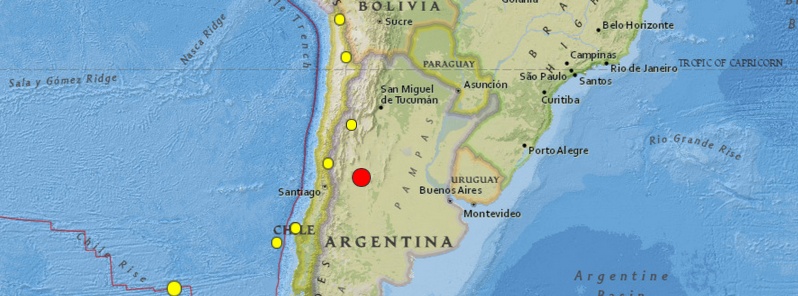
    A strong and deep earthquake with recorded magnitude of 6.3 hit San Luis, Argentina at 10:49 UTC on February 2, 2015 (07:49 local time). USGS is reporting depth of 172.3 km. EMSC is also reporting M6.3 but at a depth of 157 km.Epicenter was located 87 km (54 miles) NW o

  • Night sky guide for February 2015

    The period of February through March is not known meteor activity, however, the fireball season starts this month and will last until April. The best fireball activity occurs during the early evening hours so watch out for those bright balls of fire.There are only a cou

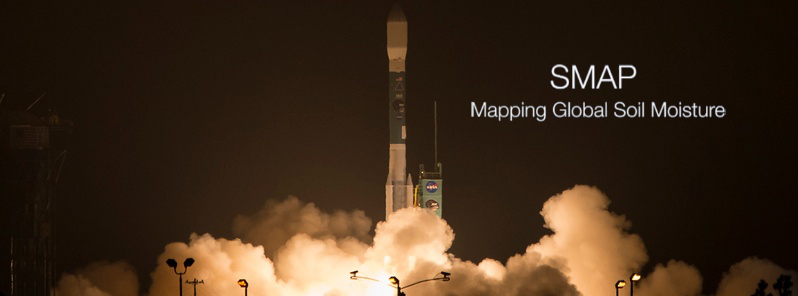
  • Groundbreaking SMAP Earth observatory launched

    NASA has successfully launched its groundbreaking Soil Moisture Active Passive observatory (SMAP) at 15:22 UTC today. SMAP is the first Earth satellite designed to collect global observations of the vital soil moisture hidden just beneath our feet. Its high resolution s

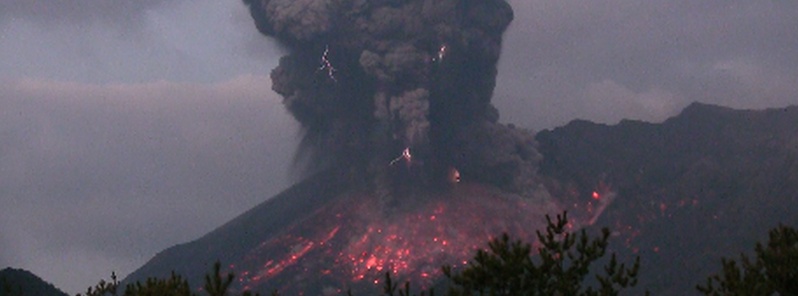
  • Intense explosions at Sakurajima, Japan

    Intense explosions accompanied by volcanic ash which is falling on nearby communities are continually observed at Japanese Sakurajima volcano.The Tokyo VAAC reported an explosion at 03:38 UTC today sent volcanic ash up to 2.7 km. Explosion at 09:41 UTC sent ash up 3 km.

  • Galactic ‘hailstorm’ in the early Universe

    Astronomers have been able to peer back to the young Universe to determine how quasars – powered by supermassive black holes with the mass of a billion suns – form and shape the evolution of galaxies. Two teams of astronomers led by researchers at the

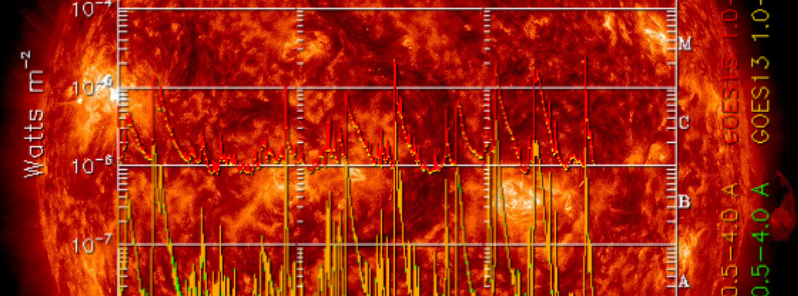
  • Increased solar activity continues

    Solar activity continues at moderate levels today with two M-class flares (M2.0 and M1.7) erupting from Region 2268 and one from newly numbered Region 2277 (M2.4).The first M-class solar flare of the day was an impulsive M2.0 which erupted at 00:44 UTC. It was followed