• World’s largest asteroid impacts found in central Australia

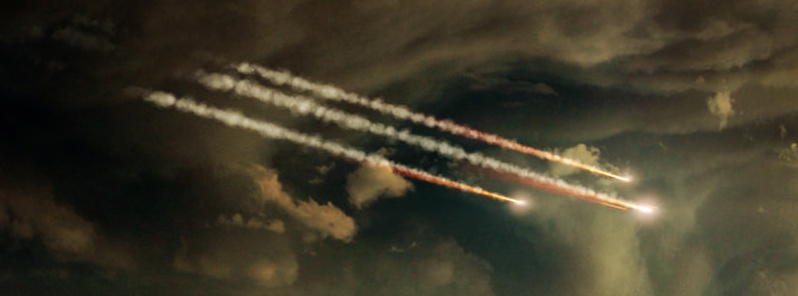
    A 400 km-wide impact zone from a huge meteorite that broke in two moments before it slammed into the Earth has been found in central Australia. The crater from the impact millions of years ago has long disappeared, but a team of geophysicists has found the twin scars of
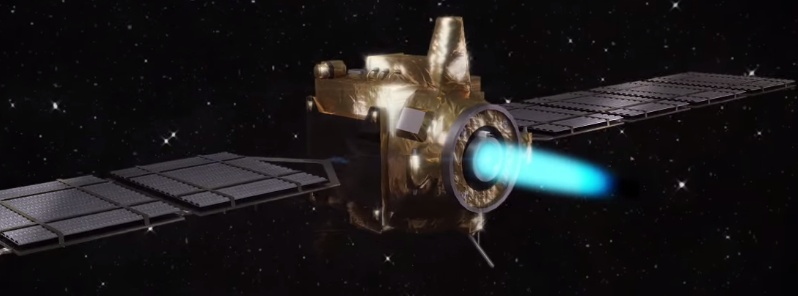

  • Dawn of a new era: the revolutionary ion engine that took spacecraft to Ceres

    The NASA spacecraft Dawn has spent more than seven years travelling across the Solar System to intercept the asteroid Vesta and the dwarf planet Ceres. Now in orbit around Ceres, the probe has returned the first images and data from these distant objects. But inside

  • United Nations urged to ensure open plant genomes

    A plant scientist from The Australian National University (ANU) has called for the United Nations to guarantee free and open access to plant DNA sequences to enable scientists to continue work to sustainably intensify world food production. Dr Norman Warthmann, a plant

  • Very strong and deep M6.4 earthquake hits Tarapaca, Chile

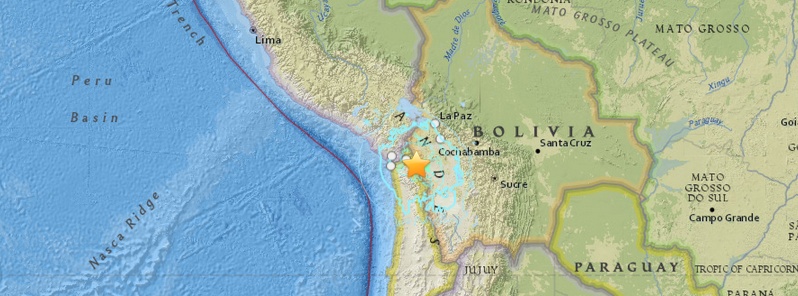
    A very strong and deep, M6.4 (USGS) earthquake was registered in Tarapaca region, northern Chile on March 23, 2015 at 04:51 UTC. USGS is reporting depth of 120.9 km (75.1 miles). CSN Chile is reporting M6.3 at a depth of 121 km.Epicenter was located 48 km (30 miles) ESE

  • It is a Magnetic Universe Genius

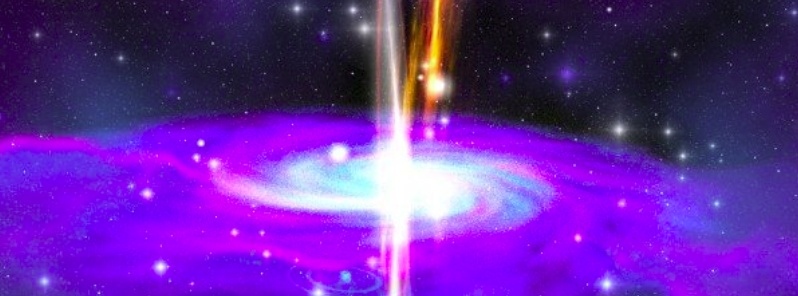
    Part one: Cosmic Accelerators Current physics cannot explain the intense galactic magnetic fields in spiral galaxies and also the source of high energy particles, both charged and neutral particles (Cosmic Rays and Neutrinos) because of the major defects in the fundamen

  • How is Mars rover Opportunity still alive?

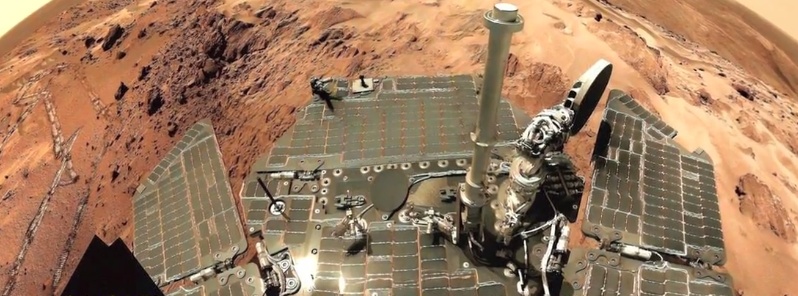
    Today, we review one of the great ongoing mysteries in the history of Mars exploration. In January of 2004, the Mars rovers Spirit and Opportunity arrived at the red planet about three weeks apart.Due to the extreme dustiness of the Martian environment, it was believed

  • Large underground ocean on Ganymede, Jupiter’s largest moon

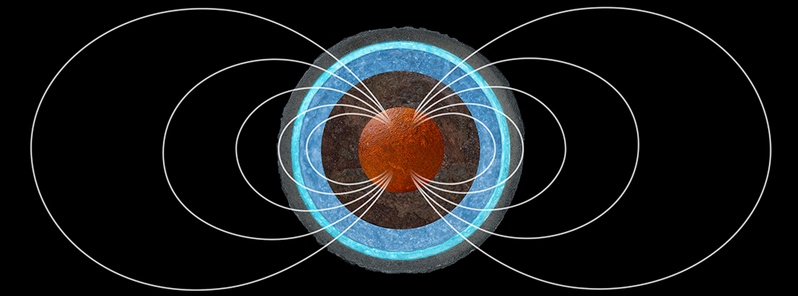
    Hubble Space Telescope has the best evidence yet for an underground saltwater ocean on Ganymede, Jupiter’s largest moon. The subterranean ocean is thought to have more water than all the water on Earth's surface. Identifying liquid water is crucial in the

  • Rosetta makes first detection of molecular nitrogen at a comet

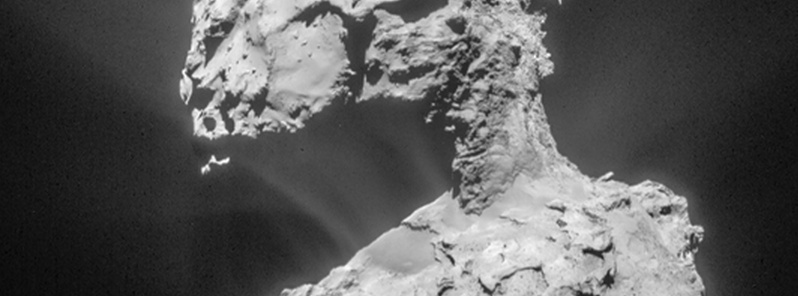
    ESA's Rosetta spacecraft has made the first measurement of molecular nitrogen at a comet, providing clues about the temperature environment in which Comet 67P/Churyumov-Gerasimenko formed, the agency reports.The in situ detection of molecular nitrogen has long been

  • Massive amounts of fresh water, glacial melt pouring into Gulf of Alaska

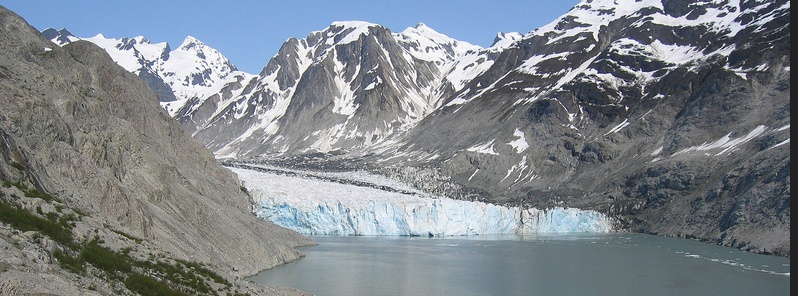
    Incessant mountain rain, snow and melting glaciers in a comparatively small region of land that hugs the southern Alaska coast and empties fresh water into the Gulf of Alaska would create the sixth largest coastal river in the world if it emerged as a single stream, a r

  • The mystery of solar nanoflares

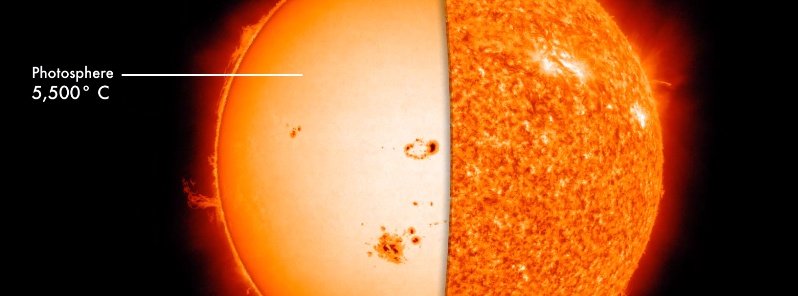
    Nanoflares are eruptions on the Sun which are billion times less energetic than ordinary flares but still have the power that belies their name. They appear as little brightenings of the solar surface at extreme ultraviolet and X-ray wavelengths and they might solve a l