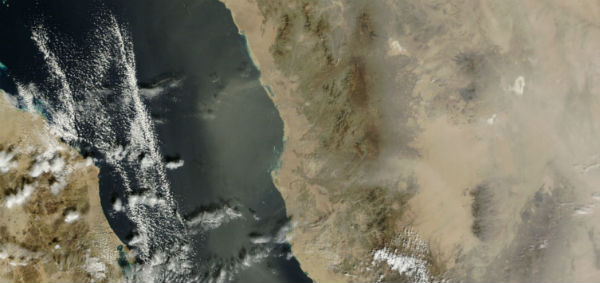
• Dust over Saudi Arabia and Red Sea

    Dust can be seen in the air over Saudi Arabia and blowing westward over the Red Sea. Unsettled weather is typical in Saudi Arabia in winter, with strong winds a frequent occurrence. The Rub’ al Khali desert, the world’s largest sand sea, covers large parts of the
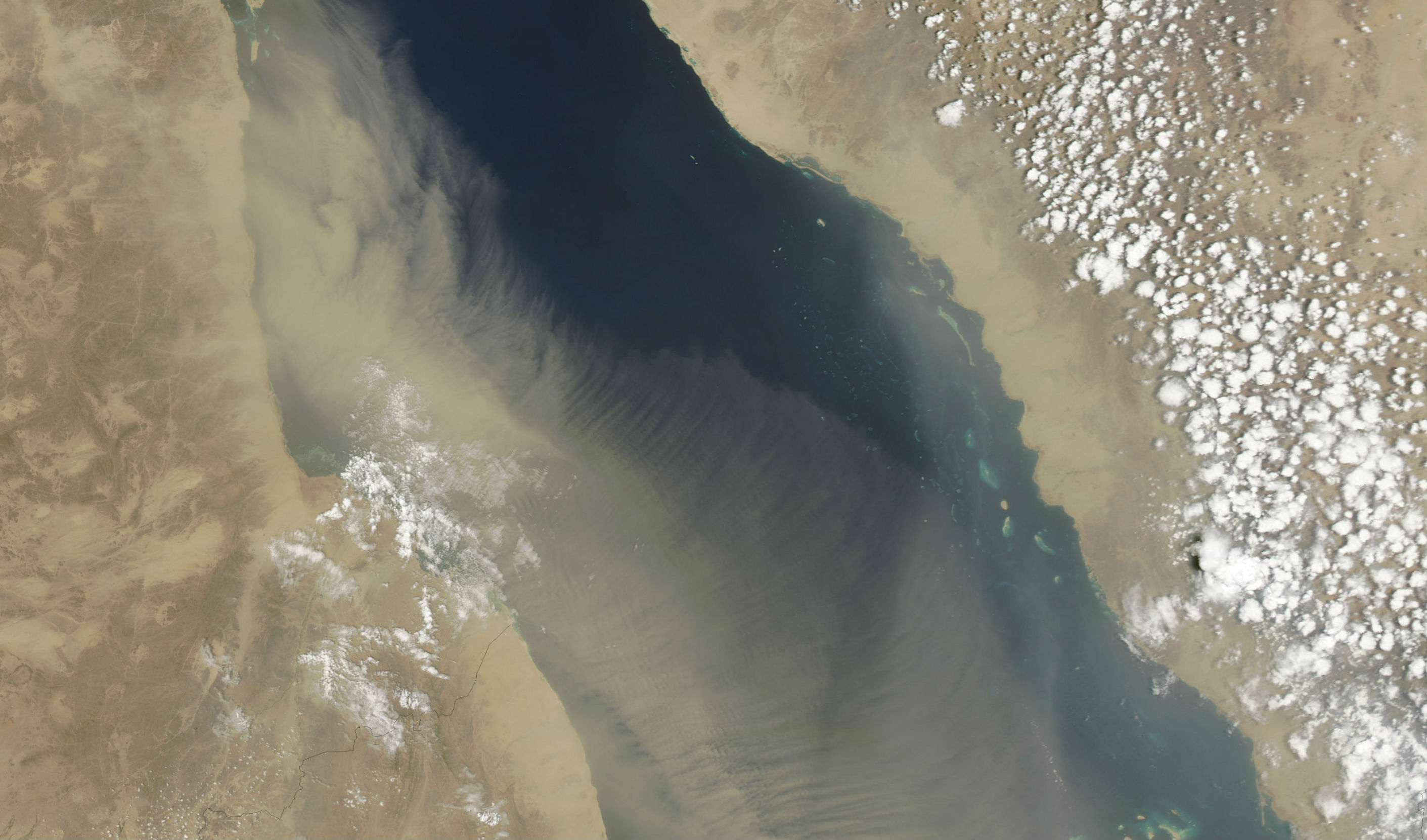
  • Dust storm over the Red Sea

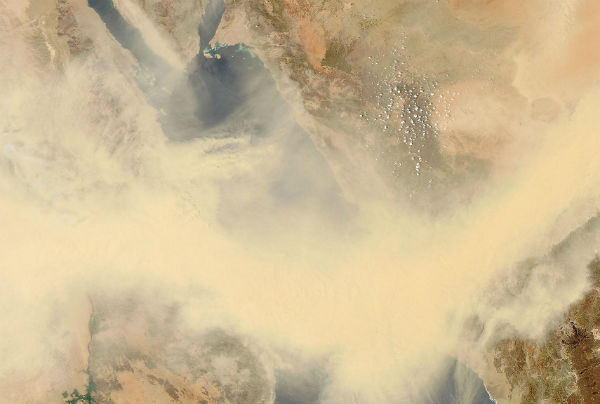
    On either side of the Red Sea, the Sahara Desert and the Arabian Peninsula rank among the world’s most prolific dust-producing regions. The dust in this image bellow is originated in northeastern Africa, where a network of impermanent rivers has created fine

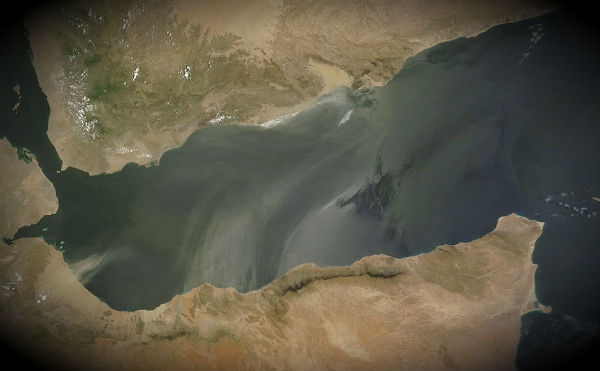
  • Dust plumes over Red Sea and Gulf of Aden

    Several plumes of dust can be seen blowing off the coast of the African continent, over bodies of water, towards the Arabian Peninsula. The largest dust plume can be observed in the upper left quadrant, blowing northeastward over the Red Sea, off the coast of Sudan,

  • Dust storm over Red sea

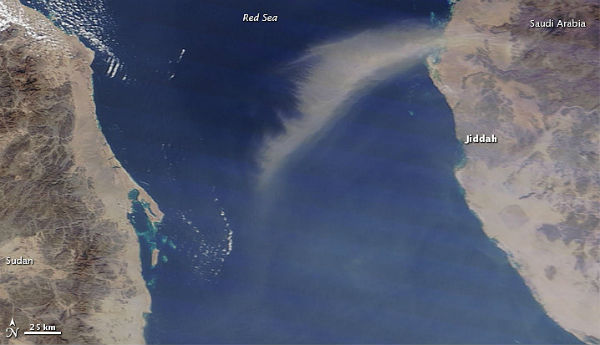
    A small dust plume blew from Saudi Arabia over the Red Sea on December 12, 2011. Arising near the coast, north of the city of Jiddah (Jeddah), the plume arcs toward the southwest. The dust is thick enough to completely hide the water below, but the plume stops short of

  • Dust plumes over Red Sea

    Another dust storm blew off the coast of Africa and over the Red Sea on September 15, 2011. The Moderate Resolution Imaging Spectroradiometer (MODIS) on NASA’s Aqua satellite took this picture the same day.Dust plumes travel in a generally clockwise direction

  • Dead Sea disappearing day by day

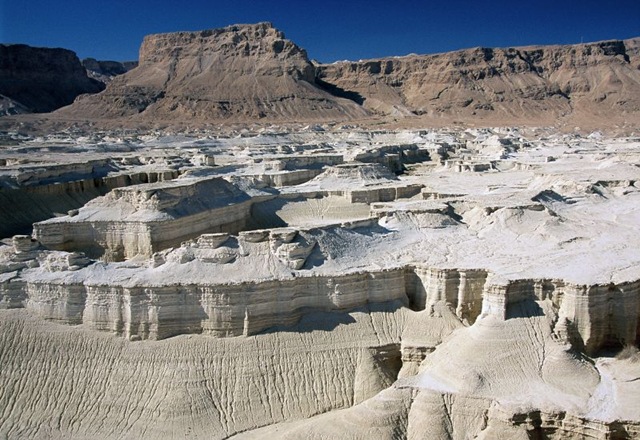
    The Dead Sea has been drying up at a dramatic rate in recent decades as a result mostly of human demands for water. But instead of letting the historic body of water continue to disappear, some scientists are getting increasingly serious about trying to save it.In the m