• Polar vortex winds at 60°N drop from 22.13 to 5.44 m/s in eight days in rare November disruption; major SSW remains forecast

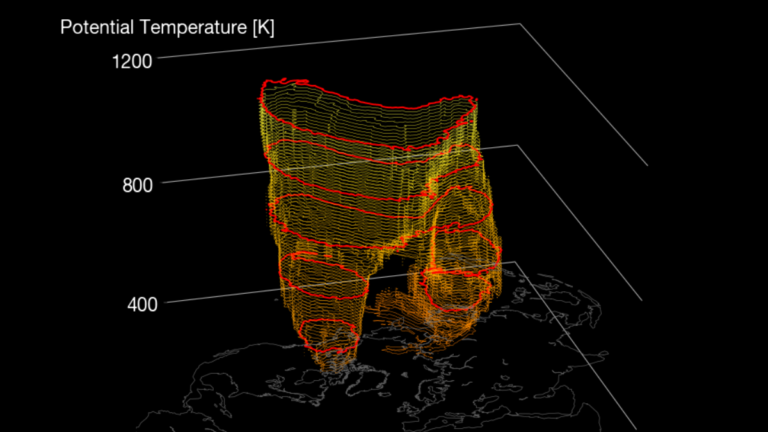
    A rare November disruption of the Northern Hemisphere stratospheric polar vortex is underway, with the daily-mean wind at 60°N and 10 hPa weakening from 22.13 m/s (49.5 mph) on October 25 to 5.44 m/s (12.2 mph) on November 2. Forecast guidance continues to indicate a possible brief reversal during the second week of November, which would meet the defining wind-reversal threshold used to identify a major sudden stratospheric warming, while any surface-weather response remains uncertain.

  • Severe storms leave 2 dead, trigger flooding and evacuations across Italy, Slovenia and Croatia

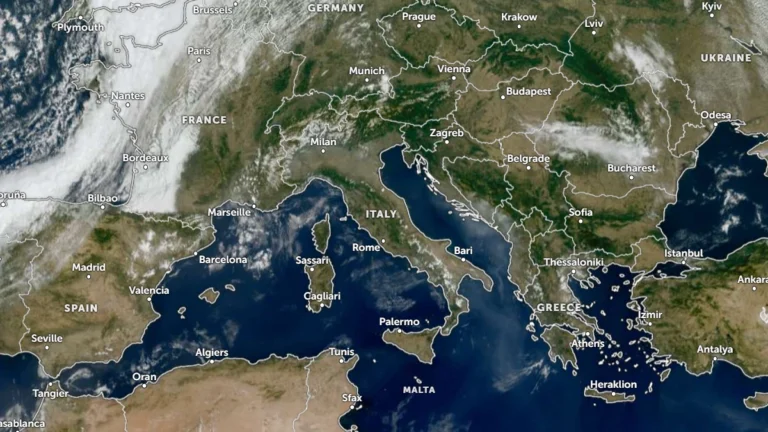
    Severe storms and torrential rainfall struck parts of Italy, Slovenia and Croatia on September 9 and 10, 2026, causing flooding, evacuations, transport disruption and localized infrastructure damage. Two women died in Italy during the event, one after becoming trapped in a flooded underpass at Latisana and another after being struck by broken window glass at Sinalunga.

  • Thunderstorms, heavy rainfall and flash flood risk forecast across northern Italy, Slovenia and Croatia, ending late-summer heat

    Widespread thunderstorms and locally heavy rainfall are forecast across northern Italy, Slovenia and Croatia on September 9, 2026, with intense rainfall posing a risk of rapid rises in torrential watercourses and localized flash flooding. A marked temperature drop is also forecast behind the system, bringing substantially cooler conditions to northern Italy and parts of the Alpine and northern Adriatic region after the recent late-summer heat.

  • RKI estimates 15 800 heat-related deaths, Germany records second-warmest summer since 1881

    The Robert Koch Institute estimated 15 800 heat-related deaths in Germany between April 6 and August 16, while the German Weather Service provisionally ranked the June–August period as the country’s second-warmest summer since records began in 1881. Germany’s seasonal mean reached 19.6°C (67.3°F), only 0.1°C (0.2°F) below the 2003 record.

  • Three tornadoes confirmed after severe storms leave at least two dead in Germany

    At least two people died, and at least 12 were injured in separate incidents during severe weather across Germany on August 19–20, 2026. By August 21, the German Weather Service (DWD) confirmed three damaging tornadoes in Fürstenwalde/Spree, the greater Wetzlar area, and Höhr-Grenzhausen, while recovery operations continued across several states.

  • France heatwave brings temperatures above 40°C (104°F), exceptionally warm nights, and widespread wildfire risk

    A prolonged heatwave continued across France on Monday, July 13, with 37 departments under red heatwave vigilance and another 39 under orange vigilance. Exceptionally warm nights, increasingly dry soils and a nationwide wildfire danger are expected to persist as the highest temperatures shift toward central and eastern parts of the country.

  • Western Europe records hottest June on record as heatwave drives widespread temperature extremes

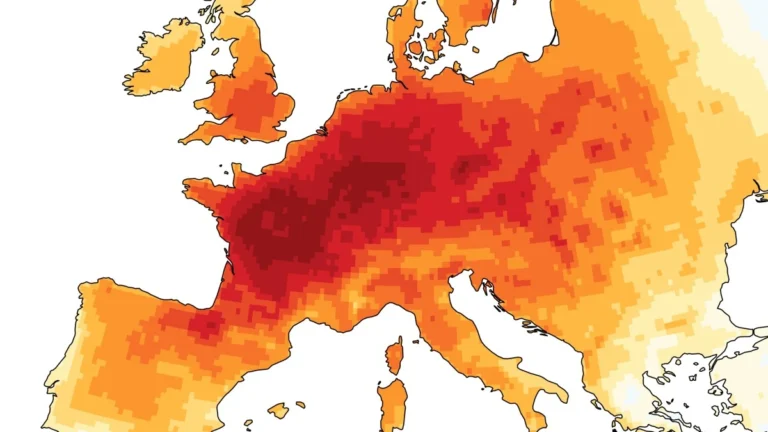
    Western Europe recorded its warmest June on record in 2026, with an average temperature of 20.74°C (69.3°F), 3.06°C (5.51°F) above the 1991–2020 average, according to the Copernicus Climate Change Service (C3S). The record-breaking month coincided with widespread heatwaves across western and central Europe that set national and local temperature records, while June ranked as the second-warmest globally in the ERA5 dataset.

  • Hungary sets new all-time temperature record as heat wave rewrites national and Budapest records

    Hungary recorded its highest temperature since observations began on June 30, 2026, when the temperature reached 42°C (107.6°F) in Szécsény, surpassing the previous national record of 41.9°C (107.4°F) measured in Kiskunhalas in 2007. The same heat wave also established a new all-time temperature record in Budapest and rewrote numerous national and capital daily maximum and minimum temperature records between June 29 and July 1, according to HungaroMet.

  • Czech Republic records hottest day on record with 41.9°C (107.4°F)

    The Czech Hydrometeorological Institute (CHMI) has confirmed a new all-time maximum air temperature for the Czech Republic after the Doksany meteorological station measured 41.9°C (107.4°F) on June 28, 2026, surpassing the previous national record of 40.4°C (104.7°F) set in 2012 during a historic late-June heatwave.