
A fish filmed 600 meters below the Pacific has a transparent head, and its eyes rotate inside it to follow prey
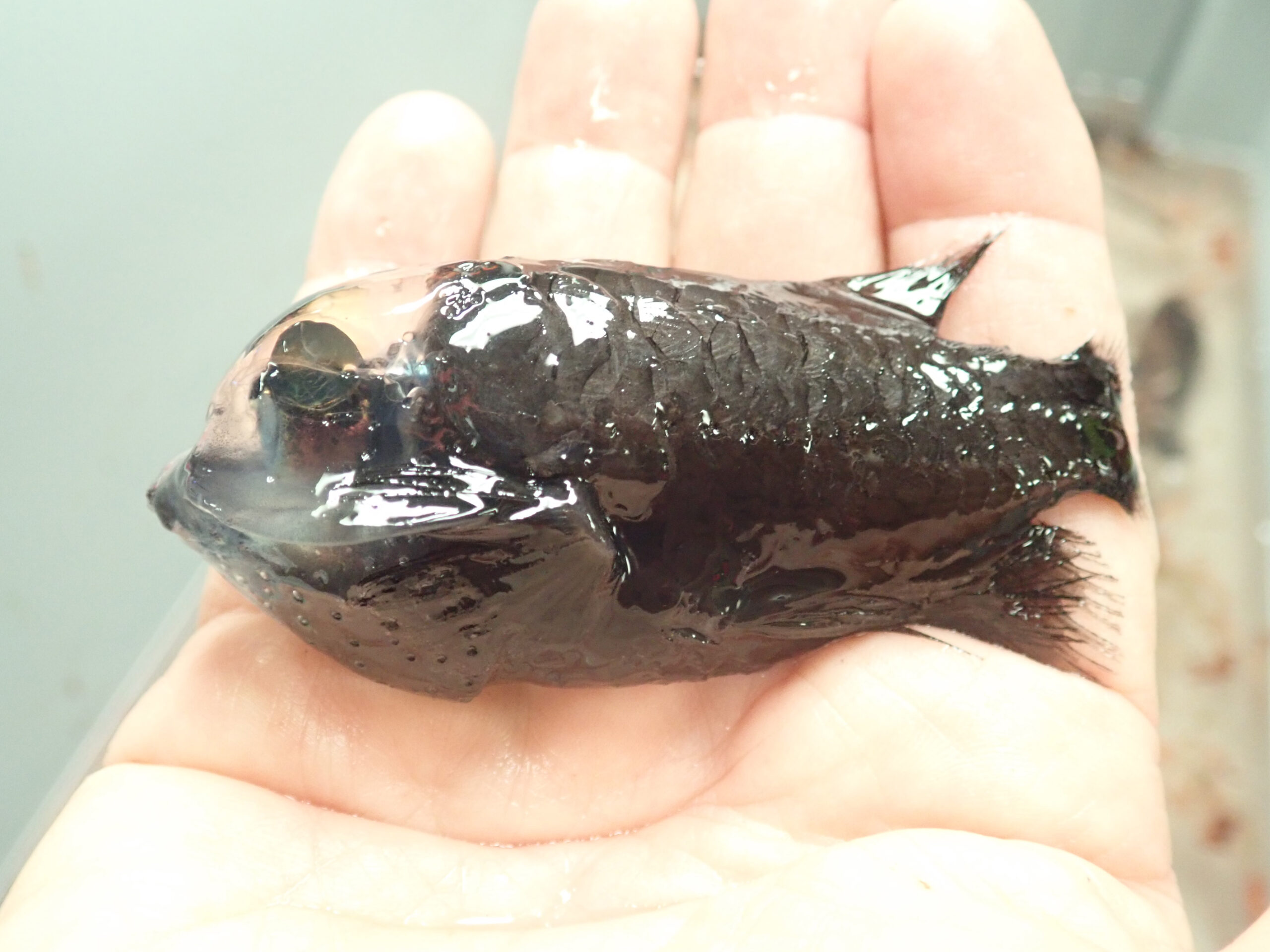
MBARI researchers released new 4K footage on October 28, 2026, of a barreleye fish (Macropinna microstoma) encountered about 600 m (1 970 feet) beneath the Pacific Ocean roughly 90 km (55 miles) off Central California. Its large tubular eyes sit beneath a transparent, fluid-filled shield and rotate from an upward-looking position to a forward-looking one, allowing the fish to keep prey in sight as it feeds. MBARI says the encounter was only its 11th observation of the species in nearly 40 years of deep-sea exploration.
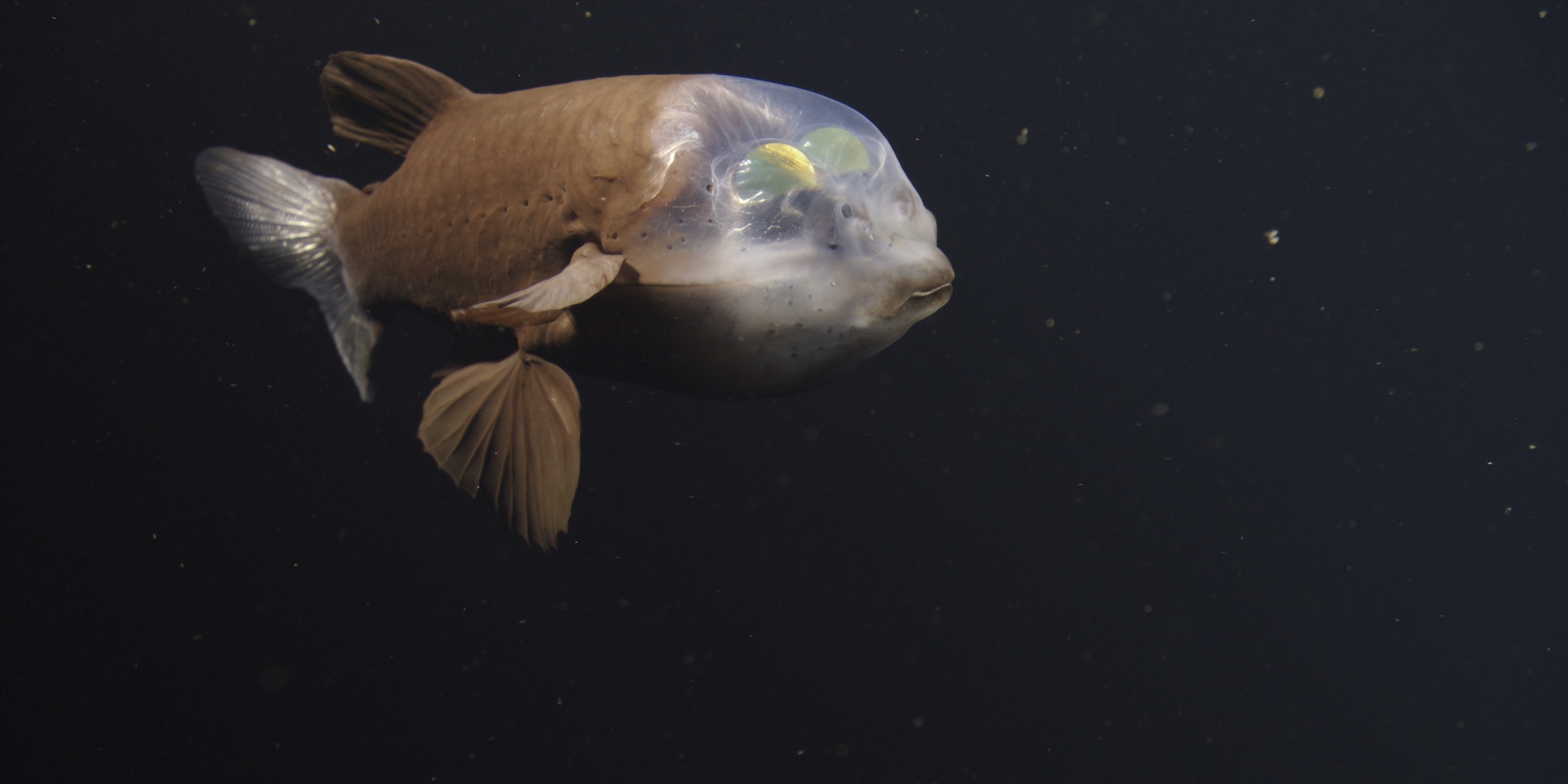
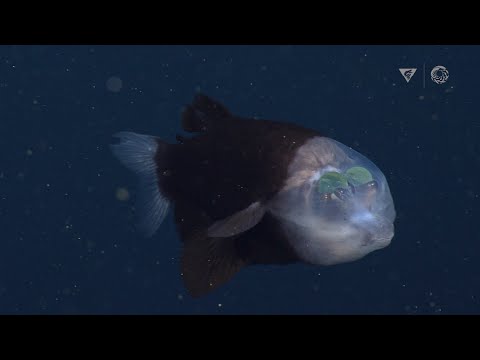
A barreleye fish (Macropinna microstoma) filmed during MBARI's 2026 expedition off Central California. Its tubular eyes are visible beneath the transparent head shield. Credit: 2026 MBARI
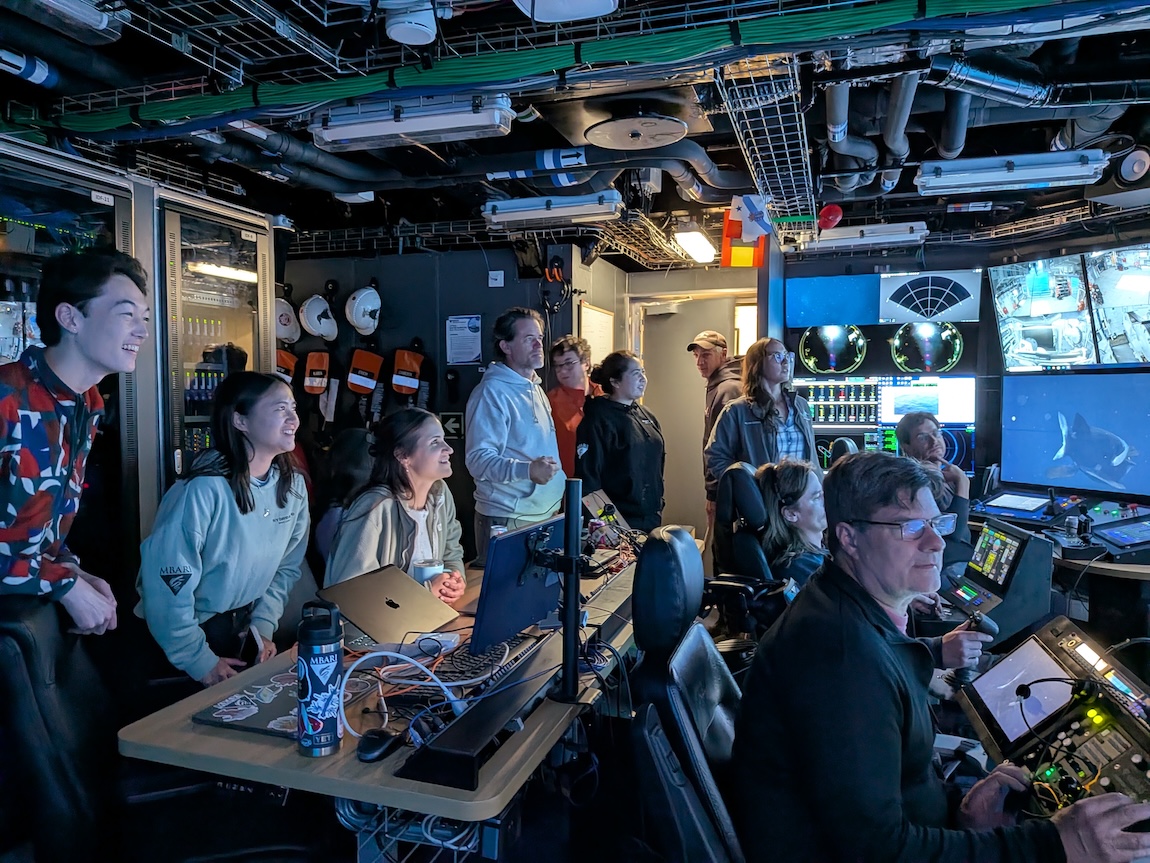
The encounter occurred during MBARI’s eight-day Diving Deep for Delicate Drifters expedition aboard R/V David Packard. Researchers from the institute’s Biodiversity and Biooptics Team were using the remotely operated vehicle (ROV) Doc Ricketts to observe and collect deep-sea animals when Research Specialist Shannon Johnson spotted the barreleye as the vehicle was returning toward the surface after science operations had ended for the day.
The expedition team watched the fish for approximately 20 minutes. A high-resolution 4K camera on Doc Ricketts recorded its body and behavior while the team changed the lighting to reveal details of the transparent head shield. ROV Pilot/Technician Cameron Law also moved the vehicle close enough to record 3D stereo imagery with its VR camera.
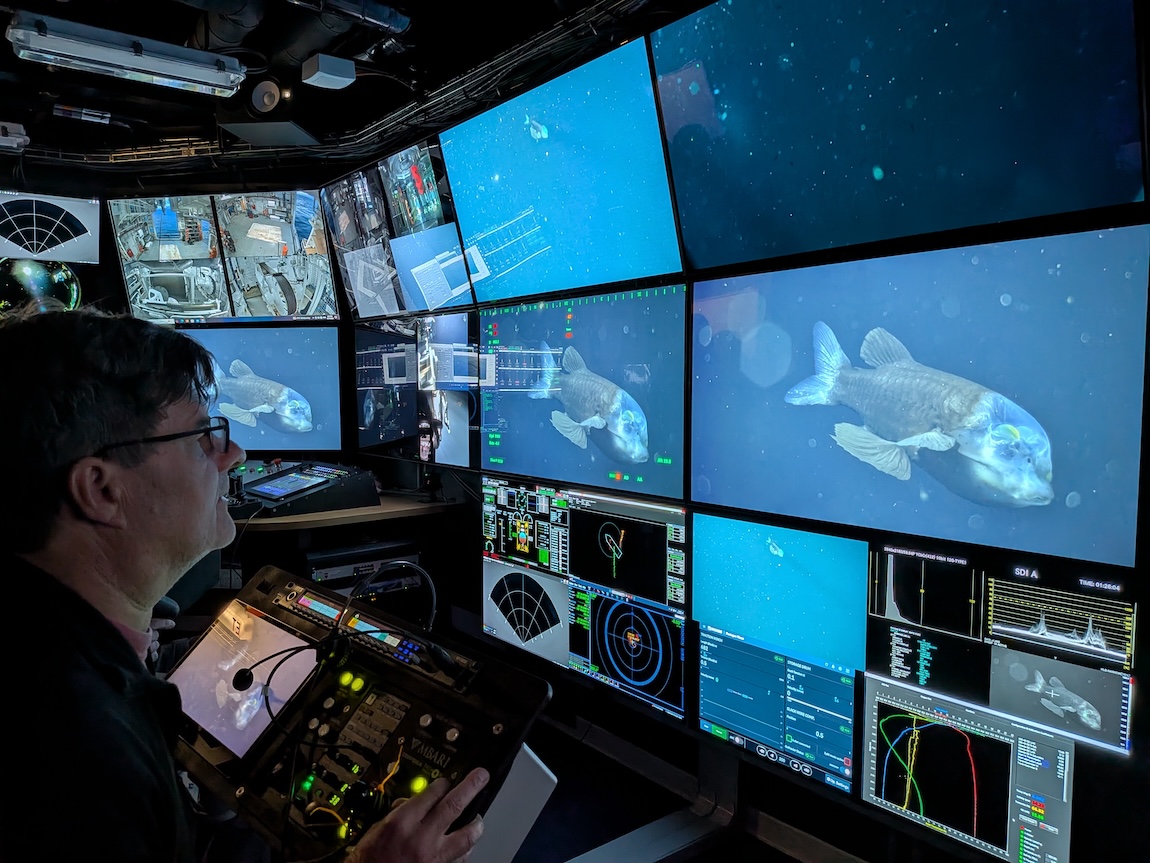
MBARI did not collect the animal. The institute said the close-up footage will provide material for continued study of the species and of vision in the dimly lit ocean twilight zone. The encounter was MBARI’s first observation of Macropinna filmed in 4K and its first from the new research vessel David Packard.
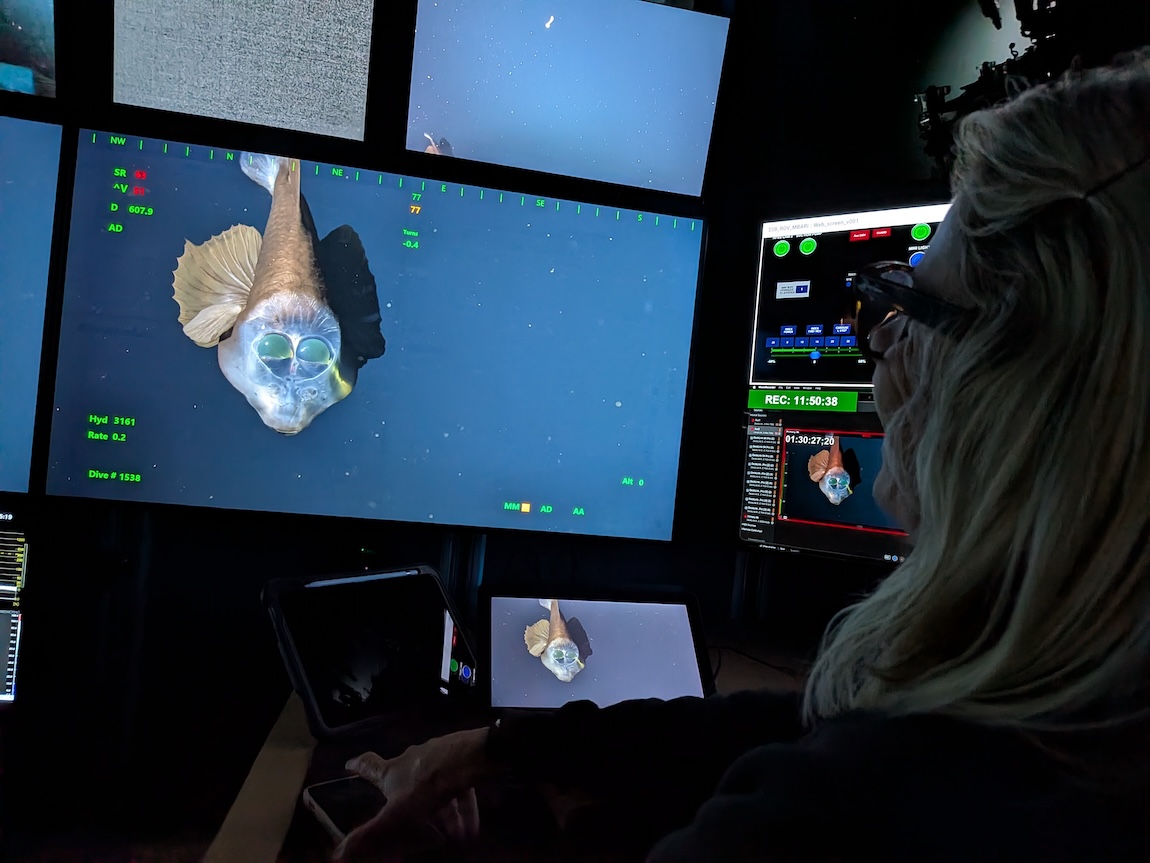
The expression “transparent head” refers to a transparent, fluid-filled shield covering the top of the fish’s head rather than a transparent skull. The two large green structures visible through the dome are the fish’s tubular eyes. The two small spots above its mouth are olfactory organs called nares, not forward-facing eyes.
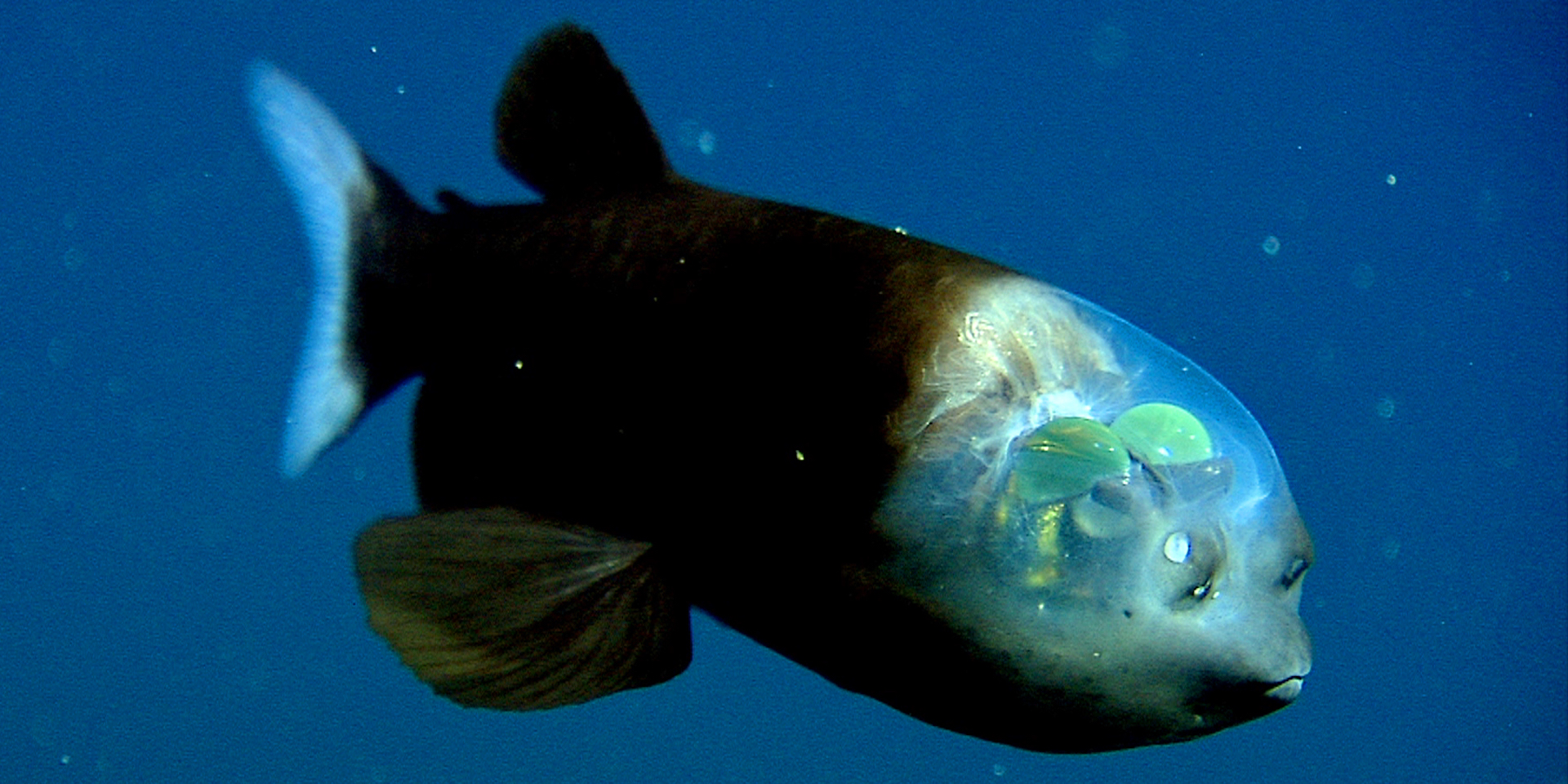
Macropinna microstoma was first described in 1939, but its anatomy produced a persistent problem for biologists. The tubular eyes appeared to point upward while the mouth pointed forward, and researchers long assumed that the eyes were fixed in that position. Earlier descriptions and illustrations generally lacked the transparent shield as well, probably because the fragile structure was damaged when specimens were brought to the surface in nets.

Bruce Robison and Kim Reisenbichler resolved the central eye-orientation problem in work published in Copeia in 2008. They combined ROV observations of freely swimming barreleyes with observations of a net-caught specimen that reached the surface alive and survived for several hours in a shipboard aquarium. The fish rotated its tubular eyes as it changed body orientation, confirming that the eyes can move from a dorsally directed, upward-looking position to a rostrally directed, forward-looking position.
The movement addresses a basic trade-off created by tubular eyes. Their shape is efficient for gathering faint light from a restricted part of the visual field above the fish, where silhouettes and bioluminescent signals can reveal other animals. A narrow upward field of view, however, would make it difficult to see food immediately in front of the mouth. Rotating the eyes forward allows Macropinna to keep a target in view during feeding.
Later anatomical research has shown that barreleye eyes are more complex than a simple movable tube. Wagner et al. (2022) examined eye anatomy across the family Opisthoproctidae and provided a preliminary description of Macropinna specimens with a lateral retinal diverticulum, an additional retinal structure extending from the tubular eye. The authors emphasized that preserved material for the species remains scarce and that the structure differed between the two Macropinna specimens they examined.
The bright green lenses add another layer to the visual system, but their exact role should not be overstated. Robison and Reisenbichler proposed that green pigments may filter downwelling sunlight and improve the fish’s ability to detect bioluminescent animals above it. MBARI’s 2026 report says the lens pigments are thought to perform a function similar to green pigments studied in the eyes of the strawberry squid, rather than presenting that comparison as a demonstrated mechanism in Macropinna.
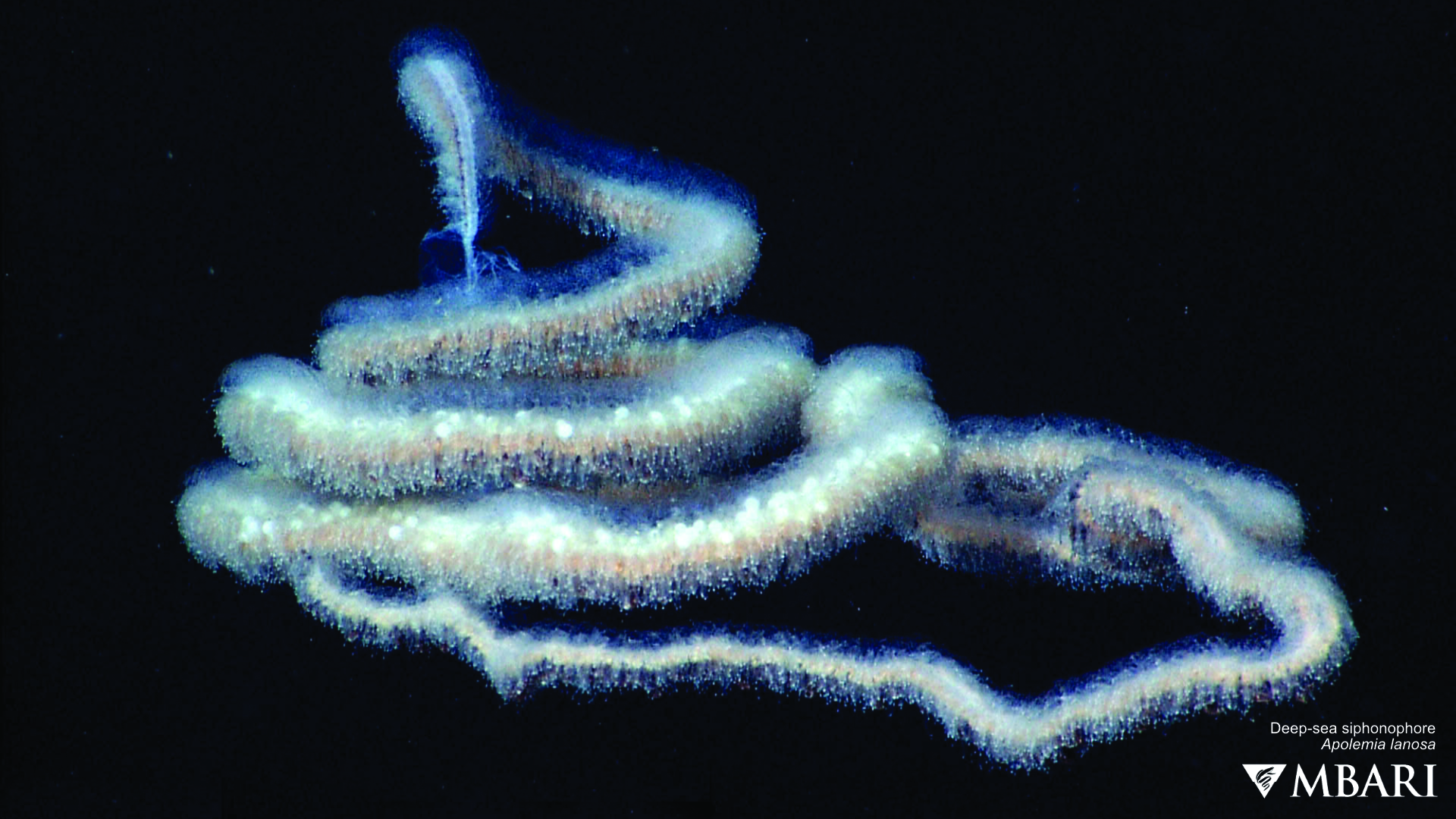
The proposed relationship with siphonophores remains more uncertain. Two net-caught barreleyes examined in the earlier work contained fragments of jellies, and the researchers developed a working hypothesis in which the fish maneuvers near siphonophore tentacles and takes small animals captured there. Under that interpretation, the movable eyes would help keep prey in view and the transparent shield could protect the eyes from stinging cells. The behavior has not been established by a directly observed feeding sequence.
Traditional collection methods also help explain why the living fish looked so different from older preserved material. A delicate, fluid-filled structure can be damaged during capture and ascent, removing the feature that makes a freely swimming Macropinna immediately distinctive. Underwater robots allow researchers to examine the fish intact at depth before collection alters its appearance.
MBARI’s own observation record illustrates how infrequently its vehicles have encountered the species. In nearly 40 years of ocean exploration, the institute reports roughly 7 000 ROV dives and more than 41 000 hours of deep-sea video, with only 11 recorded encounters with Macropinna microstoma. Its previous sighting was in 2021.
The new encounter does not establish every proposed function of the animal’s unusual anatomy. It provides MBARI with substantially higher-resolution observations of a living barreleye and a closer look at its eyes and transparent shield, while questions about the lens pigments and the proposed siphonophore-feeding strategy remain subjects for further study.
References:
1 Robison, B. H., & Reisenbichler, K. R. (2008). Macropinna microstoma and the paradox of its tubular eyes. Copeia, 2008(4), 780-784. DOI: 10.1643/CG-07-082
2 Wagner, H.-J., Genner, M. J., Partridge, J. C., Chung, W.-S., Marshall, N. J., Robison, B. H., & Douglas, R. H. (2022). Diversity and evolution of optically complex eyes in a family of deep-sea fish: Ocular diverticula in barreleye spookfish (Opisthoproctidae). Frontiers in Ecology and Evolution, 10, 1044565. DOI: 10.3389/fevo.2022.1044565
3 MBARI researchers film rarely seen deep-sea barreleye fish in 4K – Monterey Bay Aquarium Research Institute – October 28, 2026
4 Researchers solve mystery of deep-sea fish with tubular eyes and transparent head – Monterey Bay Aquarium Research Institute – February 23, 2009

I’m a science journalist and researcher at The Watchers, contributing to the Epicenter edition, where I cover peer-reviewed scientific research and emerging discoveries across Earth and space sciences. With a background in astronomy and a passion for environmental science, I’ve worked in shark and coral conservation in Fiji, conducting reef and shark-behavior research, contributing to mangrove restoration, and earning PADI Open Water and Coral Reef Certifications. I bring a blend of scientific rigor and storytelling to illuminate the discoveries shaping our planet and beyond.
Published in the last 24 hours
- In 1927, Louisiana dynamited a Mississippi River levee to save New Orleans, flooding the homes of about 10,000 people downstream, and the city turned out never to need it Epicenter
- So much water builds up in the Amazon each April that it shifts Earth’s center of mass toward South America Epicenter
- Hurricane Katrina swept eight aquarium dolphins out to sea in Mississippi in 2005, and 12 days later they were found still swimming together Epicenter
- Antarctic moss began growing again after at least 1,530 years frozen in permafrost Epicenter
