• Antarctic ozone hole reaches maximum size for 2013

    Each year for the past few decades during the Southern Hemisphere spring, chemical reactions involving chlorine and bromine cause ozone in the southern polar region to be destroyed rapidly and severely. This depleted region is known as the “ozone

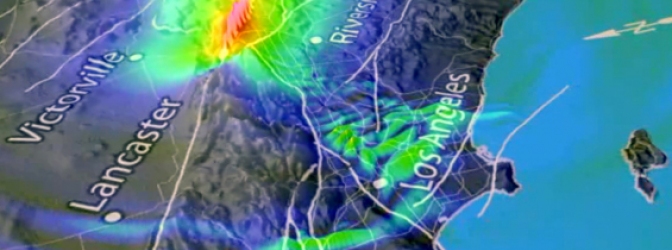
  • Massive M 7.2 earthquake hit Mindanao, Philippines

    Extremely dangerous and deadly earthquake, registered as M 7.2 by PHIVOLCS (M 7.1 – USGS/EMSC), struck provinces in Central Visayas and some parts of Mindanao, Philippines on October 15, 2013 at 00:12 UTC. The epicenter was located 2km (1mile) NE

  • Moderate M1.7 solar flare erupted from geoeffective AR 1865

    A moderate solar flare measuring M1.7 erupted on Sunday, October 13, 2013. The event peaked at 00:43 UTC and a Type II Radio Emission was associated. Type II emissions occur in association with eruptions on the Sun and typically indicate a Coronal Mass Ejection is

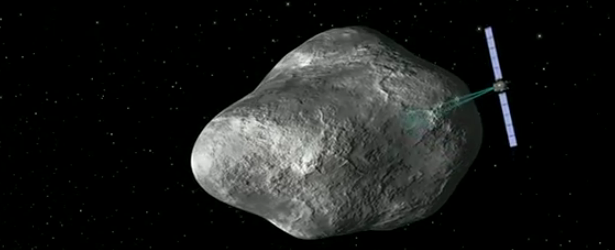
  • Comet ISON expected to survive close Sun encounter

    New studies released at the American Astronomical Society’s 45th Annual Division for Planetary Sciences meeting in Denver, Colorado suggests that Comet ISON could make it through its close perihelion passage near the Sun. Researchers Matthew Knight

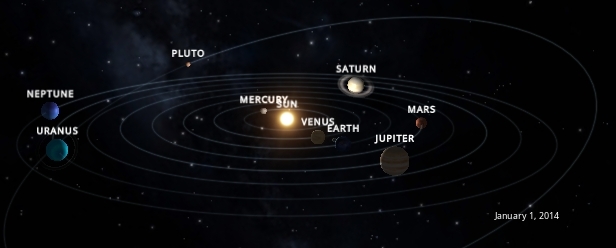
  • Night sky guide for October 2013

    On October 1, Comet ISON is making closest approach to Mars. Mars missions will have a close up look at the comet.
    On October 3 – Uranus is at opposition. The blue-green planet will be at its closest approach to Earth and its face will be fully

  • Two large fireballs spotted over the skies of Ohio, US

    Two very bright fireballs were spotted and recorded over the skies of Ohio, US, in just two days. They quickly became 2nd and 3rd most reported events of all time on the American Meteor Society (AMS) website.Witnesses from Ohio, Illinois, Indiana, Kentucky, Missouri and

  • 50 kg meteor explodes and illuminates sky over southeastern US

    A meteor with estimated mass of over 50 kg exploded over Tennessee, US, around 07:27 UTC on August 28, 2013 (02:27 local time). Head of NASA's Meteoroid Environment Office, Bill Cook, said the fireball reached a peak magnitude of -13. It was brighter than a full