G4 – Severe geomagnetic storm in progress
A coronal mass ejection (CME) produced on June 25, 2024, impacted Earth shortly after 09:30 UTC on June 28, producing G4 – Severe geomagnetic storm.


A coronal mass ejection (CME) produced on June 25, 2024, impacted Earth shortly after 09:30 UTC on June 28, producing G4 – Severe geomagnetic storm.

Russian decommissioned satellite Resurs-P1 broke up in orbit on June 26, 2024, releasing roughly 100 pieces of trackable debris. The number rose to 180 by the end of June 27 and is expected to keep rising, according to Leo Labs. Following the breakup, NASA instructed the 9 astronauts aboard the International Space Station (ISS) to take shelter in their respective spacecraft as a standard precautionary measure.

Heavy monsoon rains affecting Bangladesh since Wednesday, June 19, 2024, have left over 2 million people stranded and at least 10 dead. Bangladesh Meteorological Department predicts continued heavy rains which could potentially worsen the situation.

Heavy rainfall and snowmelt caused catastrophic flooding in the French and Swiss Alps on June 11, 2024. In the French village of La Berarde, 97 people were stranded, and in Switzerland’s Zermatt, the Mattervispa river flooded the town center.
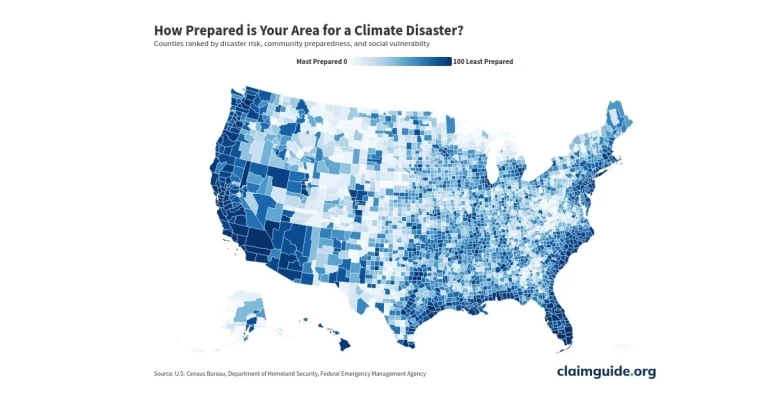
California ranks as number one on the list of the most disaster-prone states in the U.S., according to the latest rankings by ClaimGuide.

Norwegian mining company Rare Earths Norway (REN) announced on June 6, 2024, that their Fen Carbonatite Complex, located in an ancient volcano near the capital Oslo, contains an estimated 8.8 megatons of rare earth oxides, making it Europe’s largest rare earth element deposit.
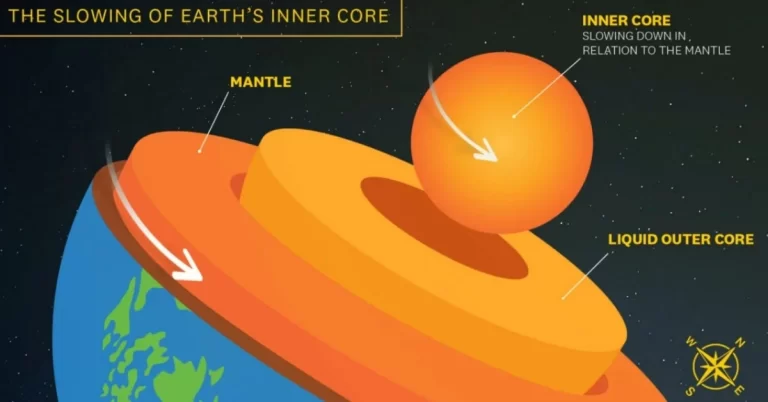
A new scientific study proves that the Earth’s rotation speed has been decreasing throughout the past decade, with data suggesting that the rotational speed of the inner core has gotten 2.5 times slower compared to the past decade.

A new study published in Nature Astronomy provides evidence that our solar system passed through a dense interstellar cloud 2 – 3 million years ago, exposing Earth to higher cosmic radiation and altering the climate. The discovery suggests that the Sun’s location in space might shape Earth’s history more than it was previously considered.

Aswan in Egypt recorded 50.9 °C (123.6 °F) on June 7, 2024, setting the highest reliable temperature ever recorded in Egypt and the hottest June day in African history. On the same day, Cyprus experienced its hottest June day ever with temperatures hitting 44 °C (111 °F), breaking its record for the second time this month.

A new auroral phenomenon, potentially a twin of the STEVE aurora, was discovered in Norway on December 28, 2021. The finding, confirmed by ESA’s Swarm satellite data, reveals an eastward stream of hot gases at dawn, similar to the westward stream seen at dusk.
