• Gezani forecast to reach intense tropical cyclone strength near Mozambique coast, more than 1 million at risk

    Tropical Cyclone Gezani was located in the Mozambique Channel at 12:00 UTC on February 12, 2026, with maximum sustained winds of 120 km/h (75 mph) and is forecast to intensify to 165 km/h (105 mph) near the Mozambique coast by February 14. Gale- to hurricane-force winds, rainfall totals locally reaching 200 mm (8 inches), and high seas of 7–10 m (23–33 feet) are possible in Inhambane Province, while Sofala and Gaza provinces remain saturated from prolonged flooding that has already displaced hundreds of thousands.

  • Strong M6.2 earthquake hits Coquimbo Region, Chile

    A strong earthquake registered by the USGS as M6.2 struck the Coquimbo Region, Chile, at 13:34 UTC (10:34 local time) on February 12, 2026. The agency is reporting a depth of 37 km (22.9 miles). EMSC is reporting the same magnitude and depth.

  • Effusive activity and ash to 7.3 km (24 000 feet) at Big Ben volcano, Heard Island, Indian Ocean

    Satellite observations show that Heard Island’s Big Ben volcano remains active, with lava flows detected through late January and February 2026. The Darwin VAAC reported that the ash plume from a brief eruption around 14:00 UTC on February 11 reached 7.3 km (24 000 feet) above sea level and fully dissipated by the following day.

  • Tropical Storm Penha leaves 8 dead and 645 612 affected after crossing southern-central Philippines

    Tropical Depression Penha crossed southern-central Philippines from February 5–7, 2026, leaving at least eight people dead and 645 612 affected across six regions, according to the National Disaster Risk Reduction and Management Council (NDRRMC) as of February 10. More than 86 000 people were displaced, including nearly 60 000 staying in 438 evacuation centres, while enhanced rainfall from a shear line continues to affect central and southern parts of the country.

  • Floods leave 44 dead and 72 000 families affected across 16 departments, Colombia

    Severe flooding triggered by persistent heavy rainfall since January 26, 2026, has left 44 people dead across 16 departments in Colombia as of February 11. Authorities report 12 000 homes damaged, 4 000 destroyed, and approximately 72 000 families affected in 104 municipalities. Additional rainfall is forecast over the next 48 hours.

  • Flash floods kill 3 and damage 1 999 shelters across 21 displacement sites in northwest Syria

    Flash floods triggered by heavy rainfall between February 7–9, 2026 killed at least three people and inundated 21 displacement sites across Idlib and northern Latakia, northwest Syria. The flooding directly affected about 5 300 internally displaced persons, damaged or destroyed 1 999 tents, submerged homes, and forced evacuations of civilians and medical facilities, according to United Nations and local authorities.

  • New York City confirms 18 deaths during prolonged Arctic cold

    Eighteen cold-related deaths were confirmed in New York City as of February 11, 2026, following a prolonged stretch of Arctic air that gripped the city from mid-January through early February. The fatalities occurred during a 9-day period of subfreezing temperatures that ended February 2, with wind chills falling below −25°C (−13°F) on multiple mornings. Most of the victims were found outdoors, according to city officials.

  • Cross-country storm to bring heavy rain to the South and snow to the West and Great Lakes

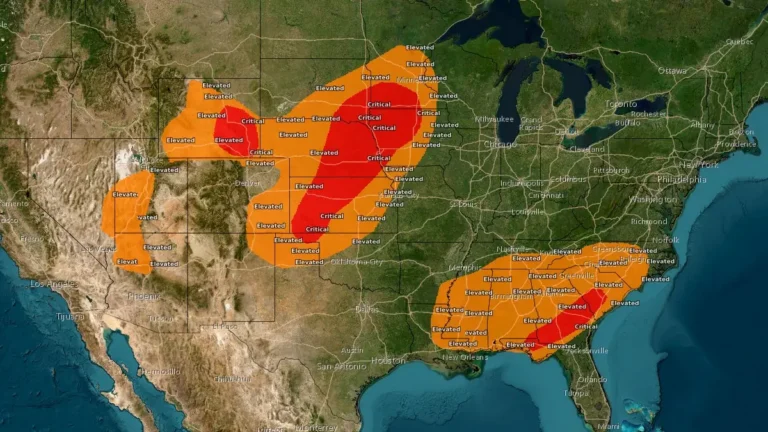
    An atmospheric river affecting California on February 11, 2026, is forecast to evolve into a cross-country storm moving across the southern U.S. through February 13–14, 2026. Widespread rainfall totals of 25 to 75 mm (1–3 inches), with locally higher amounts, are possible across Texas to Georgia. Heavy snow is ongoing in the Sierra Nevada, with additional accumulations expected in the Wasatch and central Rockies.